
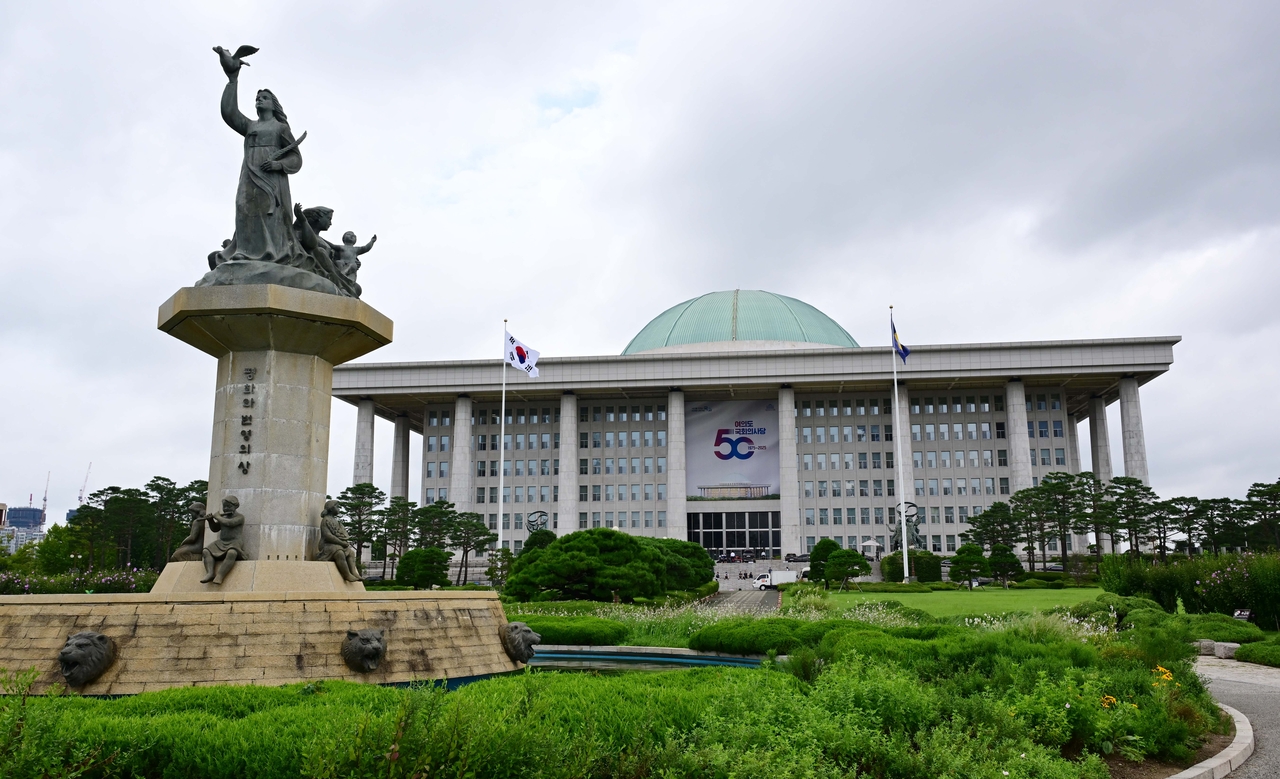
Woo Won-shik, speaker of South Korea’s National Assembly, is seeking to hold a constitutional referendum alongside the June 3 local elections — an effort that has gained backing from six political parties and President Lee Jae Myung.
But the path forward remains uncertain, constrained by a tight deadline, difficult legislative math in the Assembly — where a two-thirds majority is required before a national referendum — and resistance from the main opposition.
Woo and six parties — excluding the main opposition People Power Party — took the first step toward constitutional reform at a consultative meeting Thursday, agreeing to pursue a referendum alongside the June 3 local elections.
The phased revision plan proposed by Woo on March 10 centers on granting the National Assembly the authority to approve martial law ex post, inserting the spirit of the May 18 Gwangju Democratic Movement into the Constitution’s preamble, and codifying decentralization and balanced regional development.
The six parties agreed to pursue a cross-party constitutional amendment bill and to include in the Constitution’s preamble both the spirit of the May 18 Gwangju Democratic Uprising and the 1979 Busan-Masan Democratic Protests against the Yushin dictatorship of Park Chung-hee.
They aim to formally submit the amendment by April 7 and hold a second meeting on March 30, while continuing to seek the People Power Party’s participation.
Woo has pushed forward with a phased revision, a more realistic approach focused first on issues likely to command broad public backing and bipartisan support.

Nine votes short at Assembly, tighter deadline by April 7
The political math underscores both the opportunity and the uncertainty, however.
Passing a constitutional amendment requires 197 votes, or two-thirds of the current 295-member National Assembly. The ruling bloc and its allies control 188 seats, leaving Woo dependent on at least nine opposition lawmakers.
That narrow gap has fueled cautious hope among supporters of the revision.
Their reasoning is partly procedural as well as political: Under the National Assembly Act, constitutional amendment votes must be held by recorded roll call, not by secret ballot.
Major parts of the proposal — including revising the constitutional preamble and codifying decentralization — are declaratory in nature and politically difficult to oppose outright.
In particular, People Power Party lawmakers could face public scrutiny if they vote against the amendment or abstain, specifically if doing so is seen as blocking measures aimed at preventing a repeat of the illegal martial law declaration by ousted President Yoon Suk Yeol on Dec. 3, 2024.
Time is another critical constraint. For a referendum to be held alongside the June 3 elections, the amendment bill must be introduced by April 7.
That deadline reflects the timetable set out in the Constitution: Once a proposed amendment has been publicly announced by the president for at least 20 days, the National Assembly must pass it within 60 days, after which it must be put to a national referendum within 30 days.
People Power Party breakaway votes are crucial
The People Power Party has sharply criticized the plan to tie constitutional revision to the election calendar, with party leaders warning that such a move risks politicizing the Constitution itself.
“It is an idea that makes the Constitution a subsidiary of elections and reduces constitutional revision to a political event,” Rep. Yoo Sang-bum, the People Power Party’s senior deputy floor leader, said during a party leadership meeting, adding, “It should be pursued calmly after the local elections.”
Yoo said constitutional revision should be pursued after the local elections with the participation of the People Power Party.
“For Speaker Woo to push ahead with constitutional revision in a hasty manner for political achievement while excluding the main opposition party is not neutrality but bias, and not coordination but blatant division,” Yoo said.
“It is not that the People Power Party denies the constitutional revision discussion itself. Various agenda items — including inserting the spirit of May 18, refining the requirements for martial law, and strengthening decentralization — can be sufficiently discussed.”
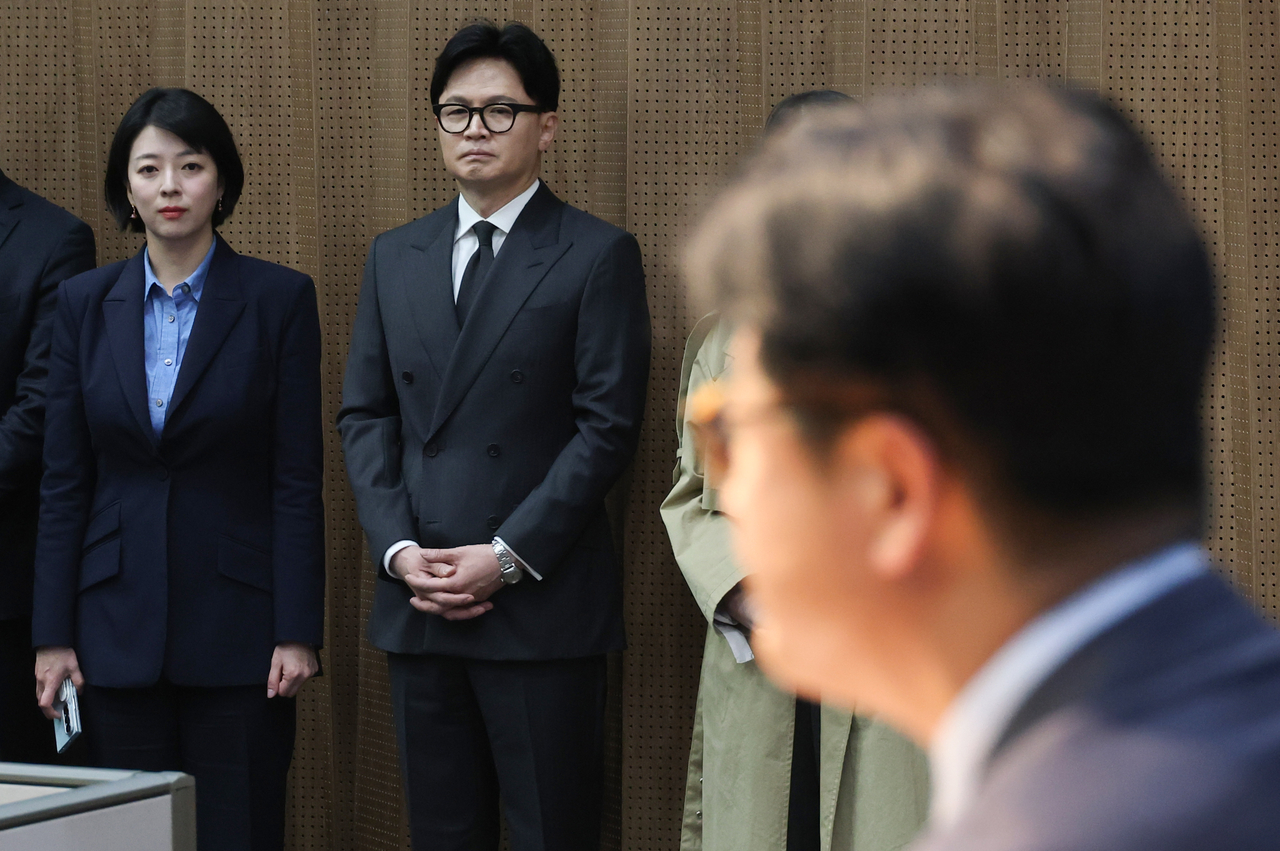
For the amendment to pass, backers would almost certainly need support from within the People Power Party — particularly lawmakers aligned with former leader Han Dong-hoon and those who voted for Yoon’s impeachment.
Han has been at odds with the party’s current leadership, including Chairman Rep. Jang Dong-hyeok. That has raised speculation that his faction could emerge as a potential swing group.
However, there are no clear signs so far that either the pro-Han camp or the pro-impeachment bloc is prepared to break ranks over constitutional revision.
Han himself warned against what he described as a unilateral push by the Democratic Party, writing on his Facebook post on Thursday: “It is necessary to guard against the Democratic Party government’s one-sided drive for constitutional amendment.”
Still, there are early signs of potential cracks.
Rep. Cho Kyoung-tae of the People Power Party publicly called for the party to engage in the debate, marking the first such signal from within the conservative bloc.
“Our People Power Party must be a party of the people,” Cho said on his Facebook post on Friday. “I hope it will actively engage in discussions on a constitutional amendment."
Momentum has been building within the ruling camp.
President Lee Jae Myung signaled support for Speaker Woo Won-shik’s proposal for a phased approach to constitutional revision at a Cabinet meeting on Tuesday.
“I don’t think the public would oppose this. Strengthening local autonomy and tightening the requirements for martial law are issues the public would broadly agree on, and the opposition is unlikely to oppose them either,” Lee said.
Calling the proposal “reasonable,” Lee instructed the Ministry of Government Legislation and the Prime Minister’s Office to conduct an official review.
Later in the day, Justice Minister Jung Sung-ho said, “The Justice Ministry will also begin a full-fledged legal review of constitutional revision tasks.”
dagyumji@heraldcorp.com