
Democratic Party swiftly coalesces around plan, following pushback from president
South Korea’s ruling bloc has reached an internal agreement on a sweeping prosecutorial reform bill that would strip prosecutors of any authority to direct or intervene in investigations by removing contentious provisions from the original draft.
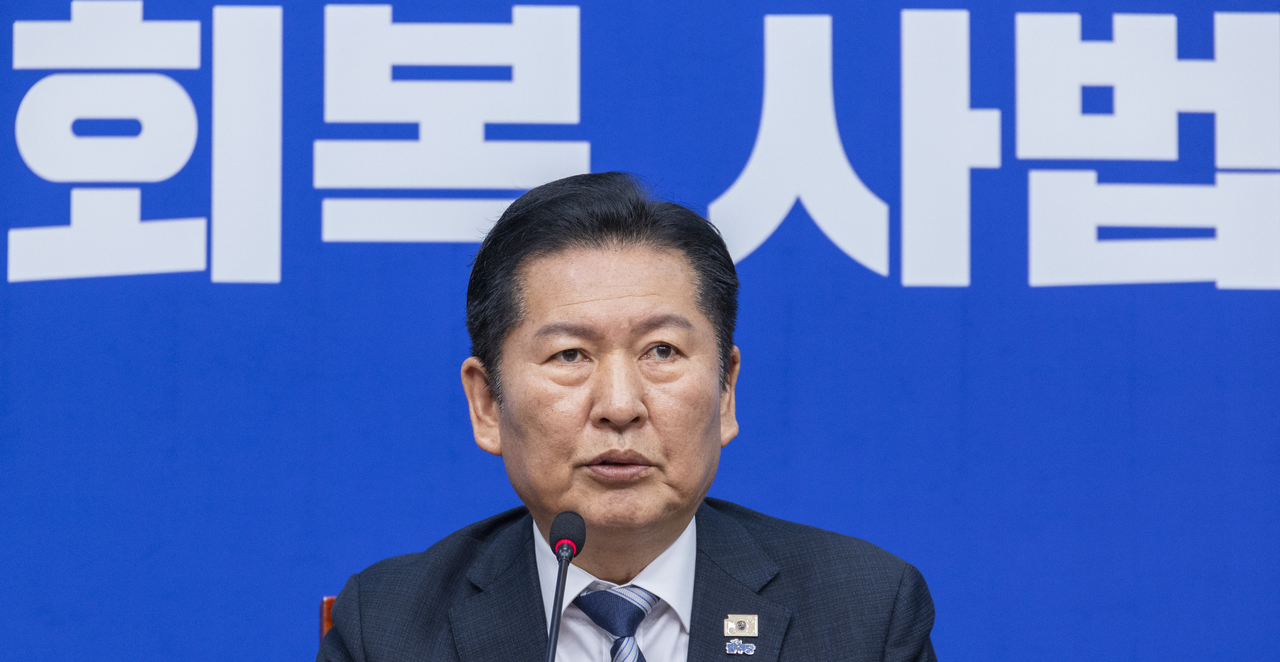
Rep. Jung Chung-rae, chair of the ruling Denmocratic Party of Korea, unveiled the revised compromise bill on Tuesday after coordination among the ruling party, the government and Cheong Wa Dae.
The announcement came after rifts within the Democratic Party, with hard-liners calling for further limits on the authority of prosecutors in the proposed prosecution agency following the government’s January legislative notice of the bill.
At its core, the bill seeks to dismantle the prosecution service’s long-held concentration of investigative and prosecutorial powers by dividing those functions between two separate bodies: an investigative agency and a prosecution agency.
The ruling party plans to put the revised bill to a vote at Thursday’s National Assembly plenary session.
Jung said the agreement was grounded in "the overarching principle of separating investigation and prosecution. "
"We removed various clauses that could have allowed prosecutors in the proposed prosecution agency to command or intervene in investigations," Jung said in explaining the core of the revised bill. "In effect, we cut off any possible route for such intervention."
The revised proposal further removes provisions allowing prosecutors to direct or supervise special judicial police officers — administrative investigators in specialized fields such as forestry, environment, food safety, taxation, railways and customs.
The amendment also clarifies that prosecutors would be treated like other administrative civil servants in matters such as appointments, discipline and reassignment under the State Public Officials Act.
However, the revised bill adopts the government’s proposal to retain the title of prosecutor general as the head of the new prosecution agency.
Lee weighs in, party falls in line
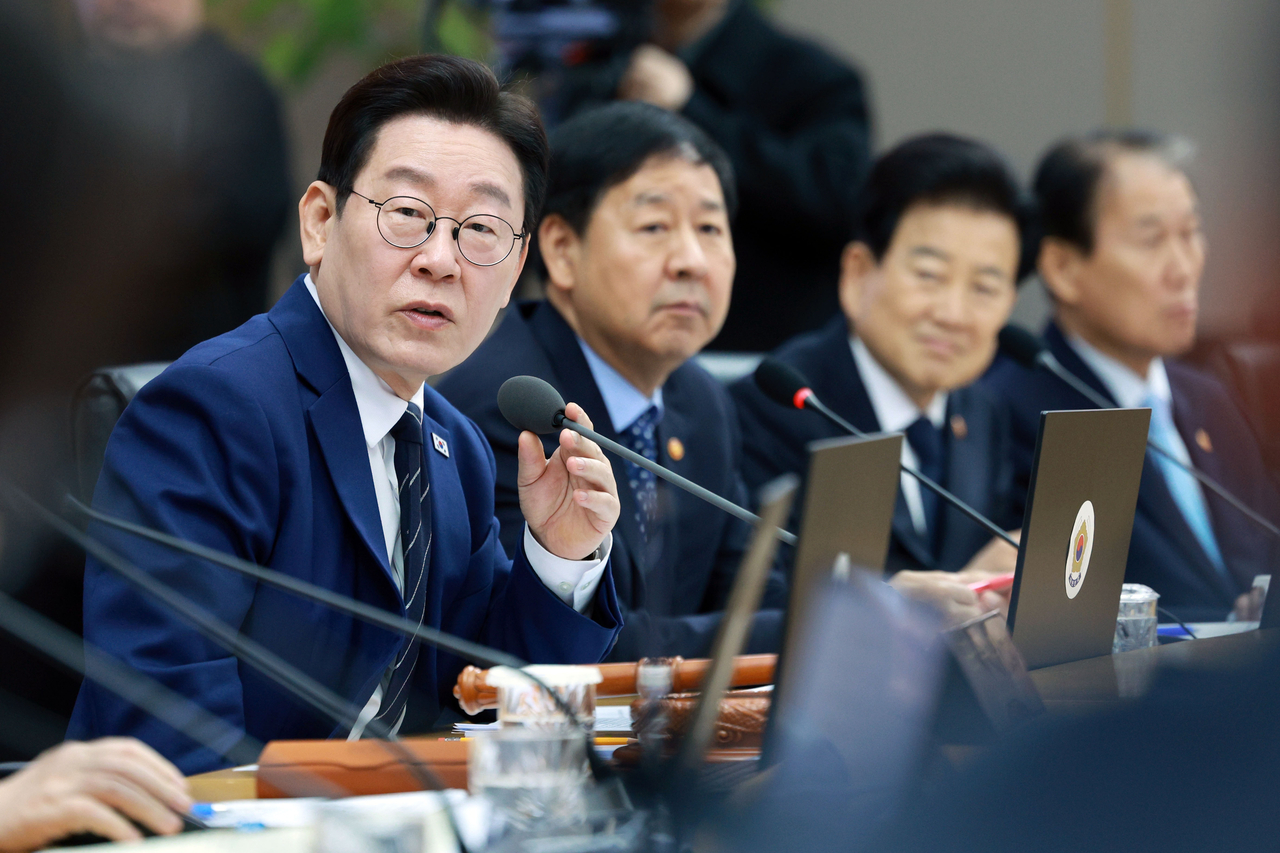
The internal debate was effectively brought to a close after President Lee Jae Myung stepped in Monday with a lengthy, sharply worded message on X, rebutting the list of demands raised by hard-liners within the ruling party one by one.
Hard-line advocates of prosecutorial reform opposed the original proposal. Hard-liners continued to press for tougher measures, including changing the title of prosecutor general and ensuring that current prosecution service officials are not automatically transferred to the new prosecution agency.
In the post, Lee stressed that "the core of prosecutorial reform is separating investigation and prosecution and removing prosecutors’ investigative authority," adding that "what matters in reform is delivering tangible results."
Ahead of Jung’s press conference, Lee wrote again on X on Tuesday that "unnecessary excess that creates obstacles to reform should not be allowed for any reason."
Lee reiterated that "separating investigation and prosecution and excluding prosecutors from investigations are clear state policy goals that we will firmly pursue."
"The party-government proposal produced through consultations can be revised even 10 times through further discussions, as long as it remains within the scope necessary to exclude prosecutors from investigations," Lee clarified in his X post.
Lee further disclosed that "I have directed the government to delete clauses in the party-government proposal that allow prosecutors to command special judicial police officers or leave room for prosecutors to intervene while investigations are underway."
Supplementary investigation powers remain
Jung’s press conference was also attended by hard-liners on prosecutorial reform within the Democratic Party, including Rep. Choo Mi-ae, chair of the National Assembly’s Legislation and Judiciary Committee, and Rep. Kim Yong-min.
Kim stressed that "this revised bill is not the end of reform but the beginning." Kim added that "only a comprehensive revision of the Criminal Procedure Act will allow us to finally bring the reform to completion."
In addition to the passage of the bill to establish an investigative agency and a prosecution agency, revisions to the Criminal Procedure Act — which lays out how investigative authorities are to conduct criminal investigations when offenses occur — are essential to pushing forward prosecutorial reform.
Debate over revisions to the Criminal Procedure Act is expected to address one of the most contentious issues in the broader prosecution reform drive: whether prosecutors in the new prosecution agency should retain supplementary investigation authority.
Supplementary investigation authority refers to the power of prosecutors to request additional investigative work after police have transferred a case, or when they determine that key facts remain unclear.
The party and the government agreed to review the issue of supplementary investigation authority during discussions on revisions to the Criminal Procedure Act.
Consultations are currently underway through public hearings and other forums to gather opinions from legal experts, government agencies and other stakeholders.
During a Cabinet meeting, Lee also stressed that reforms as complex and socially divisive as prosecutorial reform must not be rushed.
"I said we should deliberate and make decisions through discussion," Lee said during the meeting on Tuesday in Sejong. "But if, instead, we suppress or restrict the process simply because we’re pressed for time, it will all come back to cause problems later."
dagyumji@heraldcorp.com