

As K-pop’s global reach expands, companies are betting on K-pop-themed games — but few have found sustained success
As K-pop continues its rapid global expansion, entertainment companies have increasingly tried to extend the genre's influence into gaming. Yet despite repeated attempts, few K-pop-based titles have managed to translate the industry's massive fandom into sustained success in the gaming market.
The disconnect is notable given that South Korea's gaming sector plays a massive role in the global growth of K-content exports.
According to a report released by the Ministry of Culture, Sports and Tourism in January, the gaming sector exported $8.5 billion, accounting for 60.4 percent of total K-content exports in 2024. The music industry followed with $1.8 billion, while the broadcasting and film sector recorded $1.25 billion.
Given those numbers, combining two of Korea's most globally competitive industries — gaming and K-pop — would appear a natural formula for global synergy. In practice, however, the results have been mixed at best.

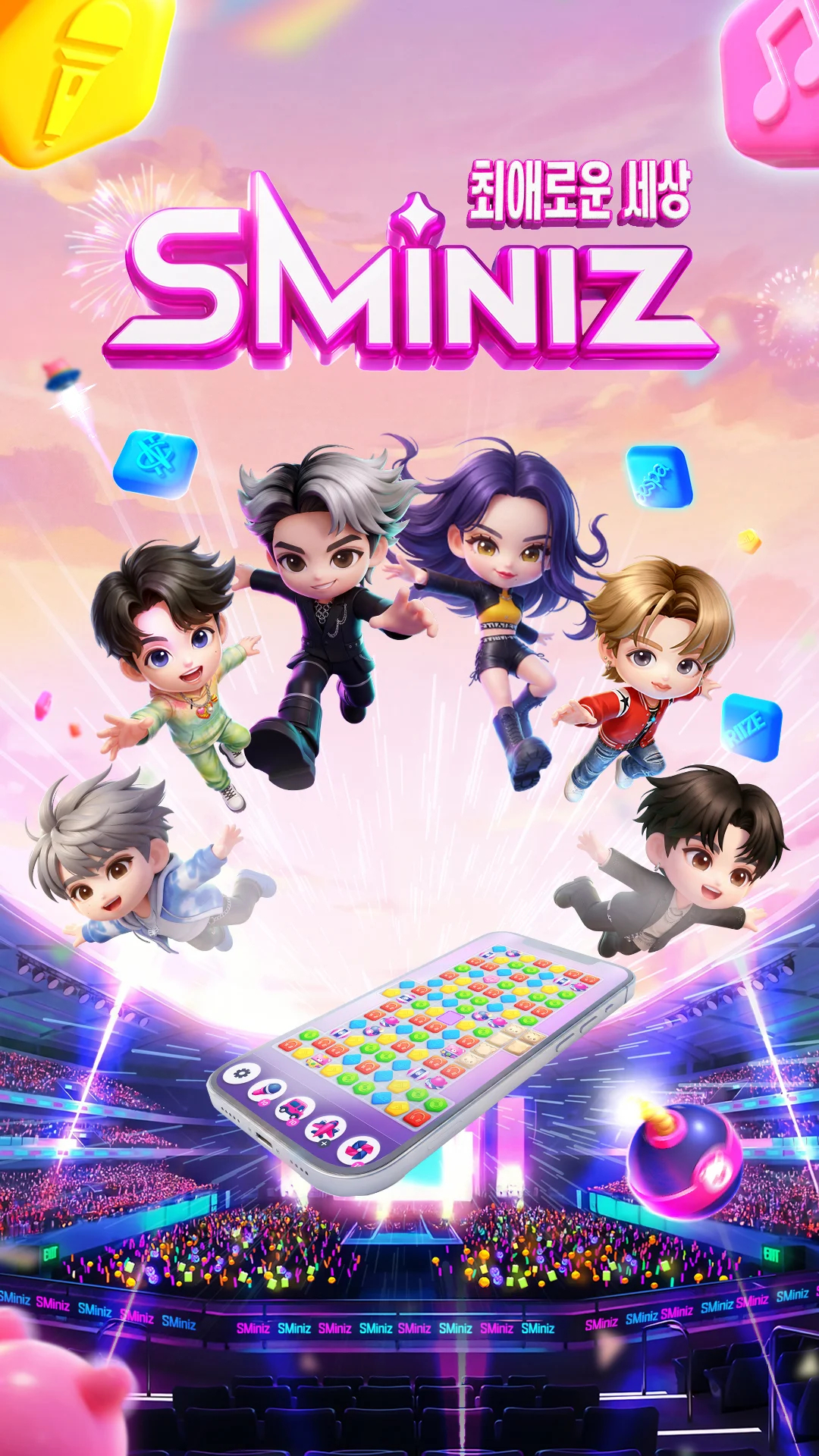
A recent example is SMiniz, an ambitious collaboration between Kakao Games and SM Entertainment that launched globally on Feb. 25.
The mobile title features miniature characters known as Miniz, modeled after SM artists. Players solve match-3 puzzles, a genre in which users swap or connect three or more identical tiles on a grid to clear the board, alongside their favorite SM artist.
The game supports five languages: Korean, English, Japanese, Traditional Chinese and Simplified Chinese.
Despite the scale of its rollout, the title has struggled to gain traction. As of March 9, the latest data available from market tracker Upup placed the game at No. 151 on the Google Play Store global rankings, roughly two weeks after its launch.
The performance mirrors that of several earlier K-pop-themed game projects.
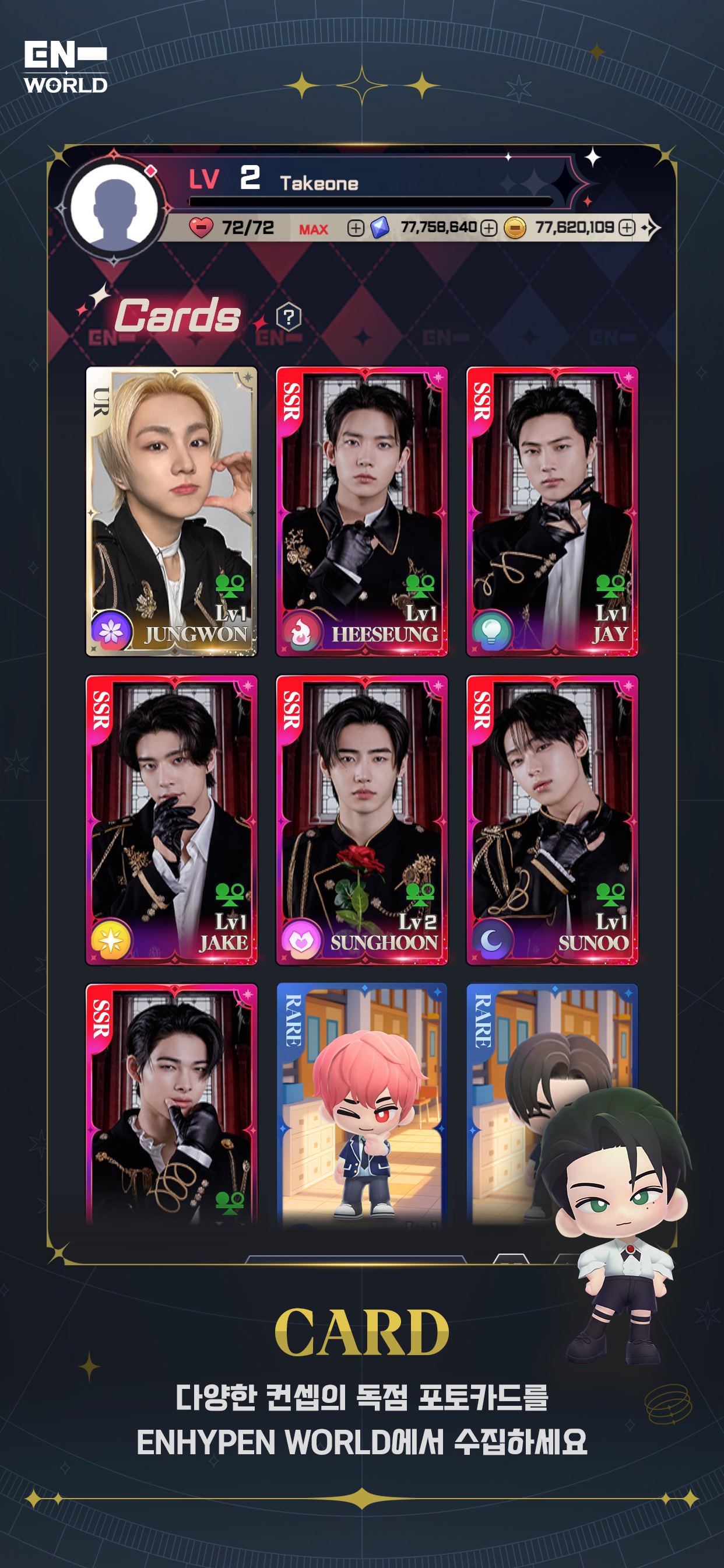
One example is Enhypen World: Eternal Moment, which launched globally in October. The game centers on simple puzzle gameplay that allows players to progress through story content while interacting with the group's virtual environment.
Additional features include a member room and lobby where players can view character reactions from Enhypen members and Vampire Town, an SNG system that allows users to decorate and expand a town alongside characters known as Bamkiz. SNG, short for social network game, refers to a genre designed to incorporate social networking elements such as interacting with friends.
However, the game ranked No. 371 on Apple's App Store charts as of March 9, according to Upup.
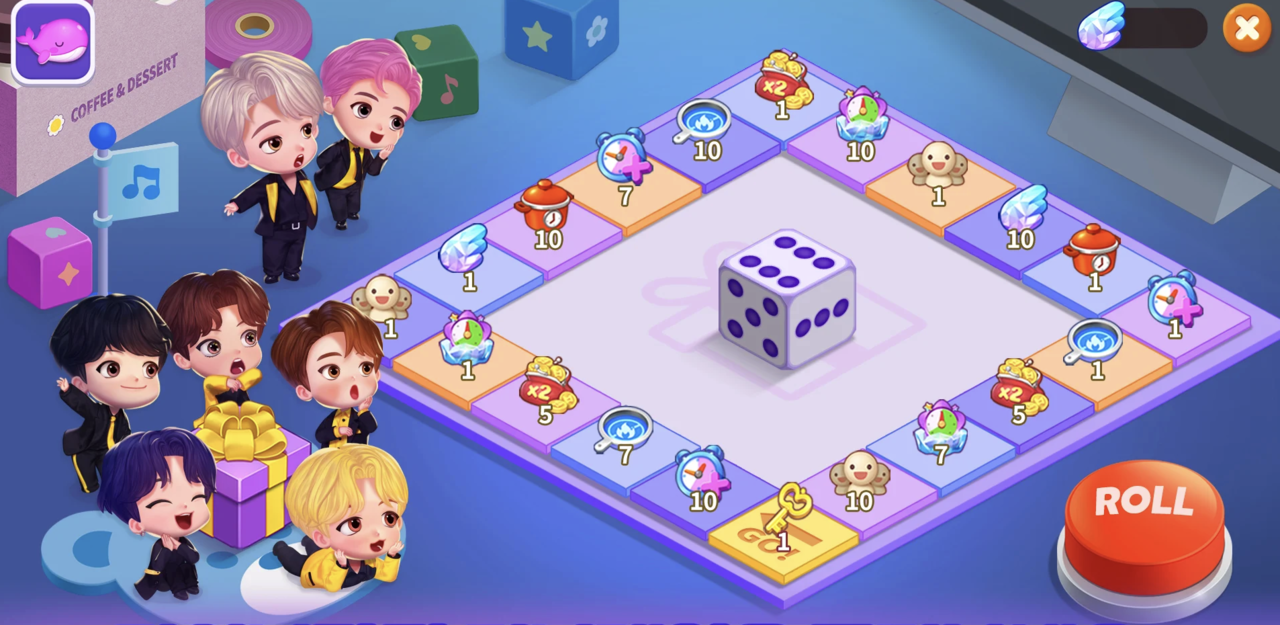
One of the most high-profile attempts to merge K-pop and gaming came last May when Smilegate released BTS Cooking On Stove: TinyTan.
The mobile tycoon game, launched in May, features TinyTan, animated versions of BTS members, as players cook dishes from around the world and manage restaurants. The title also includes collectible elements such as TinyTan photocards and customizable stages where users can listen to BTS music. However, the game is currently absent from the Korean App Store rankings.
Fans themselves suggest the challenge may lie in the sheer volume of K-pop content already competing for their attention.
“Every day there's something new to keep up with, whether it's Weverse updates, social media posts or self-produced content,” said Jung Yoon-ah, a fan of BTS in her 20s living in Seoul. “I don't know if I would have the time to squeeze a game into that. It sounds like a lot of work.”
Another fan, Kim, a Seoul-based TWS supporter in her 20s, said gaming simply does not fit her usual consumption habits.
“I'm personally not interested in games,” she said. “I've never really played games in my life, and I don't think I would start just because of a K-pop group when there are already photos, videos and social media content to enjoy.”
Industry observers say the issue also stems from the design of many K-pop games themselves.
According to Lee Jae-hong, the head of the Korea Game Policy Association, K-pop game titles largely rely on relatively simple gameplay mechanics and limited storytelling, presenting a challenge at a time when younger audiences increasingly gravitate toward narrative-driven entertainment across streaming platforms and interactive media.
“To play a game, there ultimately needs to be a clear narrative arc, a beginning, development, climax and conclusion,” Lee said.
Instead, Lee argues, many K-pop games have fallen into repetitive formulas.
“Most K-pop games simply follow the same rhythm game template,” he said, adding, “If they keep repeating the same style, there's no differentiation. Eventually, audiences start to find it stale.”
yoonseo.3348@heraldcorp.com