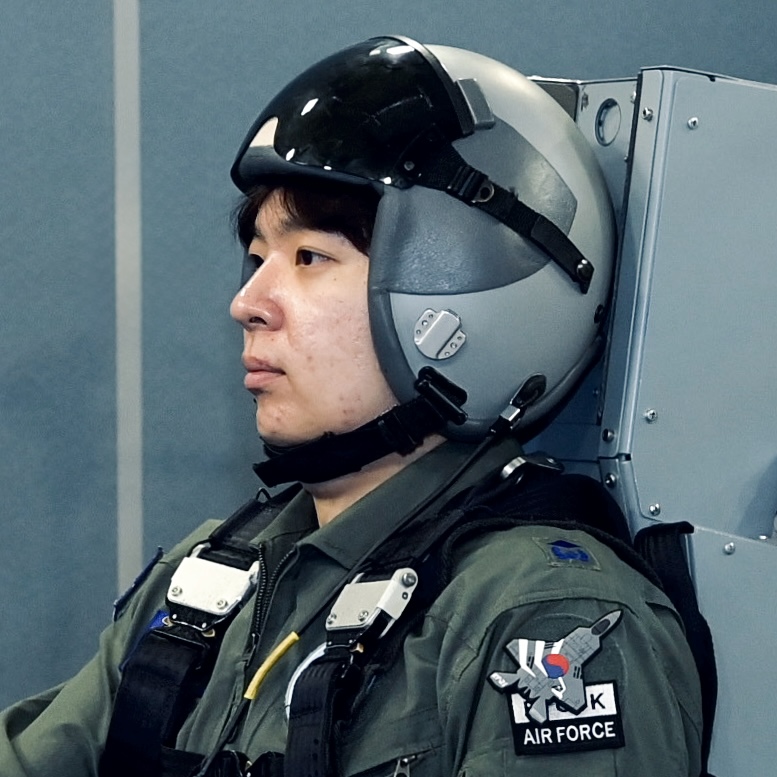
Last month's crash of a fighter jet was the result of a rare midair collision caused by human error, the Air Force said Wednesday.
The collision, involving two F-16C aircraft, occurred during a night training exercise on Feb. 25 caused by a pilot’s misjudgment while wearing night vision goggles, according to the Air Force. One of the aircraft later crashed in a mountainous area in Yeongju, North Gyeongsang Province.
According to the Air Force, the accident occurred when the external fuel tank mounted on the left side of the lead aircraft struck the right wing of the second jet during the training mission.
The two pilots had taken off from Chungju Air Base in North Chungcheong Province at 6:58 p.m. that day to conduct a high-difficulty tactical exercise using night vision goggles.
Shortly before the accident, the pilots were performing a battle damage check — the final step of the training in which pilots visually inspect another aircraft’s exterior for damage and fuel leaks, as well as the condition of external fuel tanks and weapons.
As the aircraft approached the boundary of the designated training airspace during the inspection, the pilots turned to avoid leaving the mission area. In the process, the lead aircraft’s left external fuel tank collided with the right wing of the second jet.
The impact caused the second aircraft’s head-up display to shut down and disrupted its flight control systems, making it difficult for the pilot to maintain control as the jet continued to lose altitude.
Because the mission area was mountainous and the risk of ground collision was high, the pilot ejected after confirming there were no residential areas near the expected crash site.
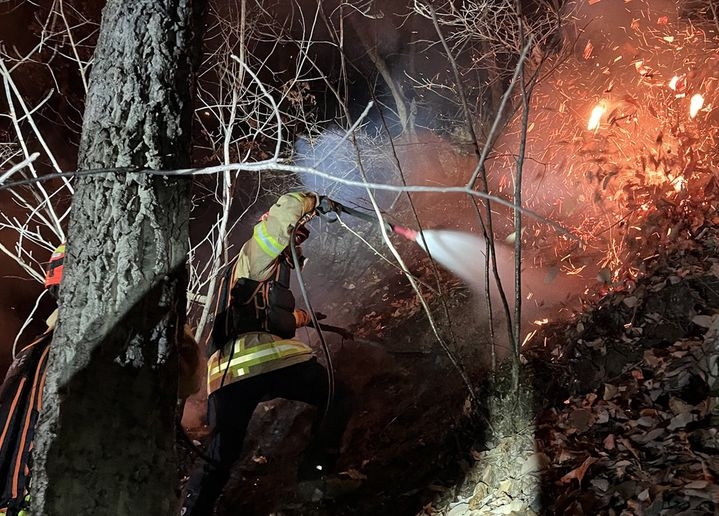
No civilian damage was reported, though the crash sparked a small forest fire that was quickly extinguished.
The pilot of the lead aircraft, meanwhile, determined that the jet remained controllable despite minor damage and reported the emergency and crash location to air traffic control before returning safely to Chungju Air Base.
Investigators concluded the lead pilot, while wearing night vision goggles, misjudged the distance and closure rate to the other aircraft, leading to the midair contact.
While night vision goggles are essential for nighttime operations, they narrow a pilot’s field of view and reduce depth perception, requiring greater caution in maintaining formation, the Air Force said.
“The Air Force deeply regrets causing concern to the public due to this accident,” the service said.
flylikekite@heraldcorp.com