
The legislative process needed for South Korea's $350 billion US investment plan regained momentum Wednesday, with rival parties agreeing to move ahead and leave behind the drawn-out gridlock.
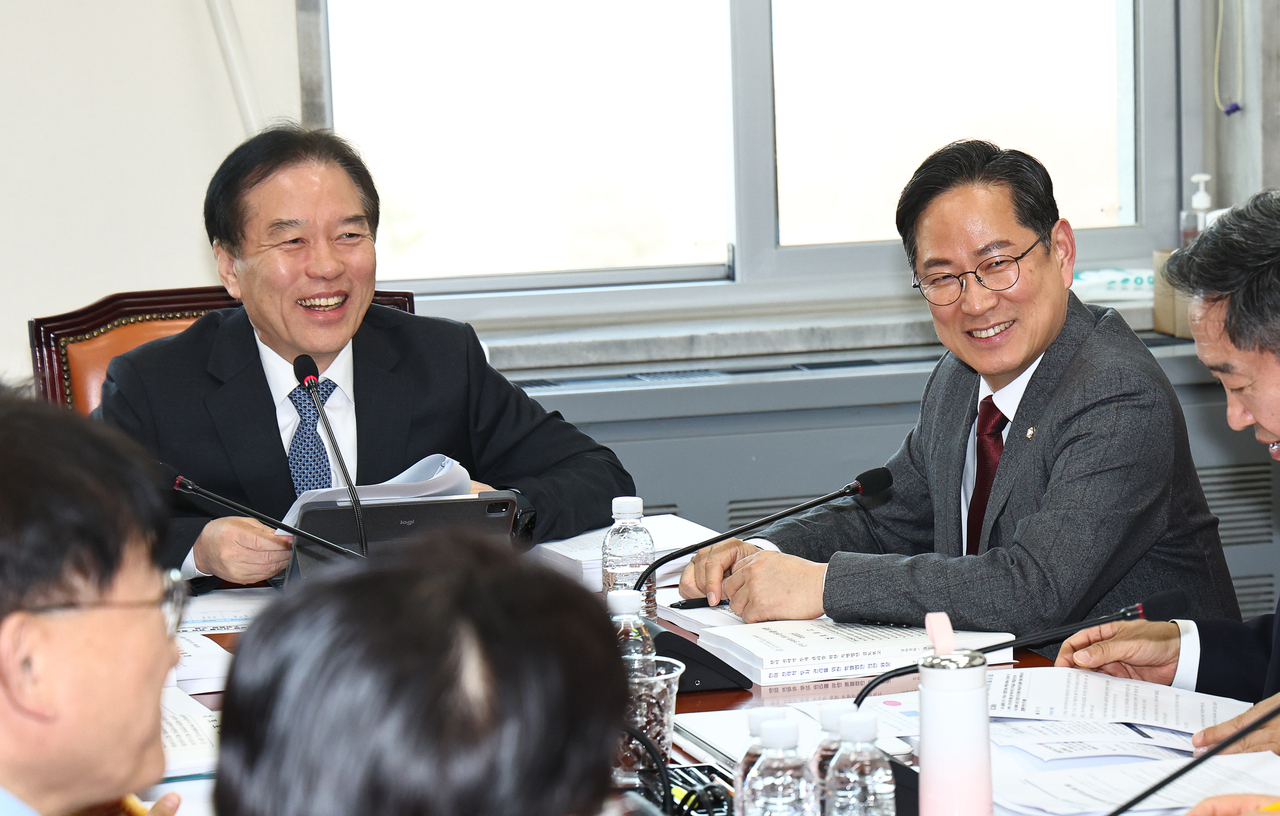
A special parliamentary committee dedicated to passing the bill resumed operation Wednesday, tabling all nine related bills and conducting subcommittee-level reviews.
The bills differ in detail, but each is designed to establish a new state-run body dedicated to US investments, outline the plan to use the state budget to invest in US projects and grant the parliament the authority to oversee and approve the investment projects, according to the National Assembly.
Wednesday's session came later than scheduled, with the ruling Democratic Party of Korea and the main opposition People Power Party initially agreeing to hold the meeting on Feb. 24. However, the move was stalled, with the main opposition party boycotting all parliamentary sessions amid the ruling party-led judicial reform push.
On Wednesday, the main opposition People Power Party said it would cooperate with the US investment bill legislation to minimize the impact on South Korea from external uncertainties.
The rival parties will work together to have the bill approved by the special committee on Monday and pass the plenary session of the National Assembly later next week, tentatively on March 12, as suggested by the Democratic Party on Monday, according to Rep. Yoo Sang-bum of the People Power Party on Wednesday.
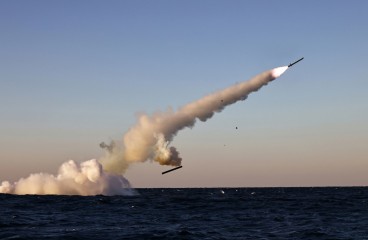
"The international situation is fluid due to the current war between the US and Iran, and there is the chance of trade retaliation if the passage of the US investment bill is delayed beyond the time frame that was agreed upon and promised," Yoo told reporters.
"From a broader perspective, we have confirmed that it is necessary to remove uncertainties, especially regarding our tariff agreement with the US."
Washington's tariff threats and trade uncertainties loom larger after US President Donald Trump issued a new sweeping tariff on its trading partners under Section 122 of the Trade Act of 1974. The new tariff replaces Trump's "reciprocal" tariffs based on the 1977 International Emergency Economic Powers Act, which the US Supreme Court struck down in February.
Additionally, the US court ruling ignited Washington's push to launch Section 301 investigations into its trading partners, stoking Seoul's fears that South Korea could be targeted due to existing digital regulations and controversies over Seoul's handling of consumer data leakage by e-commerce firm Coupang, which is domiciled in the US.
Democratic Party Rep. Kim Young-bae told reporters Wednesday that the deadline for the US to determine whether to initiate its Section 301 investigations into South Korea was set Sunday, after lawmakers of the Korea-US Parliamentarians' Alliance met Trade Minister Yeo Han-koo to discuss the situation regarding the Seoul-Washington relationship on Wednesday.
During the meeting, Yeo stressed the National Assembly's role in "having the US investment bill passed in a timely manner." That was in line with a joint statement on Monday by six South Korean business advocacy groups, which stated, "The longer the passage of the (US investment bill) is delayed, the weaker (South Korea's) negotiating power in dealing with the US will be."
Meanwhile, six members of the Korea-US Parliamentarians' Alliance, led by six-term conservative Rep. Cho Kyoung-tae, will travel to Washington on March 23 to hold talks with members of the US Congress.
consnow@heraldcorp.com