
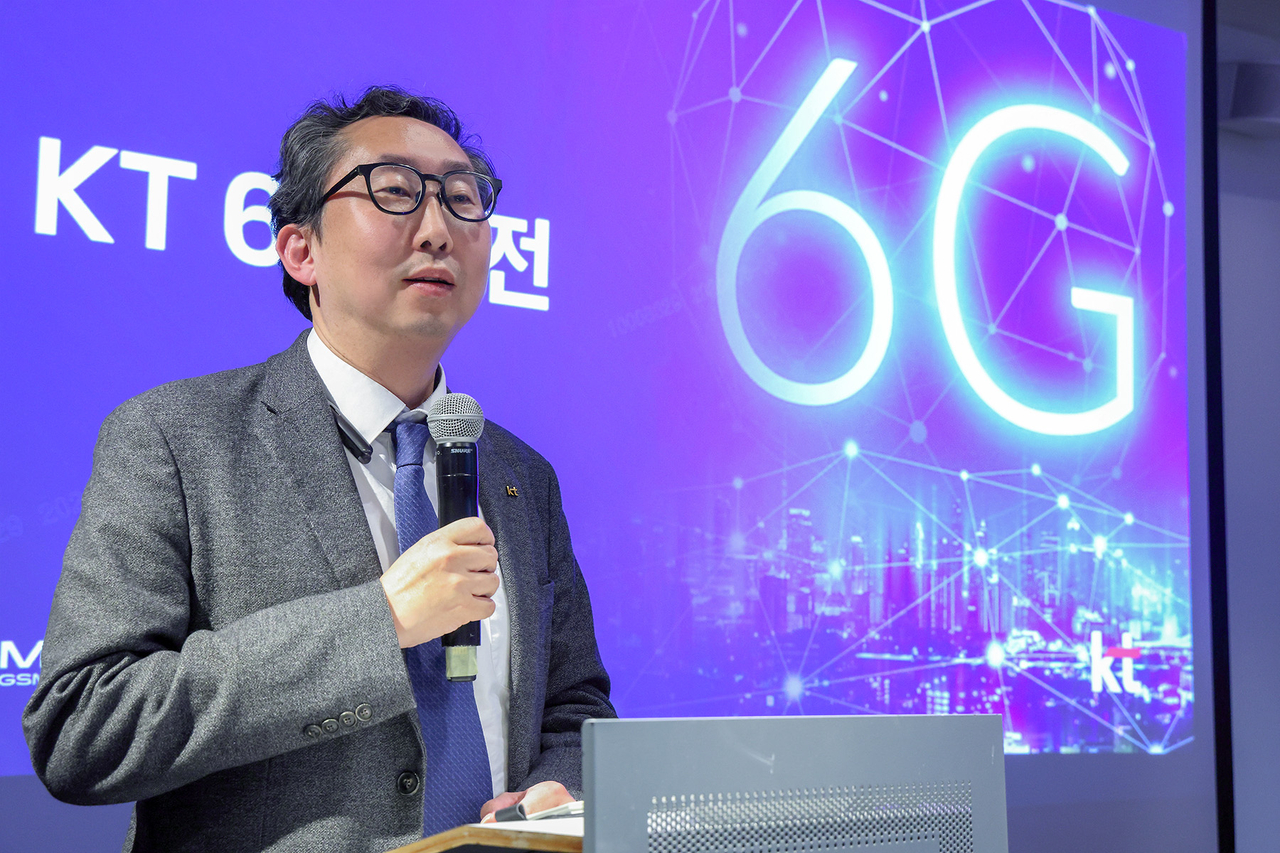
KT used Mobile World Congress in Barcelona this week to make one point clear: It sees 6G less as a speed upgrade and more as a strategic reset built around AI and satellite-linked coverage.
At a press briefing on Tuesday, the Korean telecom operator said it plans to design 6G as an “intelligent infrastructure” for the artificial intelligence era, focusing on network reliability, automation and wider geographic reach rather than headline download speeds.
“6G goes beyond a new radio specification and represents our broader future network strategy,” said Lee Jong-sik, head of KT’s Future Network Lab. “5G was a meaningful advancement, but we internally reflected on whether it truly was a game changer. With 6G, we aim to deliver changes that customers can actually experience.”
KT emphasized integrated coverage. The company said it will combine traditional ground-based mobile networks with satellite links through affiliate KT SAT to extend connectivity to remote areas and support communications during disasters.
At its MWC booth, KT demonstrated a “supercell” configuration deployed at 51 major sites nationwide. The setup is designed to secure coverage across about 90 percent of South Korea’s land area in emergency scenarios.
KT also highlighted efforts to make networks more automated. The company said it is developing AI-based systems to help manage traffic and respond to faults, with the aim of improving service quality while controlling operating costs as data demand rises.
Another area of focus is traffic efficiency. In a demonstration using a 5G router and CCTV footage, KT said it reduced uplink bandwidth use by more than 50 percent by transmitting only key object data rather than full video streams.
On timing, Lee said detailed 6G standards are expected around March 2029 under the 3rd Generation Partnership Project, the global body that sets cellular specifications. The International Telecommunication Union adopted the broader IMT-2030 framework for 6G in 2023. Even if standards are finalized in 2029, Lee said broad commercialization would more realistically take place between late 2030 and 2032, depending on equipment and ecosystem readiness.
KT also pointed to its experience operating a standalone 5G core network as groundwork for the transition to 6G. “As the only Korean operator with standalone 5G capabilities, we believe our independent 5G architecture experience gives us a stronger starting point for 6G,” Lee said.
mjh@heraldcorp.com


