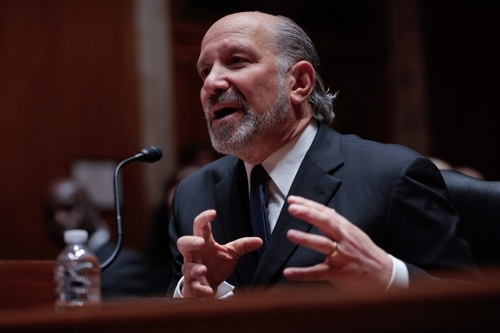
US Commerce Secretary Howard Lutnick reportedly warned Friday that major memory chipmakers that are not investing in the US could face tariffs of up to 100 percent.
하워드 러트닉 미 상무장관은 금요일 미국에 투자하지 않은 메모리 반도체 대기업들에게 최대 100퍼센트의 관세를 부과할 수 있다고 경고했다고 한다.
A day earlier, Taiwan concluded negotiations with the United States over semiconductor tariffs. As a result, the potential tariff he mentioned would apparently target South Korea’s two chipmakers, Samsung Electronics and SK hynix.
전일 대만은 미국과 반도체 관세 협상을 마무리했다. 따라서 장관이 거론한 관세는 한국의 반도체 기업인 삼성전자와 SK하이닉스를 겨냥한 것으로 보인다.
South Korea finalized a trade deal last year to reduce US tariffs in return for large investments in strategic US sectors, while Taiwan's trade negotiations were in progress.
한국은 지난해 미국의 전략 분야에 대규모 투자를 약속하고 그 대가로 관세를 인하하는 무역 협상을 체결했다. 반면 미국과 대만의 협상은 진행중이었다.
In the deal, Seoul and Washington have left US tariffs on Korean semiconductors as an issue for future negotiations. Instead, the US said semiconductor tariffs on South Korea would be "no less favorable than terms that may be offered in a future agreement covering a volume of semiconductor trade at least as large as South Korea's." That language appeared to point to South Korea's key competitor, Taiwan.
협정에서 한미 양국은 한국산 반도체에 부과하는 미국의 관세는 추가 협상의 대상으로 남겨두었다. 미국은 대신 한국에 부과하는 반도체 분야 관세가 "한국보다 반도체 교역 규모가 비슷한 국가들과의 추후 협정에서 제시된 것보다 불리하지 않은" 수준이 될 것이라고 말했다. 이는 한국의 주요 경쟁국인 대만을 가리키 것으로 보였다.
In the US-Taiwan agreement on chip tariffs, Taiwanese firms committed to at least $250 billion in new direct investments to expand production in the US. Taiwan will provide at least $250 billion in credit guarantees to support its enterprises.
미국-대만의 반도체 관세 협정에 따라 대만 기업들은 미국 내 생산시설을 늘리는데 최소 2천5백억 달러를 직접투자할 것을 약속했다. 대만 정부는 기업들을 지원하기 위해 최소 2천5백억 달러 규모의 신용보증을 제공할 것이다.
In return, Taiwanese companies building new US facilities can import up to 2.5 times their planned production capacity duty-free during construction. Once projects are completed, firms can continue to import up to 1.5 times their new US capacity without paying Section 232 duties. The US effectively granted Taiwan tariff-free quotas on the condition that it increase investments in the US.
반대 급부로 미국에 새 반도체 생산시설을 구축하는 대만 기업들은 구축 기간 동안 생산능력 대비 최대 2.5배의 물량을 관세 없이 수입할 수 있다. 시설이 완공되면 기업들은 신규 생산능력의 최대 1.5배의 물량을 지속해서 무역법 232조에 해당하는 품목별 관세 없이 수입할 수 있다. 대만이 미국에 투자를 늘린다는 조건으로 미국이 사실상 비관세 한도를 부여한 것이다.
Under its tariff agreement with the United States, South Korea pledged investments of $350 billion, with $150 billion earmarked for US shipbuilding and $200 billion for strategic projects still to be defined.
미국과의 관세 협정 하에 한국은 3천5백억 달러를 투자하기로 약속했다. 조선 분야에 1천5백억 달러를, 2천억 달러는 아직 미정인 전략산업 분야에 투자하기로 책정했다.
Washington continues to link preferential tariff rates to the construction of new production facilities in the US. It could impose on South Korea conditions comparable to those applied to Taiwan.
미국 정부는 자국내 신규 생산시설 구축과 특혜관세를 연동시키고 있다. 이는 대만에 적용한 것과 유사한 조건을 한국에 부과할 수도 있다.
The investments already committed represent a heavy burden for South Korean companies. Chipmakers must spend significantly to build new factories at the semiconductor cluster under development in Yongin, Gyeonggi Province.
이미 약속한 투자는 한국 기업들에게 무거운 부담이다. 반도체 기업들은 경기도 용인에 조성중인 반도체 클러스터에 신공장을 건설하는데 많은 비용을 들여야 한다.
The $350 billion deal has weighed on the Korean currency, contributing to its depreciation against the US dollar. Financial institutions at home and abroad forecast ongoing volatility in the won-dollar exchange rate this year.
3천5백억 달러짜리 협상은 원화에도 영향을 끼쳐 달러 대비 가치 하락에 일조했다. 국내외 기관들도 올해 원달러 환율이 등락을 계속할 것으로 예상했다.
Cheong Wa Dae said South Korea would consult with Washington to minimize the impact of US semiconductor tariffs on its firms, based on the principle of "no less favorable" terms. The principle -- already agreed upon -- must be upheld.
청와대는 최혜국 대우 원칙에 기반해 한국 기업들이 미국의 반도체 관세로부터 받는 타격을 최소화하기 위해 미국과 협의할 것이라고 말했다. 이미 합의된 이 원칙은 지켜져야만 한다.
Although Samsung Electronics and SK hynix have already committed $37 billion and $3.87 billion, respectively, to US investments, the US is likely to seek further commitments in future negotiations. If they result in South Korea being subjected to less favorable terms than Taiwan, the Korean semiconductor industry could suffer a fatal blow.
이미 삼성전자와 SK하이닉스가 각각 370억 달러, 38억7천달러를 미국에 투자하기로 했으나 미국은 추후 협상에서 더많은 투자를 얻어내려 할 확률이 크다. 만약 그 결과로 한국이 대만보다 불리한 상황에 놓인다면 한국의 반도체 업계는 치명적인 타격을 입을 수 있다.
Investment in the US warrants attention, but expanding the domestic production base is a pressing priority.
대미투자가 주의를 끄는 것은 당연하나 국내 생산 기지를 확충하는 것은 시급한 우선과제다.
Moving South Korean semiconductor production overseas risks industrial hollowing-out and the loss of technological advantage. Preparations must be made to address this.
한국의 반도체 생산을 해외로 이전하는데는 산업공동화 그리고 기술적 우위 상실의 위험이 따른다. 이에 대비한 준비가 있어야만 한다.
South Korea excels in memory chip production, but relies heavily on foreign countries for design, postprocessing and equipment. A rapid development of the related industrial ecosystem is essential.
한국은 메모리칩 생산에서 앞서가고 있지만 디자인, 후공정 그리고 장비에서 해외의존도가 높다. 관련 산업 생태계를 조속히 발전시키는 것이 필수다.
Countries are fiercely competing to localize semiconductor production within their own borders. South Korea needs to ease excessive regulations, such as the rigid 52-hour workweek, and step up investment and research support for its strategic semiconductor industry.
각국은 반도체 생산을 자국내로 내재화하기 위해 치열하게 경쟁하고 있다. 한국은 주 52시간 노동시간과 같은 과도한 규제를 완화하고 투자 및 연구지원을 강화해 전략 산업인 반도체를 지원해야 한다.
The US warning of semiconductor tariffs early this year may signal the start of another tariff war, potentially as intense as that in 2025. With Washington likely to press for negotiations on an ongoing basis, Seoul must be prepared for repeated talks.
올해초 미국이 반도체 관세로 경고를 보낸 것은 2025년 만큼이나 치열한 또다른 관세 전쟁의 시작을 알리는 것일지 모른다. 미국 정부는 계속해서 협상을 요구해올 확률이 높고 한국은 반복되는 협의에 대비해야 한다.
credit guarantee 신용 보증
earmark 배정하다
preferential tariff 특혜 관세
depreciation 평가 절하
volatility 변동성
hollowing-out 공동화
khnews@heraldcorp.com