

Over 4,000 schools closed nationwide as of 2025, with 107 more set to close by 2030
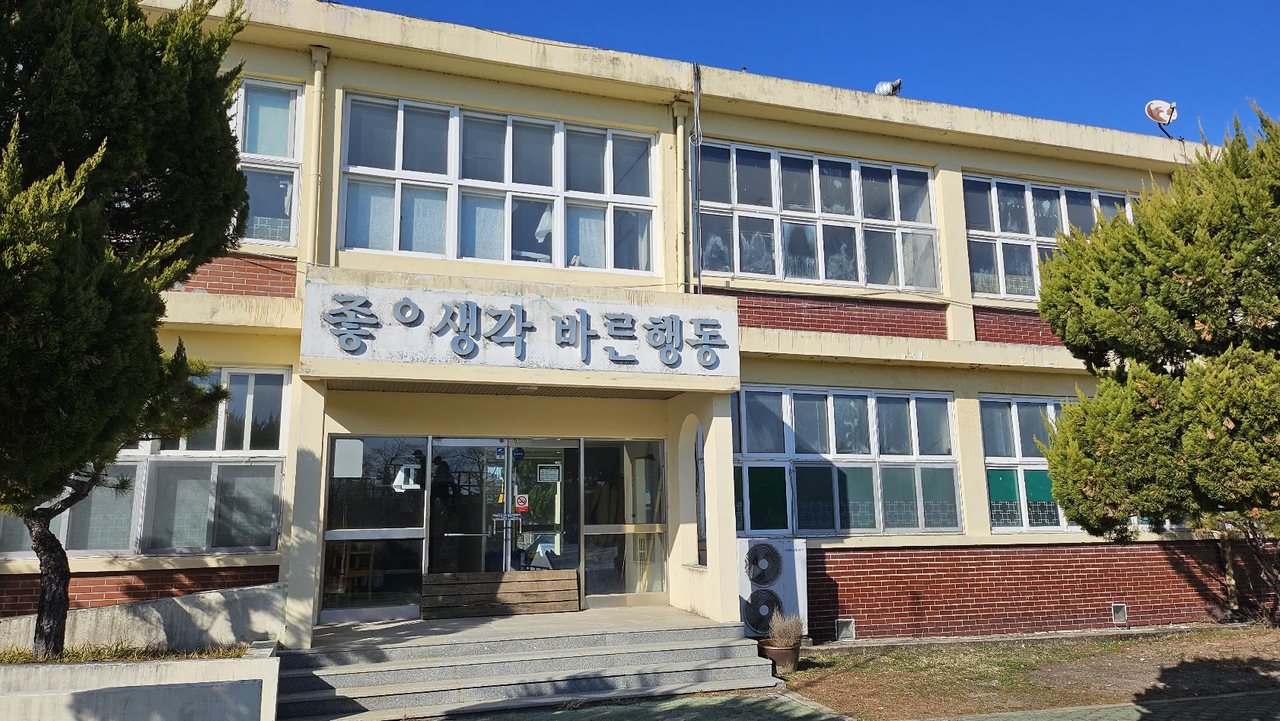
Local governments across South Korea are scrambling to find new uses for shuttered schools amid a declining student population, while a parallel movement is unfolding on social media, where individuals are taking the initiative to renovate and reimagine closed campuses.
According to the Ministry of Education, the cumulative number of shuttered schools surpassed 4,000 in 2025, with South Jeolla Province recording the highest number at 854. In contrast, only seven schools have closed in Seoul since the government began compiling such data in 1970.
Ministry data also showed that more than 91 percent of closed schools were elementary schools, raising concerns that middle and high schools may follow as today’s fewer elementary students advance.
The ministry projects that an additional 107 schools will close by 2030.
Abandoned school buildings often become eyesores in local communities, prompting municipalities to seek new ways to repurpose their facilities.
From book cafes to vacation resorts
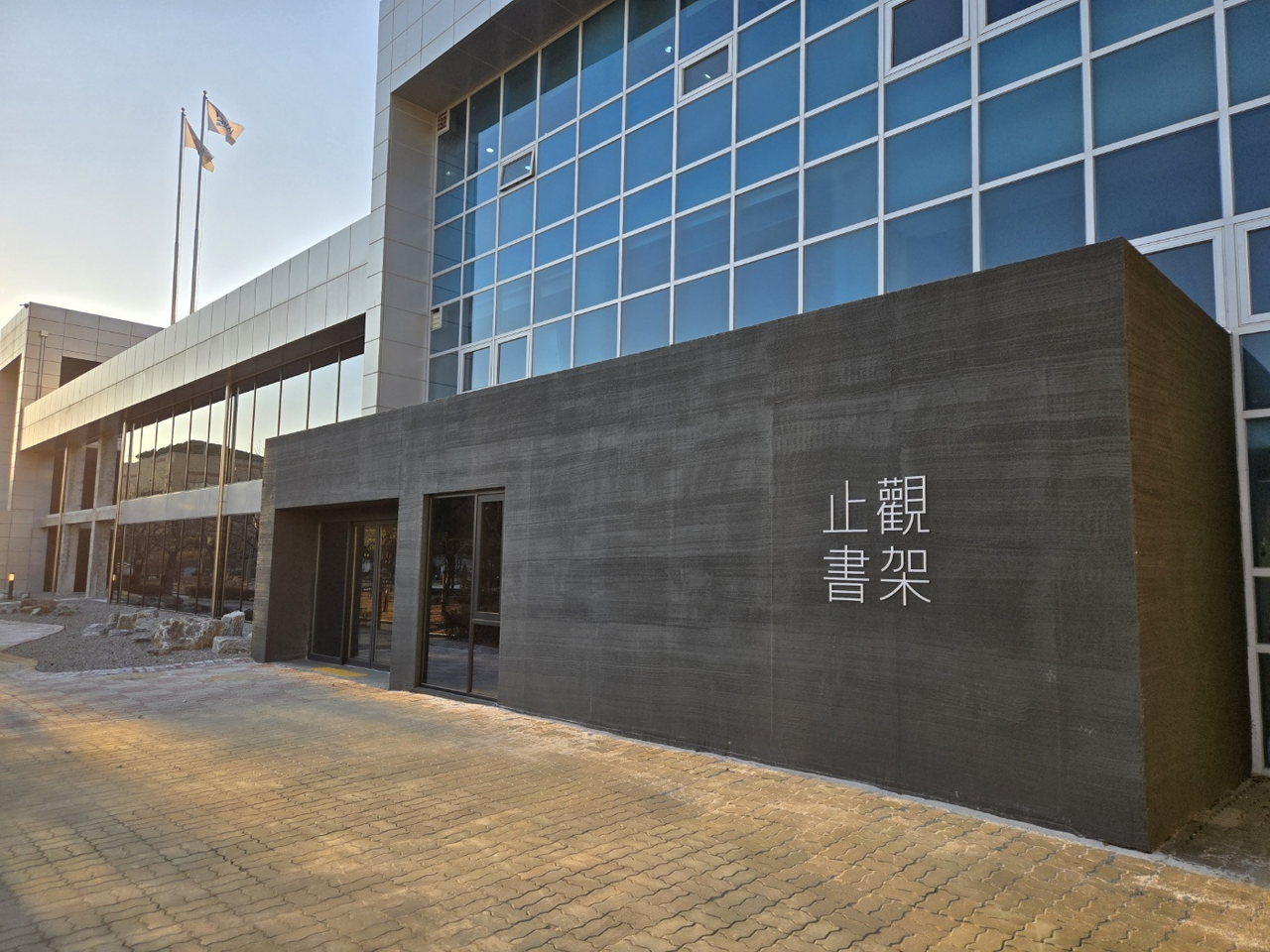
The Jeju Provincial Office of Education announced Monday a comprehensive plan to manage and utilize shuttered school properties. Under it, village councils will be allowed to negotiate contracts with the education office to use former school facilities for projects aimed at local development.
Other local governments have launched similar initiatives, transforming closed schools into spaces for residents and visitors.
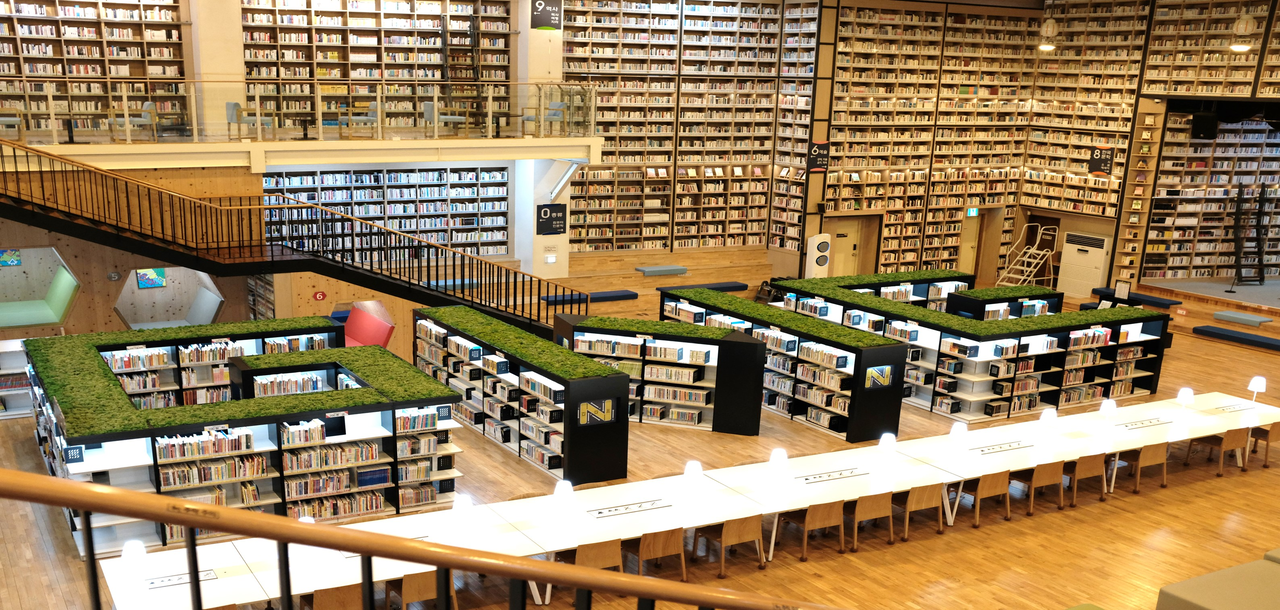
In Suwon, Gyeonggi Province, part of the former Yeonmu Middle School campus — which closed and relocated in 2008 due to declining enrollment — was renovated into a book cafe in 2025 with funding from the South Korean biochemical firm SK Chemical.
Operating under the theme of “happiness,” the cafe curates books selected by Seoul National University’s Center for Happiness Studies. The site also makes use of the campus’ spacious grounds, offering study areas for nearby residents and hosting cultural and educational events.
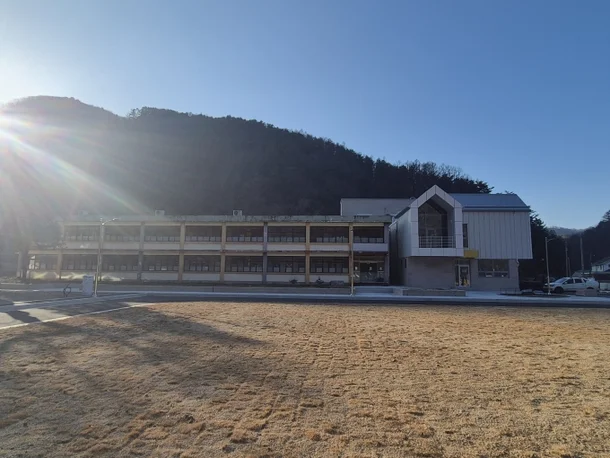
Meanwhile, Samcheok in Gangwon Province said Monday it will invest 6.2 billion won ($4.3 million) to convert the former Nogok branch of Geundeok Elementary School, which closed in 2016, into a family resort and webtoon “workcation” hub.
A workcation combines work and vacation, allowing employees or freelancers to work remotely from nontraditional locations.
The planned resort will include campsites for families and six guesthouse rooms, while the workcation facility will feature 10 creative rooms, a seminar room and a cartoon library.
"We plan to make this (shuttered school) into a space where people can enjoy the comfortable rest of a resort, while experiencing the creative energy of a webtoon center," said a Samcheok city official.
"We are looking to transform this area into a tourist hub, while also increasing its population."
Elsewhere, towns near the Demilitarized Zone in Incheon have converted closed schools into peace-themed museums, while former middle schools in Busan and Changwon, South Gyeongsang Province, have been renovated into public libraries.
As local populations dwindle, local governments are turning to closed schools to foster regional development and draw tourists and new residents.
Shuttered schools gain new life online
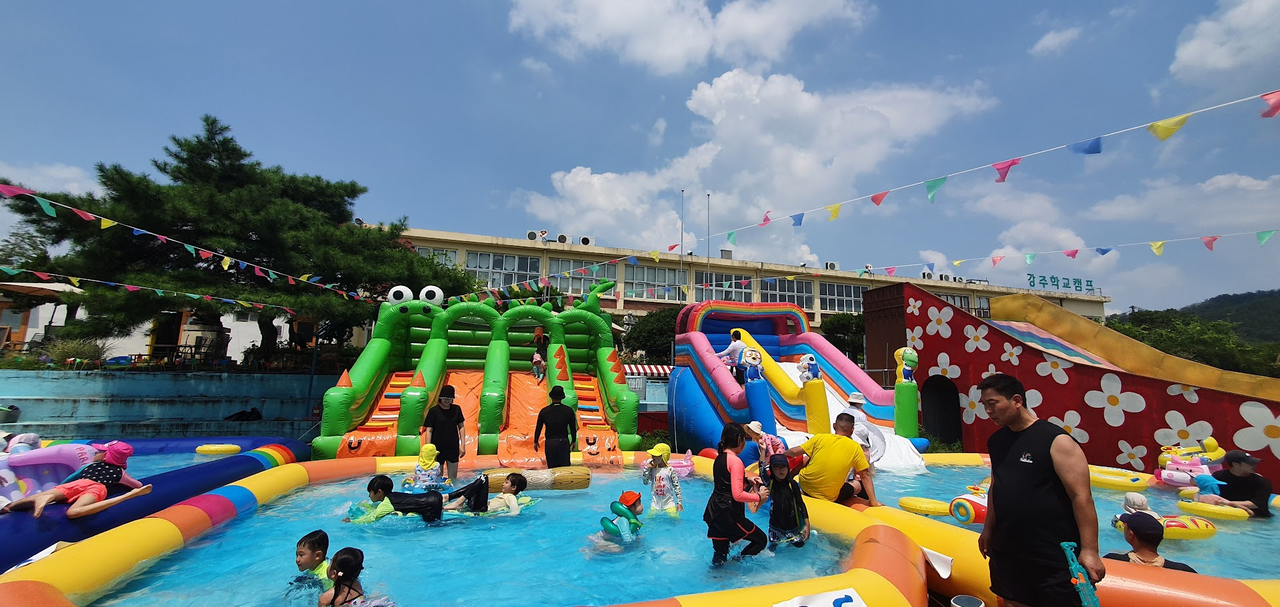
Alongside government-led redevelopment efforts, individuals are also reimagining shuttered schools and documenting the process on social media.
Jeong Joo-won, a 40-year-old father of two, moved from Busan to Haman, South Gyeongsang Province, in February 2025 after renting a closed school campus in 2022. He now lives with his family in one of the former school buildings and operates the Gangjuhakgyo Camp on the rest of the grounds.
“My family has always loved camping,” Jeong said, noting that he and his wife, Park Min-ji, went backpacking even before their children were born.
The family's love for the outdoors led them to purchase the shuttered school to open a campsite for young children.
Jeong said large playgrounds often cater to older children, while campsites deep in nature can feel intimidating for families with young kids. “We thought it would be meaningful to create a campsite designed to cater to children under eight,” he said.
Initially, the couple managed the campsite remotely while living in Busan. They decided to relocate permanently when their eldest son reached school age, drawn by the close-knit atmosphere of a nearby rural elementary school.
Jeong’s home was originally established as Beopsu Primary School in 1927 during Japan’s colonial rule and was later renamed Gwandong Elementary School. It closed in 2012 due to declining enrollment. Today, his eldest son’s second-grade class has just four students, while his younger son’s kindergarten class has three.
Jeong said the move has helped his children become more social and given them space to play freely outdoors.
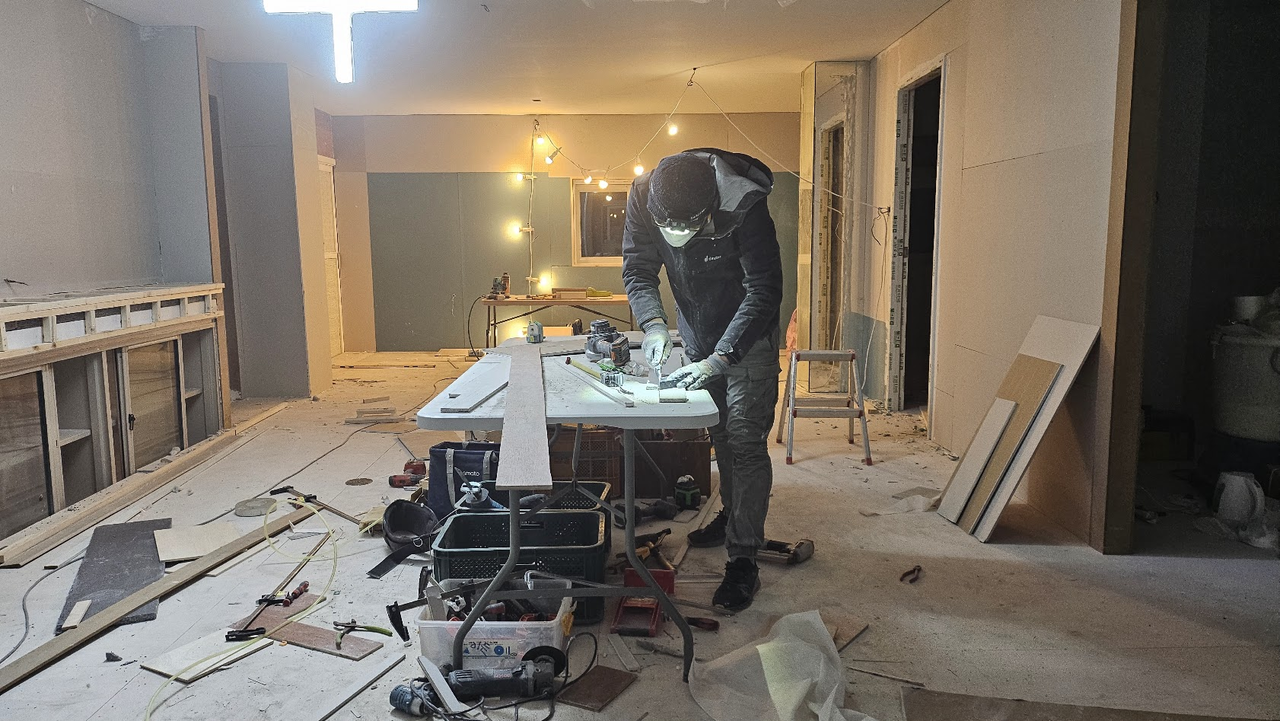
The family shares their renovation and daily life on social media, where a video explaining their decision to move into the former school has drawn more than 930,000 likes on Instagram — reflecting growing public interest in grassroots efforts to repurpose abandoned rural infrastructure.
"Watching my children run around in nature makes me the happiest," said Jeong. "I wanted to share that happiness with other young parents."
Closed campuses as 'an asset to society'
In August 2025, the Ministry of Education held a roundtable meeting with local governments and education offices to discuss ways to utilize shuttered school campuses.
“Closed schools are public assets of local education offices and an important asset for regional communities,” a Ministry of Education official said at the meeting.
“We will make greater efforts to improve coordination between the ministry and local governments so that closed schools can be reborn as central spaces for local communities,” the official added.
The ministry and local governments view closed schools as key infrastructure that can be repurposed to help revitalize regions facing rapid population decline.
During the meeting, the government also pledged to review regulatory barriers that may hinder the renovation and reuse of shuttered school facilities.
seungku99@heraldcorp.com