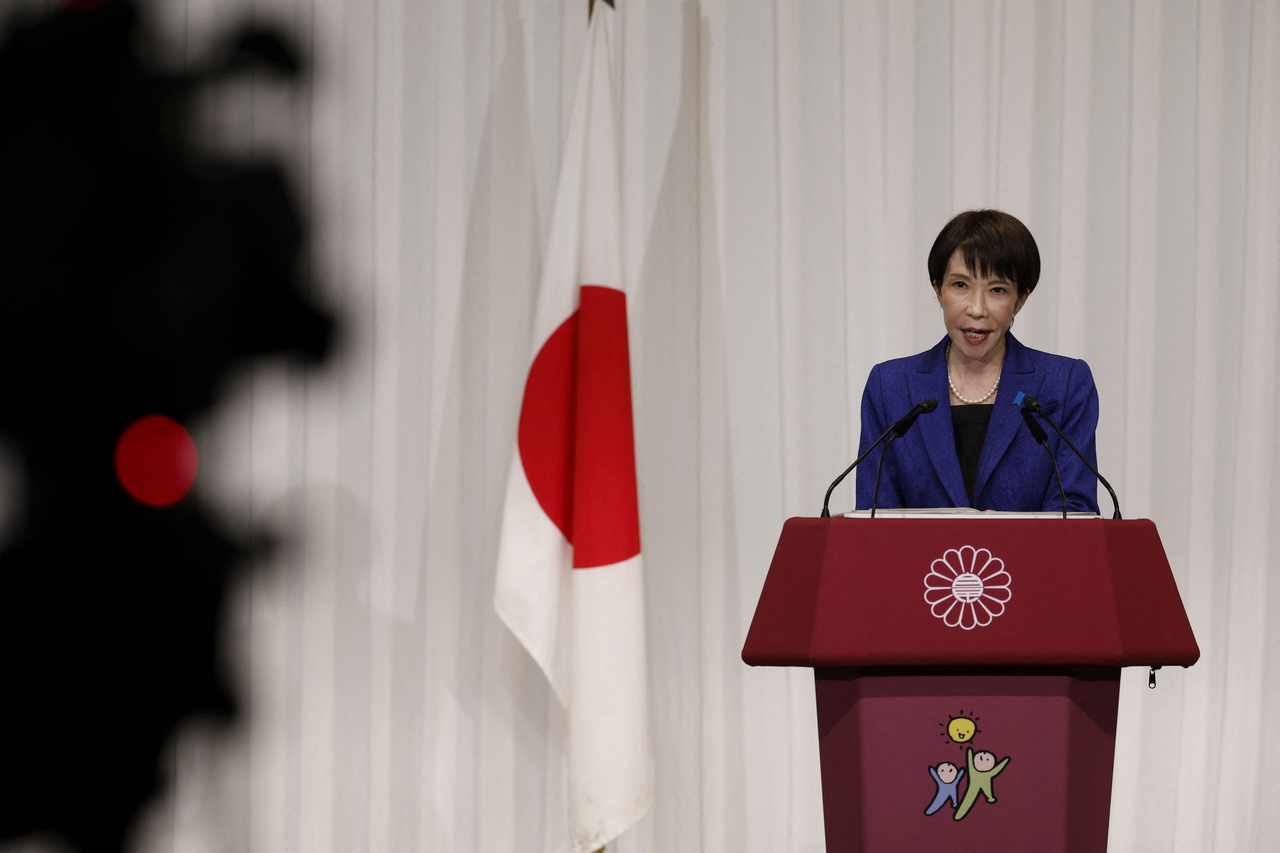
Prime Minister Sanae Takaichi’s two-thirds supermajority gives Tokyo the mandate to move from incremental defense upgrades to structural change — and it confronts Seoul with a new question.
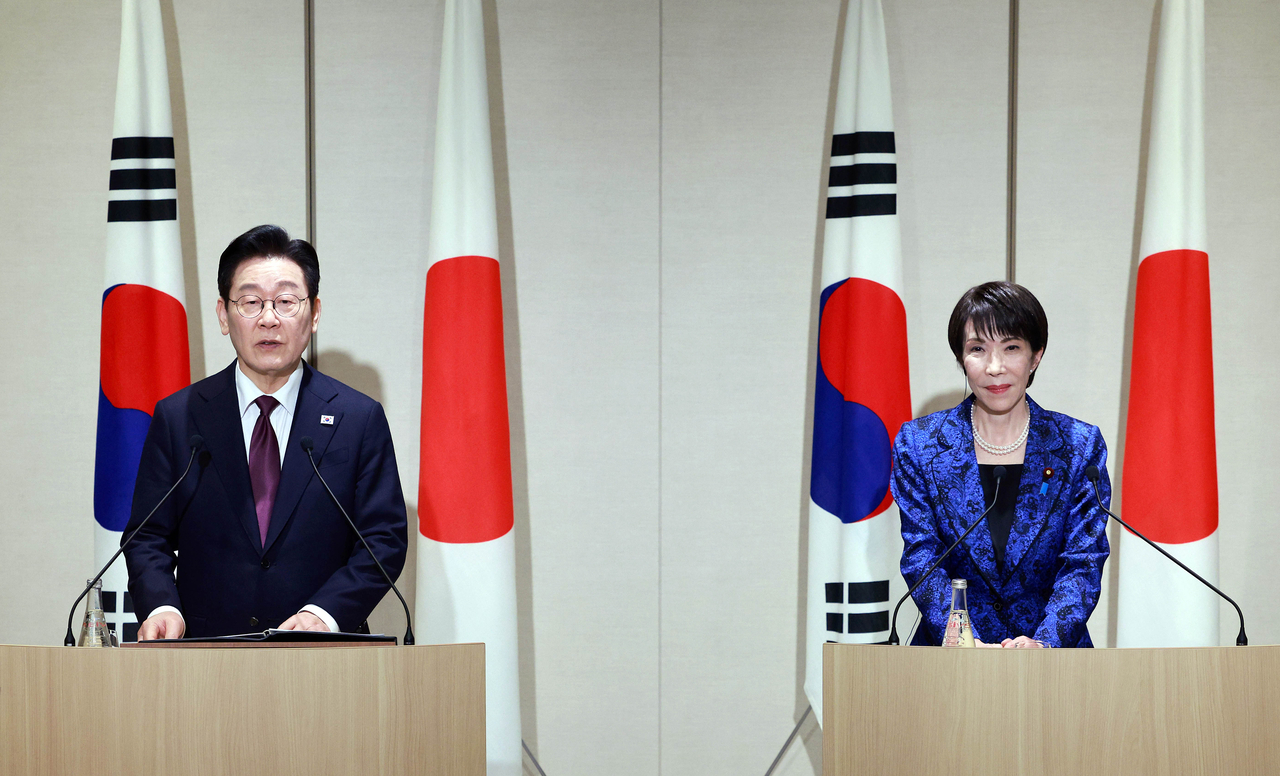
South Korea will have to define the scope and limits of cooperation and decide the terms on which it is prepared to work with Japan, whose security posture is growing more assertive.
Still, the result — 316 seats in the 465-member House, the largest tally on record — is unlikely to upend the tone of Seoul-Tokyo relations overnight, observers in Seoul and Washington say. Tokyo has little incentive to provoke Seoul in the near term amid intensifying tensions with China.
Deep-seated historical disputes stemming from Japan’s occupation of the Korean Peninsula (1910-1945) are therefore expected to remain managed rather than reignited under Takaichi’s Cabinet.
Choi Eun-mi, a research fellow at the Asan Institute for Policy Studies, said South Korea needs to initiate discussions over the direct and indirect implications of Japan’s push to strengthen its military and security capabilities.
“The reality is that we may soon be facing a much stronger Japan. But if you ask whether Korean society has had a deep, serious discussion about the range of policies Japan is trying to pursue, the answer is no,” Choi told The Korea Herald.
“We need to create the conditions for a frank discussion on these sensitive — and frankly difficult — questions: how South Korea should view them and how we should respond.”
Choi said that although low birth rates, demographic aging and other socially resonant issues have been placed at the forefront of Korea-Japan relations, Seoul must now broaden the scope of discussion.
“We need a more concrete discussion about the boundaries of cooperation with Japan — what we can work on together, what we cannot, and, when Japan moves to reinforce particular policies, whether there are elements that could benefit South Korea and thus justify joint action,” Choi said.
“We need to broaden the lens through which we view Korea-Japan relations.”
At a post-election press conference Monday, Takaichi said she would move forward with revising the war-renouncing Article 9 of the constitution and adding emergency provisions, calling for an early national referendum on the changes.
Takaichi also pledged to accelerate revisions to Japan’s three key national security documents this year to support higher defense spending and a stronger military posture.
Takaichi has espoused easing restrictions on lethal weapons exports, advancing legislation akin to a counter-espionage law, and establishing a Japanese version of a central intelligence agency. Together, the moves point to a broader strengthening of Japan’s defense and security architecture.
Harder choice for Seoul
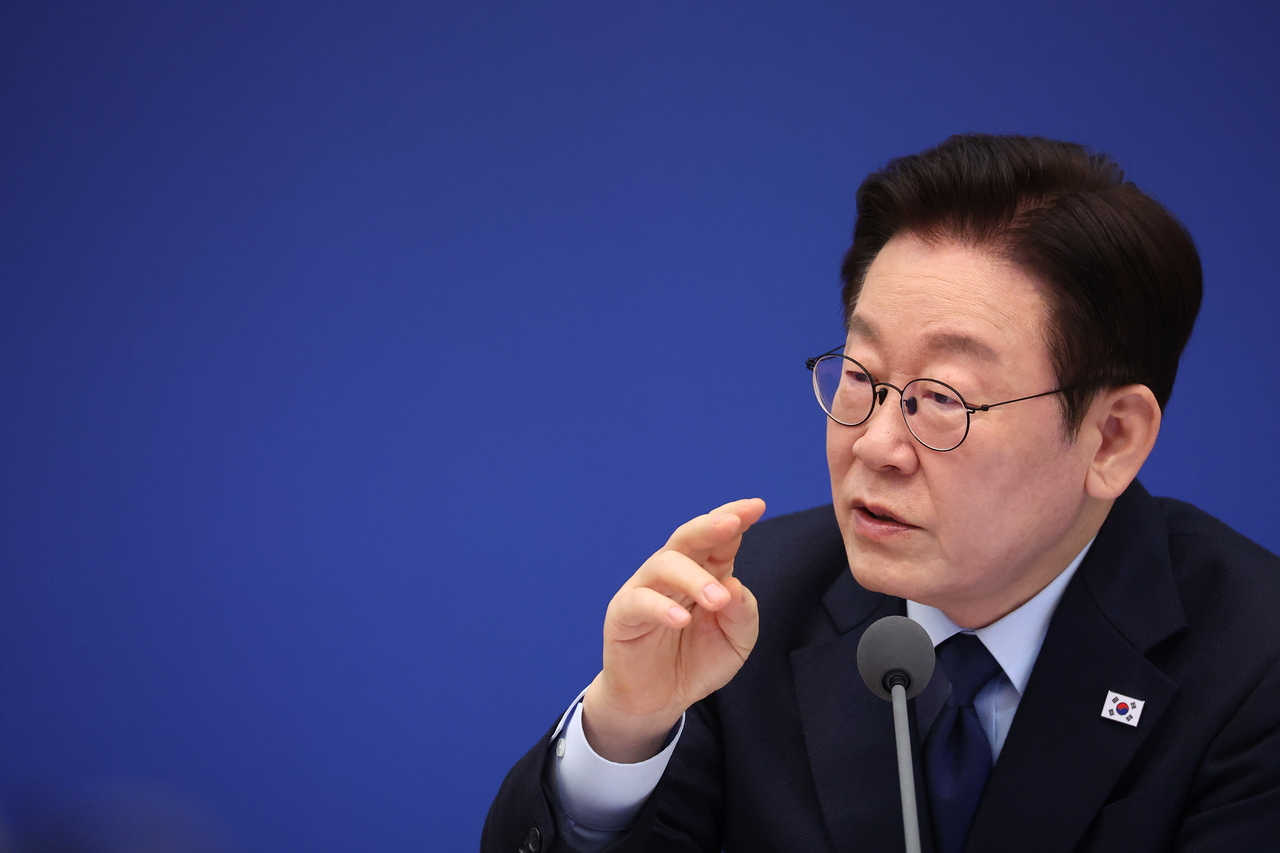
Lee Ki-tae, director of the Center for Diplomatic Strategy at the Sejong Institute, said Takaichi’s strengthened mandate could push Korea-US-Japan security cooperation toward a broader remit.
In this regard, the director notes that the Lee Jae Myung administration’s “balanced diplomacy” could present a source of friction for Seoul and Tokyo.
“In particular, regarding China policy, Japan would like ROK-US-Japan security cooperation, which is mainly focused on North Korea, to extend to checking China as well,” Lee told The Korea Herald, using the acronym for South Korea's official name, the Republic of Korea.
“But the ROK government is pursuing balanced diplomacy and opposes turning trilateral security cooperation into a mechanism for containing China. That is where differences could emerge.”
Lee underlined that Seoul should preempt that drift by drawing clearer boundaries around the trilateral agenda.
“Trilateral cooperation should not evolve into a strategy aimed at containing China. It should instead be strengthened in a way that concentrates on the North Korea issue.”
However, Patrick Cronin, the Asia-Pacific security chair at the Hudson Institute, said the trilateral framework is likely to evolve beyond a largely peninsula-focused framework under Takaichi’s strengthened mandate.
“Trilateralism is becoming operational rather than rhetorical,” Cronin told The Korea Herald. “Seoul, Tokyo, and Washington are moving toward serious planning discussions that link (United States Forces Korea) to a more robust command structure in Japan, as both allies increase defense spending and accept greater security burdens.”
That shift, he said, could set the conditions for a “genuine defense-by-denial strategy” along the First Island Chain, the strategic arc from Japan through Taiwan to the Philippines that underpins US forward defense planning in the Western Pacific.
“It also forces South Korea to think more explicitly about its role in a forward, integrated deterrence architecture,” Cronin said.
Seoul sees strategic upside
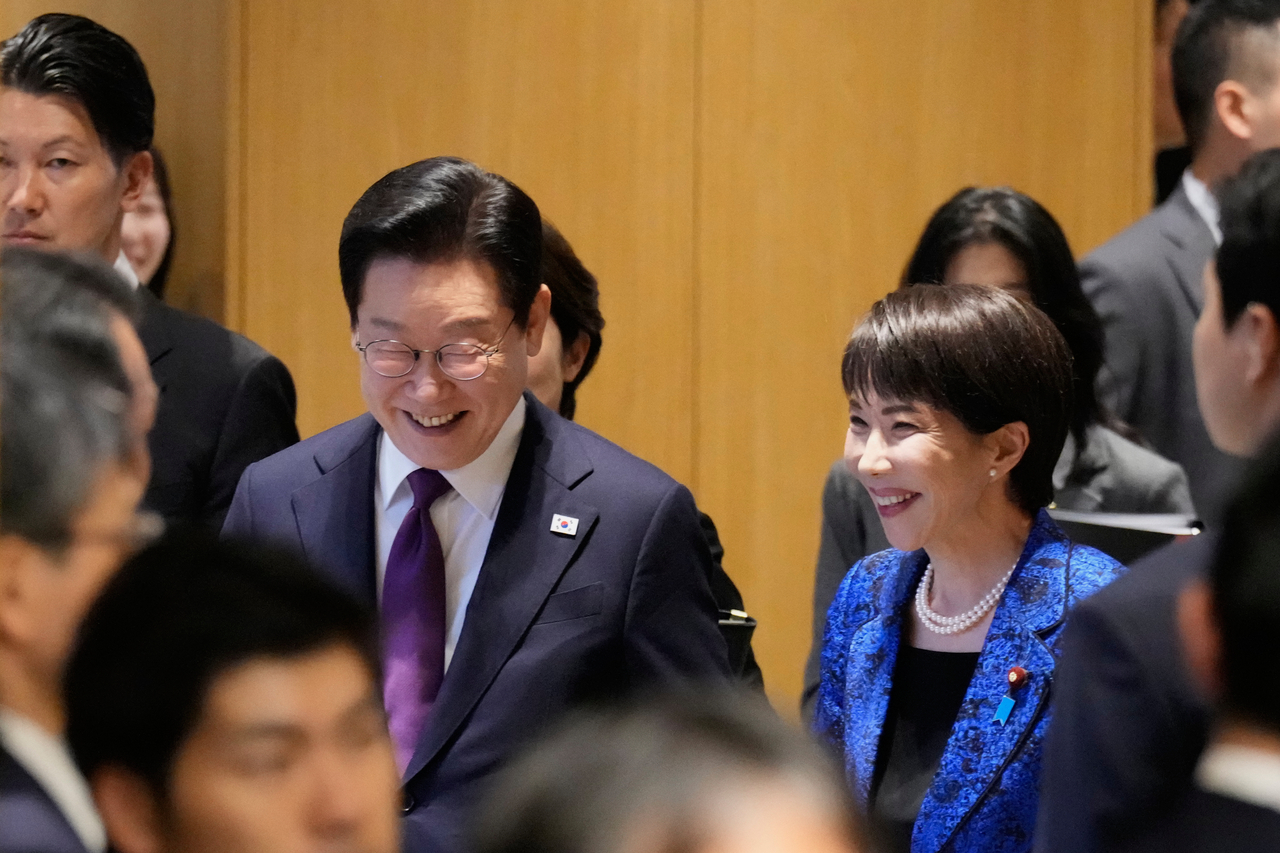
In contrast, Lee Won-deog, a professor of Japanese studies at Kookmin University, said he saw Takaichi’s decisive victory in Sunday's lower-house election as “a net positive, with little downside to speak of” for Seoul.
“I don’t see any significant negative impact. If anything, it could prove strategically beneficial depending on how we respond,” he added.
Two aspects of Takaichi’s profile are drawing particular attention in Seoul: She is widely viewed as both a security conservative and a historical conservative — a combination that points to a firmer defense posture.
The professor noted that a stronger Japan might once have been viewed, through a 19th-century lens, as an inherent threat to the Korean Peninsula. In today’s strategic environment, where China’s defense spending is roughly five times Japan’s, the calculus has changed.
“If you look at the balance of power in Northeast Asia, this is precisely the moment when the ROK and Japan should be working together — especially as the United States appears to be pulling back its commitments,” Lee said. “In that sense, Takaichi’s line can, in some respects, align with the ROK’s interests, depending on how effectively we leverage it.”
Observers noted that Japan’s current strategic environment leaves Tokyo little room to inflame historical disputes — long a source of strained ties — at a time when cooperation with South Korea is increasingly essential.
“For Japan, the current environment is already fraught. It is under mounting security and trade pressure from the US while locked in strategic competition with China,” the professor said.
“In that context, what national interest would Japan serve by turning on the ROK over historical disputes as well?”
Where Seoul could lose
Echoing that view, Yang Kee-ho, a professor of Japanese studies at Sungkonghoe University, said Tokyo has sought to keep ties with Seoul stable largely because relations with China have deteriorated — a trend he sees as unlikely to reverse anytime soon.
Yang cautioned, however, that South Korea should remain alert to the possibility that Takaichi could harden her stance on historical issues if domestic political pressure mounts.
Japan’s conservative camp, Yang noted, appears increasingly unified on flashpoints such as Yasukuni Shrine visits and history textbooks, while the election outcome suggests centrist voters have also drifted rightward — giving the government greater political room to take a tougher line.
“If the Cabinet’s approval ratings were to fall sharply, we cannot rule out the possibility that historical and territorial issues could be used to escalate confrontation with South Korea,” Yang said.
“We need something like a Plan B. It would be risky to assume Japan will always manage its relationship with South Korea in a stable manner. With this election outcome, the Japanese government now has stronger political backing and may feel less constrained — and that is something we need to approach with caution.”
Yang also warned that "competition between South Korea and Japan could intensify in the defense industry" as Takaichi pushes to expand arms exports.
Tighter US-Japan, tougher for Seoul
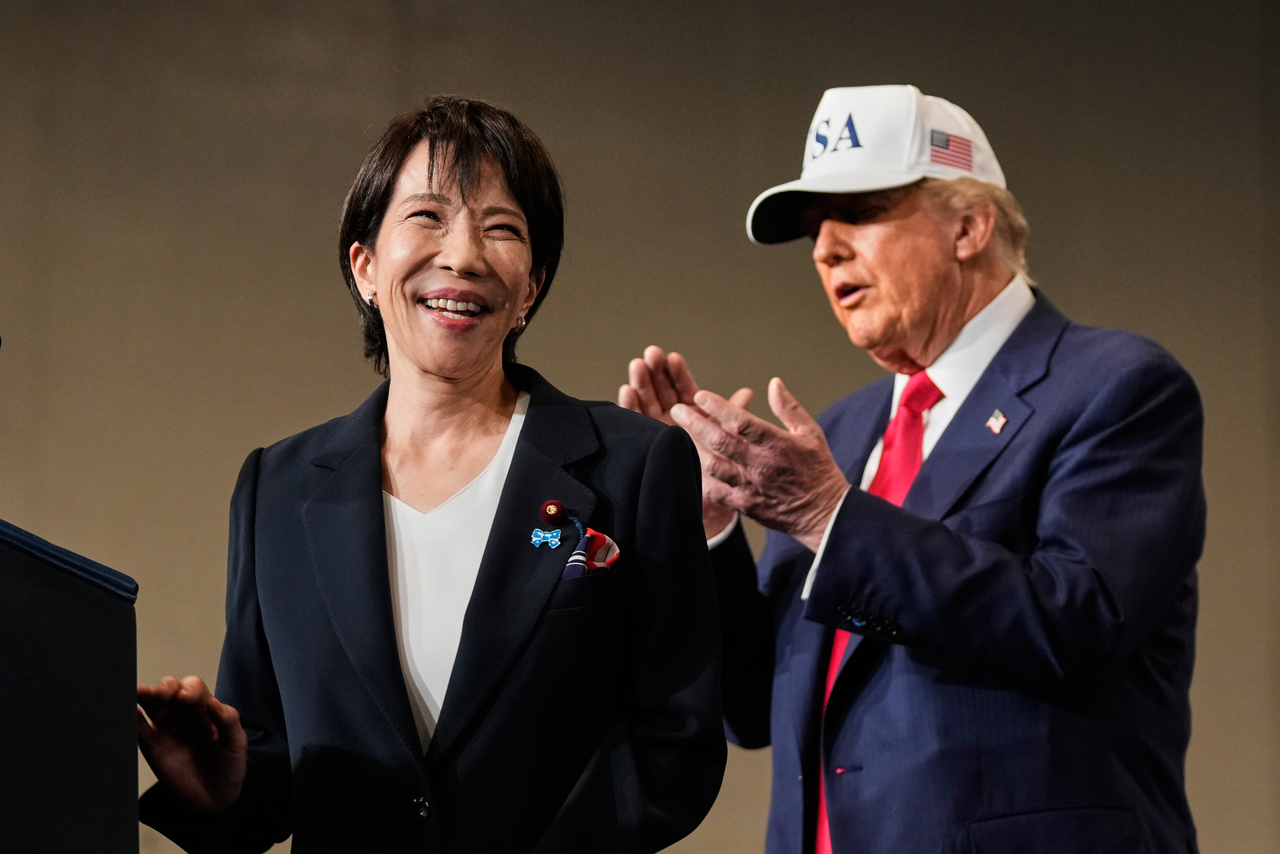
Another key variable, Yang said, is the likelihood that US-Japan ties will tighten under Takaichi — a shift that could be reinforced by Washington’s favorable view of her more assertive security line.
That dynamic, Yang added, could take on added significance at a time when Korea-US relations are under strain. The allies are still holding talks following US President Donald Trump’s announcement of possible tariff hikes, which he linked to delays in the National Assembly’s passage of a bill related to South Korea’s $350 billion investment plan in the US.
In a Truth Social post on Jan. 26, Trump said he would raise tariffs on South Korean automobiles, lumber and pharmaceuticals — along with other “reciprocal tariffs” — from 15 percent to 25 percent.
“As US-Japan relations grow significantly closer and Takaichi consolidates overwhelming leadership at home, there is a possibility that Japan could be steered back toward an ‘Abe-again’ trajectory,” Yang said.
“In that scenario, the likelihood of ‘Korea passing’ would increase considerably — whether on the North Korea issue or across broader international developments.”
Kristi Govella, an associate professor of Japanese politics and international relations at the University of Oxford, also said South Korea would likely confront heightened expectations to raise its own contributions as Japan moves to expand its role within the US alliance system.
“As Tokyo moves toward increasing its alliance burden sharing, it will likely put pressure on Seoul to do the same, and vice versa,” Govella told The Korea Herald.
Why Seoul, Tokyo must align
However, Cronin said the trajectory also came with rising demands for both allies, with Washington continuing to define the parameters of allied coordination.
“Washington’s strategy will continue to set the agenda, but expectations are rising across both alliances,” Cronin said. “Japan and South Korea will be pressed to accept tougher tradeoffs in spending, force posture, and risk to sustain deterrence while keeping diplomatic doors ajar.”
Govella called for Seoul and Tokyo to avoid an unhelpful competitive dynamic encouraged by Trump.
”From President Trump’s perspective, getting US allies to compete with one another to do more in terms of burden sharing is probably the ideal situation, and this would echo the process we saw with tariff deals last year,” Govella said.
”It would make sense for Tokyo and Seoul to quietly consult with one another and with other US allies as they move forward with such discussions.”
dagyumji@heraldcorp.com