

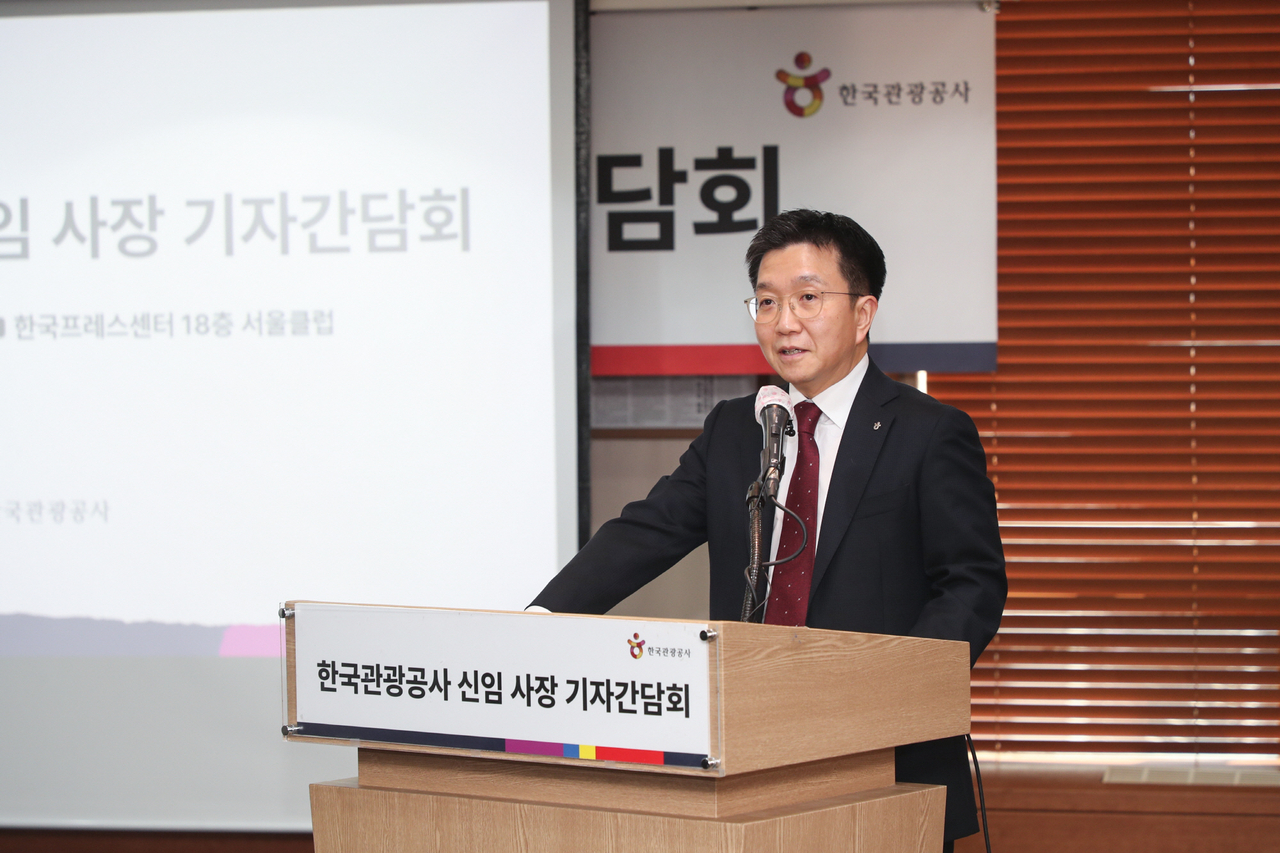
The head of the Korea Tourism Organization on Monday pledged to accelerate South Korea’s push to become a global tourism powerhouse, setting a goal of attracting 30 million foreign visitors by 2028 — two years earlier than previously planned.
At his first press briefing since taking office, Park Sung-hyeuck outlined a slate of 10 flagship initiatives for 2026, which he called the “first year of execution” to transform tourism into a core growth engine for the national economy.
Park previously served as executive vice president and head of the global division at Cheil Worldwide, where he oversaw international marketing strategy, leading operations across Europe and North America and building a reputation as a veteran global marketer.
The strategy focuses on drawing more visitors, encouraging longer stays and upgrading the industry through data and artificial intelligence.
Park said his overseas experience will help reshape how the agency targets markets.
“I served 17 years in Europe and North America, so I understand those markets well,” he said. "Chinese and Japanese visitors’ per-capita spending has been declining, with more budget and everyday consumption. But US and European travelers spend far more. From a marketer’s perspective, we will analyze what they value in Korea and dig deeper. Luxury consumption among American tourists is rising.”
The organization plans customized inbound marketing by region, expanding repeat visits from China and Japan while courting Southeast Asia and the Middle East through Korean cultural products. Western markets will see both online and offline promotions tied to Korean pop culture.
Park described the global popularity of Korean entertainment and food as a critical opportunity.
“K-culture is something we’ve never seen before,” he said. “Whether it lasts forever is another question, but using it to grow the tourism industry is our task. Food, music and many other forms are spreading globally. Turning this momentum into actual tourism results is what we are focused on.”
Beyond visitor numbers, the agency will target higher-value sectors such as medical tourism, wellness and MICE events to drive quality growth.
Park also cited favorable external conditions.
“With strong content exports and a weaker won, we can leverage price competitiveness,” he said. “We don’t need to wait until 2030 to reach 30 million visitors. Let’s move it forward to 2028.”
He summarized the plan into three keywords: global marketing, stay-oriented content and AI.
The organization will introduce an integrated tourist transport pass, expand digital payments and tax-free shopping, and deploy AI tools such as a multilingual travel assistant chatbot and a unified tourism information platform centered on Visit Korea.
“AI requires major changes,” Park said. “We will approach this globally, working with international hotel chains and global online travel agencies to attract more travelers.”
Calling 2026 a “year of transition,” Park said the goal is to deliver “data-driven execution and results people can feel on the ground” while positioning tourism as a new pillar of the Korean economy.
yoohong@heraldcorp.com