
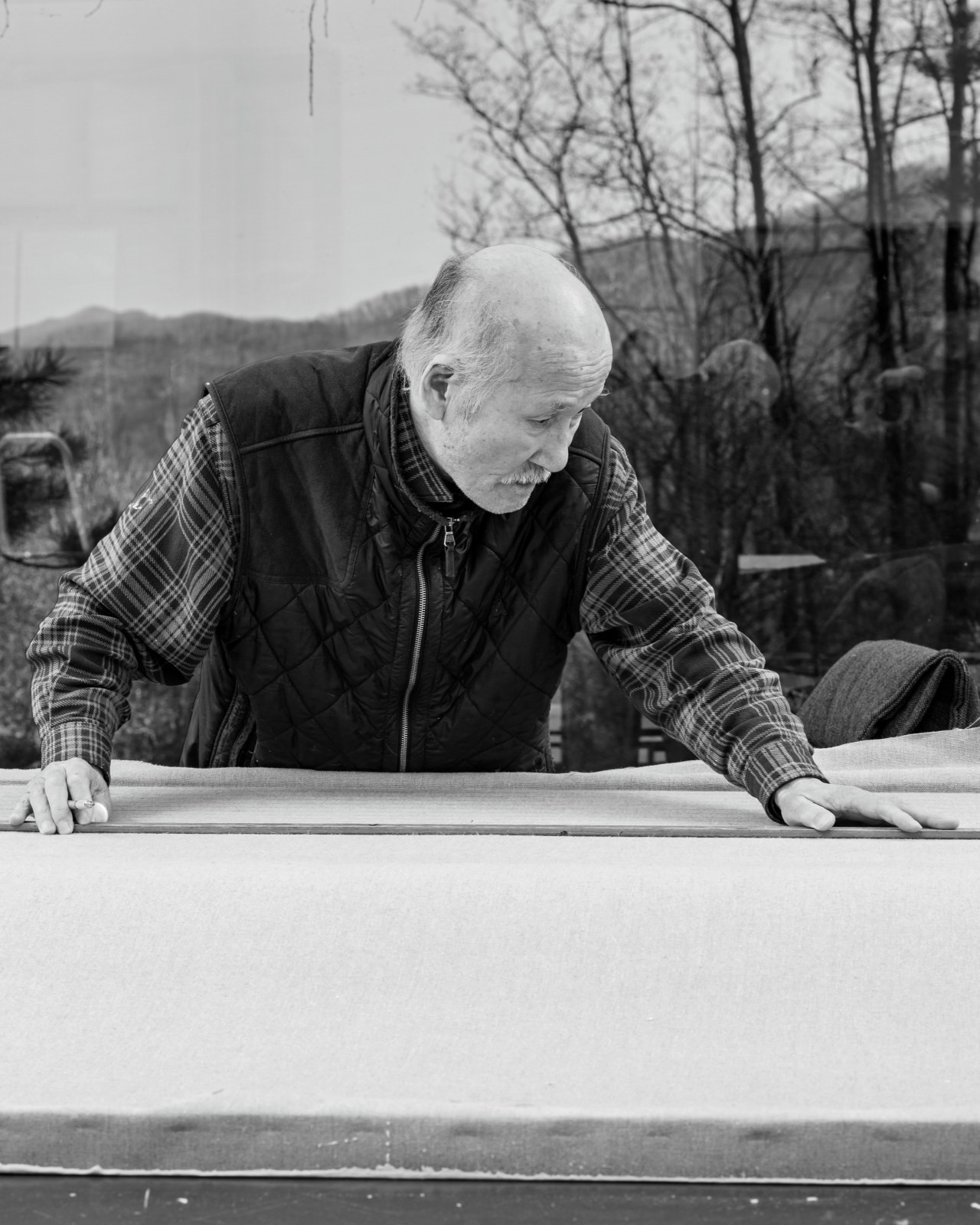
Chung Sang-hwa, a pioneering figure in Korean contemporary art, known for his rigorous and process-driven painting practice, died Wednesday after a prolonged illness. He was 93.
Born in 1932 in Yeongdeok, North Gyeongsang Province, Chung devoted his life to painting. His practice carried a distinctive methodology of “peeling off” and “filling in,” through which he transformed the two-dimensional canvas into a space of depth and restraint.
Using kaolin clay and repeatedly cutting, folding, cracking and reconstructing the canvas, Chung developed a labor-intensive process that rendered each work irreproducible, embodying the accumulation of his physical and mental discipline.
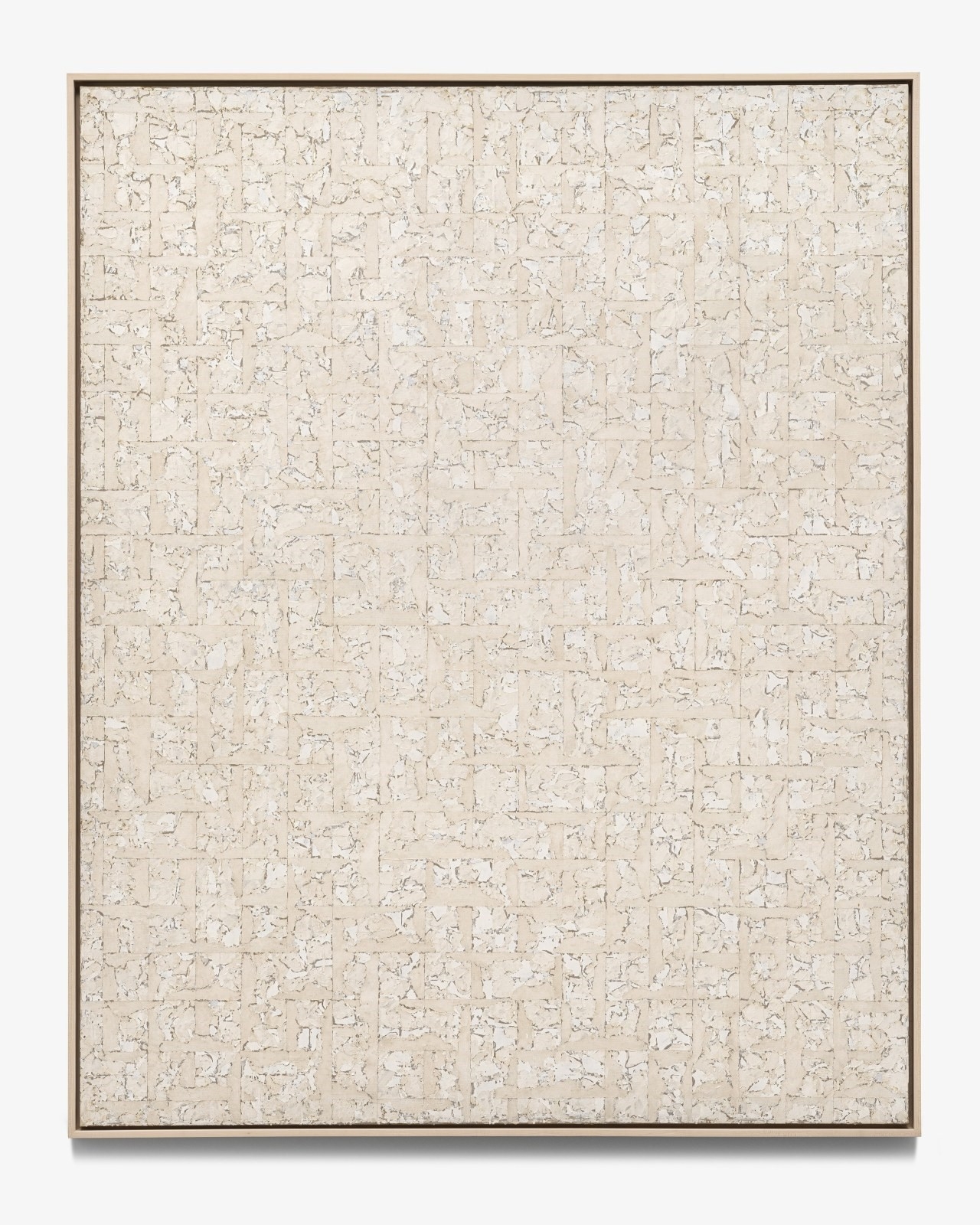
Chung is often grouped with artists of dansaekhwa, a Korean art genre that features repetitive meditative action.
“At every moment of working, I immersed myself in the surface with intense concentration, and the deeper the concentration, the more my inner self became calmly emptied,” Chung once said, according to Gallery Hyundai, which shared a long-standing relationship with the artist since his first solo exhibition in 1983 at the gallery.
After graduating from Seoul National University in 1957, Chung emerged as a leading figure in Korea’s postwar Art Informel movement.
While living in Kobe, Japan, from 1969 to 1977, he shifted toward flatness and restraint, producing his first monochromatic grid paintings in 1973. After moving to France in 1977, he devoted himself to refining this distinctive language.
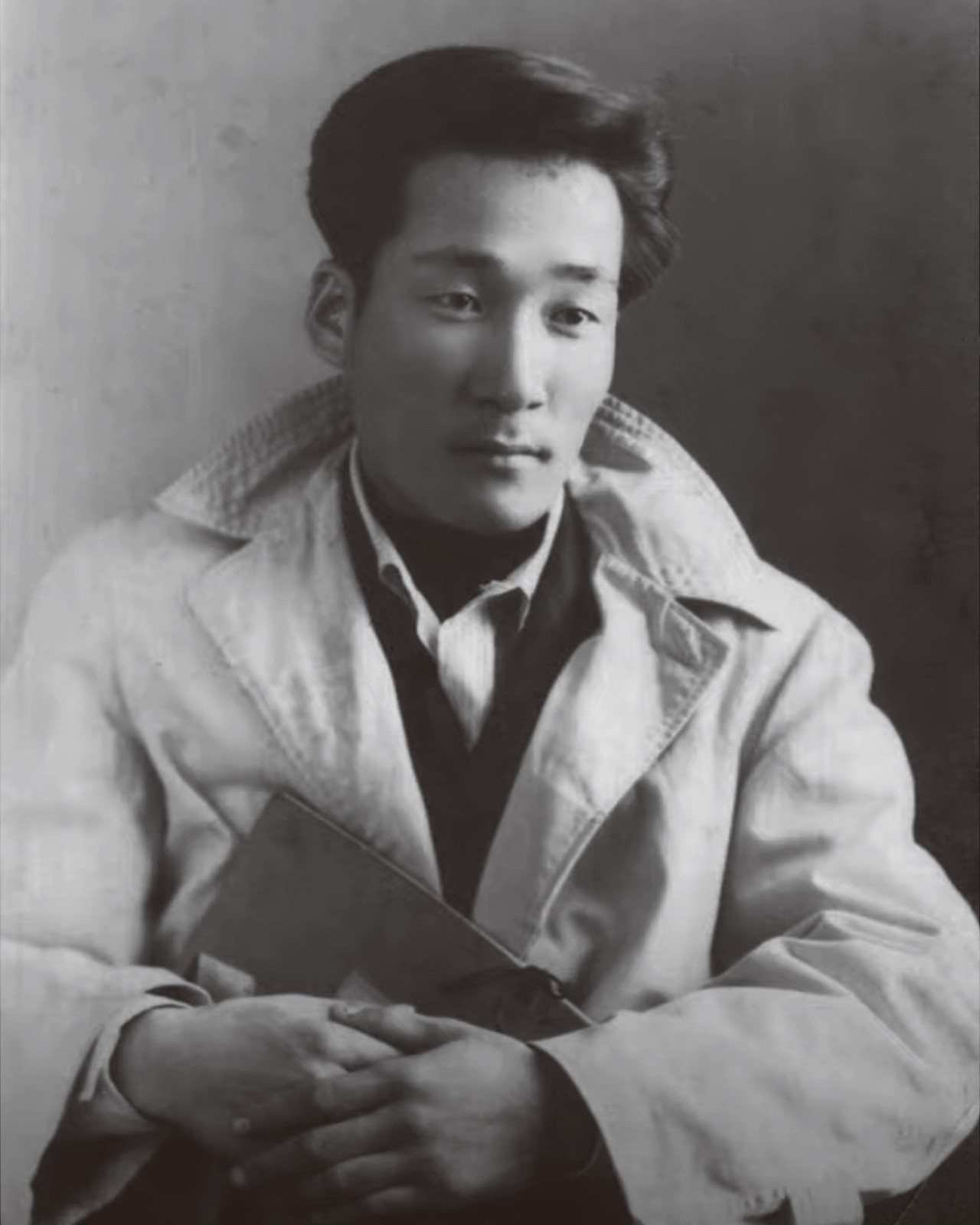
Although he spent decades abroad, Chung remained closely connected to Korea. Major retrospectives of his work were held in Saint-Etienne in 2011 and at MMCA Seoul in 2021.
“Chung believed that an artist must speak through the work itself. His paintings stand as both process and result — a lifelong meditation on time, labor, and the endless pursuit of painting,” Gallery Hyundai said.
yunapark@heraldcorp.com

![[Exclusive] Seoul readied forces to return fire after DMZ mine explosions: sources](https://wimg.heraldcorp.com/news/cms/2026/10/06/news-p.v1.20261006.354cca1fb8a94f0c891464c9cde1de6a_R.jpg?type=h&h=120)

