
Tech giant begins HBM4 mass production, steps up humanoid robotics push
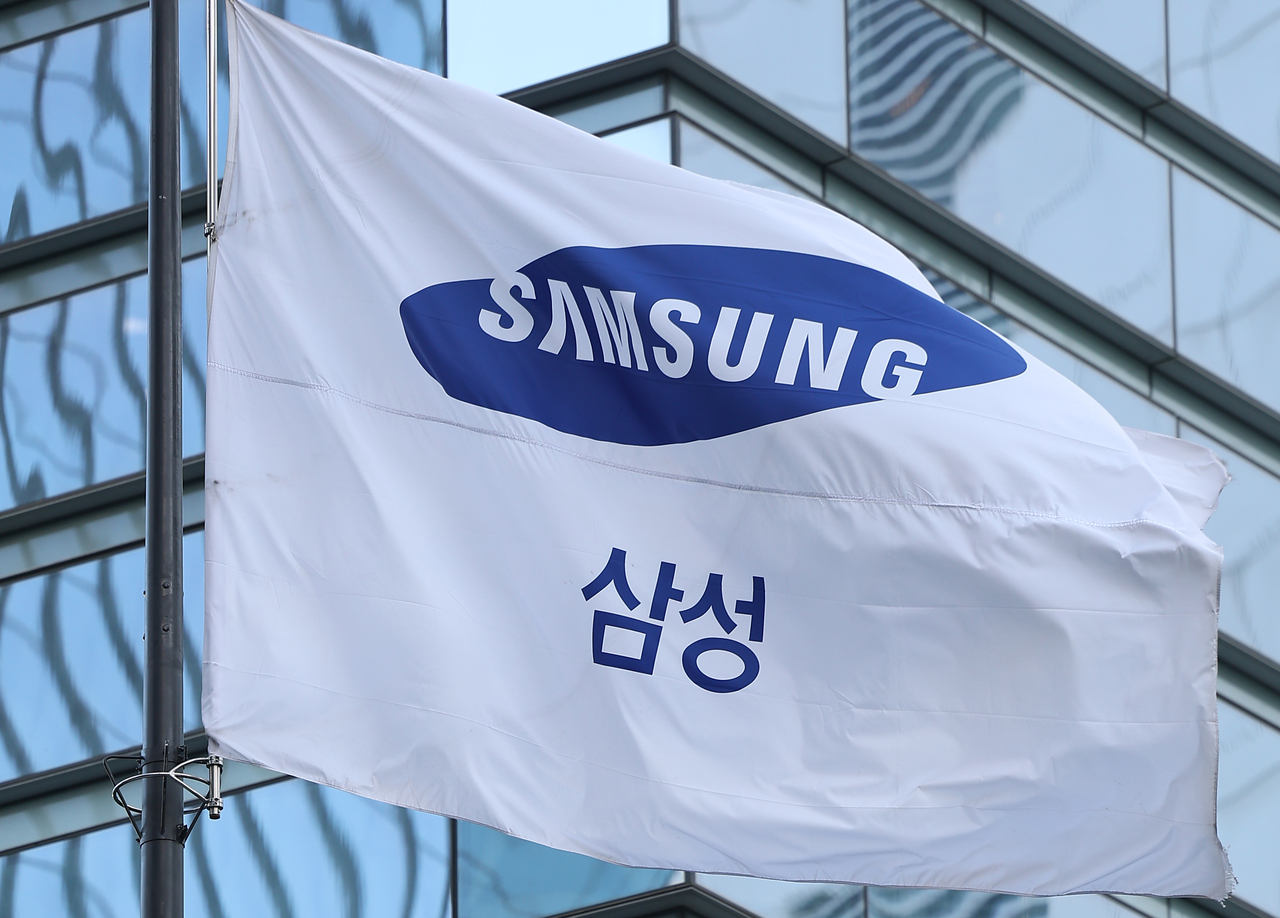
Samsung Electronics said Thursday it has started mass-producing its sixth-generation HBM4 chips, with customer shipments slated for next month as part of its broader push into next-gen memory and AI-powered devices.
Kim Jae-june, executive vice president of the memory division, said during the tech giant’s fourth-quarter earnings call earlier in the day that the development of HBM4 was aimed at exceeding performance standards set by the Joint Electron Device Engineering Council, the global semiconductor standards body.
“From the outset, we set our sights beyond conventional specifications,” Kim said. “Despite heightened performance requirements from clients, we delivered samples without any design modifications, and they are now in the final stages of quality validation.”
The company added that its 11.7-gigabit-per-second HBM4 chips — the fastest in the industry — will start shipping in February. It is also pursuing a selective approach to packaging, applying 16-high stacking and hybrid bonding only where needed, citing subdued near-term demand for fifth-generation HBM3E and 16-layer HBM4.
Despite the cautious packaging strategy, Samsung appears confident — current production capacity alone is expected to push HBM-related revenue to triple this year. Demand from key clients has already outpaced projections, with some customers requesting allocations through 2027. In response, the company is expanding HBM3E output and investing in 10-nanometer-class 1c nodes for HBM4 and seventh-generation HBM4E.
Beyond semiconductors, Samsung is also ramping up efforts in robotics. “In preparing for the future, we plan to deliver meaningful achievements in humanoid robotics this year,” said Chief Financial Officer Park Soon-cheol.
The firm began investing in Rainbow Robotics in 2023 and later raised its stake to a controlling level. It now plans to deploy robotic technologies in industrial settings.
Park also emphasized plans to expand artificial intelligence across its device portfolio. “We intend to organically embed AI throughout our ecosystem to deliver the best possible experience and lead the coming AI transition,” he said.
Buoyed by strong chip sales, Samsung posted record-breaking earnings late last year. Fourth-quarter operating profit reached 20.07 trillion won ($14.1 billion), up 209.2 percent from a year earlier — the highest quarterly profit ever recorded by a Korean company. Revenue totaled 93.8 trillion won for the quarter, while net income came in at 19.6 trillion won.
For all of 2025, Samsung reported 43.6 trillion won in operating profit, up 33.2 percent from the previous year. Annual revenue climbed 10.9 percent to a record-high 333.6 trillion won, with net income growing 31.2 percent to 45.2 trillion won.
The device solutions division, in charge of semiconductors, logged 44 trillion won in revenue and 16.4 trillion won in operating profit in the fourth quarter — both all-time highs. The gains were driven by strong DRAM demand, growing HBM sales and higher memory prices. Enterprise DDR5 and solid-state drives also contributed.
Research and development spending rose to a record 37.7 trillion won last year, including 10.9 trillion won in the fourth quarter. Capital expenditures totaled 52.7 trillion won, exceeding the planned 47.4 trillion won, as Samsung boosted investments in chip and display facilities.
In the device experience division, which oversees mobile, TV and home appliance business, revenue reached 44.3 trillion won, with 1.3 trillion won in operating profit. While smartphone shipments dipped due to weak launch momentum, annual profitability stayed in the double digits thanks to solid flagship sales and consistent demand for tablets and wearables.
The visual display unit saw strong holiday-driven sales of Neo QLED and OLED TVs. Meanwhile, the home appliance segment faced seasonal and tariff-related headwinds.
Harman, the tech giant's audio and automotive component subsidiary, reported 4.6 trillion won in revenue and 300 billion won in profit, backed by demand for premium audio and automotive products. Samsung Display posted 9.5 trillion won in revenue and 2 trillion won in profit, driven by strong sales of small and midsized panels as well as seasonal demand for large displays.
Samsung said it will continue to pursue a profit-oriented strategy while keeping close tabs on global tariffs and geopolitical risks throughout this year.
yeeun@heraldcorp.com


![[Exclusive] Ateez to return in November](https://wimg.heraldcorp.com/news/cms/2026/09/02/news-p.v1.20260902.76162fb0ba55493aad1c076f240d0750_R.jpg?type=h&h=120)