A presidency that once promised openness believed that walls could do the work of will. Three years and seven months later, South Korea has learned that architecture does not govern power. Leadership does.
한때 개방을 약속했던 대통령은 건물이 원하는 결과를 가져올 수 있다고 믿었다. 3년 7개월 후 한국은 권력을 지배하는 것은 건물이 아니라 리더십이라는 것을 깨우쳤다.
On Monday, President Lee Jae Myung’s administration formally closed the Yongsan chapter and reentered the Blue House complex, ending an experiment born of impatience and concluded in trauma.
월요일, 이재명 정부는 공식적으로 용산 시대를 마감하고 다시 청와대에 입성했다. 성급하게 시작되고 충격적인 경험으로 결말지어진 시도를 끝낸 것이다.
What began as a pledge to escape the isolation of a “secret palace” ended amid administrative disorder, fiscal waste and the political collapse surrounding former President Yoon Suk-yeol’s martial law. The return to Cheong Wa Dae is not nostalgia but recalibration, shaped as much by failure as by reflection.
"구중궁궐"로 고립되어 있는 것에서 벗어나겠다는 약속에서 시작된 시도는 행정적인 무질서, 재원의 낭비 그리고 윤 전 대통령의 계엄령을 둘러싼 정치적인 실패로 마무리되었다. 청와대로의 복귀는 향수에서 비롯된 것이 아니라 재조정이고 반성뿐 아니라 실패로 인한 것이기도 하다.
The Yongsan move rested on a seductive idea that space shapes consciousness. Proximity would enforce transparency. A single building would flatten hierarchy. Doorstep briefings would civilize executive power. Instead, openness became selective, communication one-directional and decision-making more centralized. The roughly 140 billion won ($94 million) spent on relocation and reversal now reads as a surcharge on political improvisation.
용산으로의 이전은 공간이 의식을 지배한다는 매혹적인 아이디어에서 시작되었다. 가까워진 거리는 투명성을 강화시켜 줄 것이라는, 한 건물에서 일하면 수직적인 상하 관계가 수평화 될 것이라는, 그리고 도어스텝 브리핑이 대통령의 권력을 사람들과 가깝게 만들어줄 것이라는 생각이었다. 그러나 되려 개방의 대상은 선택적으로, 의사소통은 일방적이 되어갔고 의사결정은 한 곳으로 집중되었다. 이전 및 복귀에 든 약 1천4백억원은 이제 즉흥적인 정치적 움직임에 대한 추가비용으로 보인다.
Security anxieties, traffic disruption and the awkward reality of governing from a repurposed Defense Ministry facility exposed a deeper flaw. States are not startups. They rely on institutional memory, procedural density and spaces designed for continuity rather than disruption.
보안 우려, 교통 정체 거기에 리모델링한 국방부 청사에서 집무를 본다는 어색한 상황이 더 심각한 결점을 드러냈다. 국가는 스타트업이 아니다. 국가는 제도상의 기억, 절차의 충실함 그리고 두절이 아니라 지속성을 위해 고안된 공간을 필요로 한다.
For all its historical burden, the Blue House provides that infrastructure. Returning to it is as much about restoring administrative order as clearing the residue of internal strife left by the Yoon administration. Stability, in this context, is not conservatism but institutional repair.
역사적인 무게를 짊어지고 있기는 하나 청와대는 그러한 인프라를 제공한다. 청와대로의 복귀는 윤 정부가 남긴 내부 갈등의 잔재를 청산하는 것이기도 하지만 행정질서를 복구하는 것이기도 하다. 이러한 맥락에서 안정성은 보수(保守)주의가 아니라 제도적인 보수(補修)다.
Yet the problem rooted in Cheong Wa Dae remains unresolved. The compound’s scale and layout have long encouraged insulation. The main hall sits hundreds of meters from aides and the press, reinforcing habits of solitary power. During the Park Geun-hye administration, crisis reporting faltered. Under the Moon Jae-in government, access narrowed to a thin inner circle.
그러나 청와대의 뿌리깊은 문제는 아직 해결되지 않은 채다. 청와대 부지의 규모와 건물 배치는 오랫동안 단절을 불러일으켜왔다. 본관은 보좌진과 기자단으로부터 수백미터 떨어진 곳에 위치해 홀로 권력을 휘두르는 버릇을 키운다. 박근혜 정부 시절 위기 보고체계가 흔들렸다. 문재인 정부 하에서는 소수의 측근에게만 접근이 허용되었다.
President Lee is attempting a workaround. By anchoring his daily work in Yeomingwan, the presidential secretariat building, alongside the chief of staff, policy chief and national security director, he is sidestepping the symbolic remoteness of the main hall. The goal is faster coordination and reduced friction. Whether it succeeds will depend less on floor plans than on discipline, routine and executive self-control.
이 대통령은 새로운 해결책을 시도중이다. 대통령 참모진들이 근무하는 건물인 여민관에서 비서실장, 정책실장, 국가안보실장과 지근 거리에서 일상 업무를 집행하기로 해 본관이 갖는 상징적인 거리감을 피하고자 한다. 협력의 속도를 높이고 갈등을 줄이는 것이 목표다. 성공여부는 업무실 배치보다 규율, 절차 그리고 대통령의 자제에 달려있다.
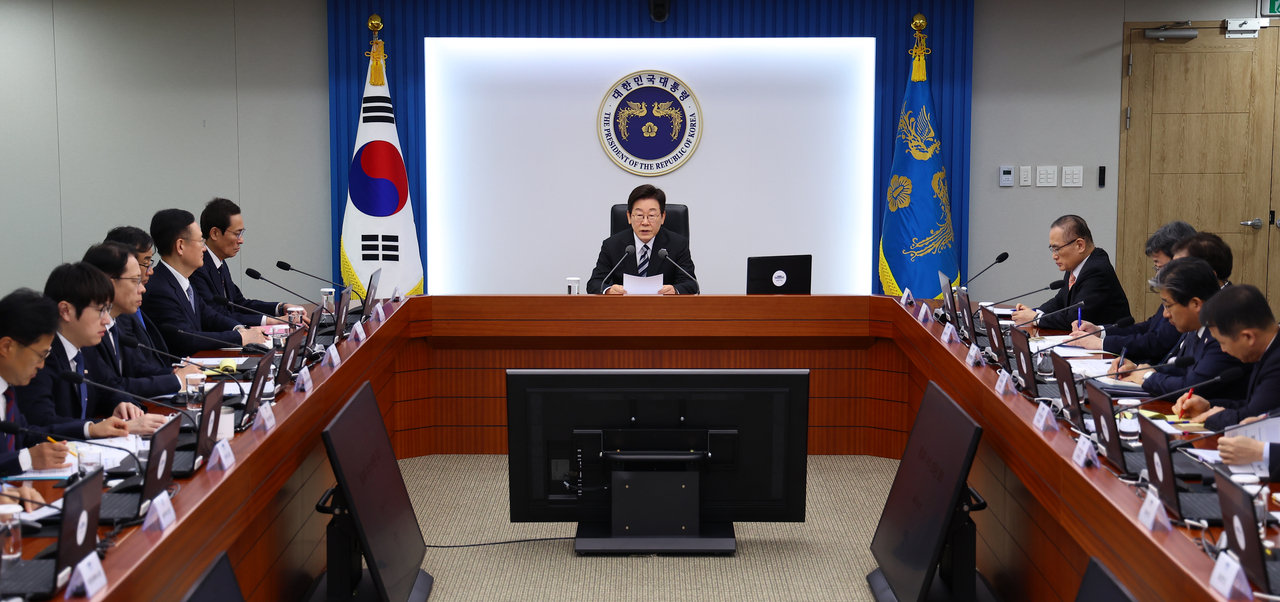
Public communication poses a sterner test. Chunchugwan, the press center, now sits roughly 300 meters from the presidential workspace, farther than during the Yongsan period. The administration’s answer has been digital transparency. Live broadcasts of cabinet meetings and briefings are meant to compensate for distance.
대중과의 소통은 더 어려운 시험이 될 것이다. 출입기자실인 춘추관은 이제 대통령의 업무공간에서 약 3백미터 떨어진 곳에 위치하고 이는 용산 시대보다 더 멀어진 거리다. 현 정부가 내놓은 답은 디지털 투명성이다. 국무회의와 업무보고를 생중계로 진행함으로써 거리두기를 보완하겠다는 의도다.
That solution cuts both ways. Live streaming democratizes access but risks turning governance into performance. When the president controls both agenda and camera, transparency can become a one-way megaphone. A press corps kept at arm’s length cannot substitute for unscripted encounters. The new Blue House era will hinge on whether the president is willing to cross that distance, literally and politically, without choreography.
그 해결책은 양날의 검이다. 생중계는 대중에게 접근을 허용하지만 국정이 퍼포먼스로 전락할 수 있는 위험도 따른다. 대통령이 의제와 카메라를 모두 손에 쥐고 있다면 투명성은 일방적인 확성기가 될 수도 있다. 기자단과 일정 거리를 두는 것은 미리 답변을 준비하지 않고 갖는 만남을 대신할 수 없다. 대통령이 말 그대로 그리고 정치적으로, 연출된 모습이 아닌 채 그 거리를 좁힐 의지가 있는지에 새로운 청와대 시대가 전적으로 달려있다.
Hovering over all of this is a greater danger: the persistence of “Blue House government.” The belief that a president must personally supervise even routine decisions has repeatedly warped the executive branch. Concentrated authority, not physical isolation, has defined the presidency’s chronic failures. If micromanagement continues, Cheong Wa Dae will again become an island, regardless of office placement.
이 모든 상황보다 더 큰 위험이 도사리고 있기도 하다. 역대 "청와대 정부"들이 보였던 모습이다. 대통령이 정례적인 결정까지도 직접 감독해야한다는 신념으로 행정부는 계속해서 왜곡되어 왔다. 물리적인 고립이 아니라 집중된 권력이 역대 대통령들의 만성적인 실패의 원인이었다. 만약 지나치게 세세한 관리가 계속된다면 청와대는 또다시 집무실의 구도와 상관없이 외딴 섬이 될 것이다.
The administration frames this return as transitional, with Sejong envisioned as the eventual seat of power by 2030. That horizon demands caution. Another costly relocation without consensus would only deepen public fatigue.
현 정부는 청와대로의 복귀를 일시적이라고 말하고 2030년까지 세종시에 대통령 집무실을 최종 마련하는 것을 구상하고 있다. 이러한 비전은 신중함을 요한다. 국민적인 합의없이 또다시 많은 비용을 들여 이전하는 것은 대중의 피로만 깊어지게 할 것이다.
The Blue House has witnessed both South Korea’s ascent and its most painful upheavals. Its walls confer authority, not wisdom. Ending the era of the secret palace will not come from changing buildings. It will come when the president’s ears prove more open than the gates.
청와대는 한국의 부상 그리고 가장 뼈아픈 격변을 모두 지켜보아왔다. 청와대라는 장소가 갖는 것은 권위지 지혜가 아니다. 구중궁궐의 시대를 끝내는 것은 건물을 바꾸는 것에서 오는 것이 아니다. 대통령의 귀가 청와대의 문보다 더 열려있다는 것을 증명할 때 오는 것이다.
pledge 약속
reflection 반성
proximity 가까움
doorstep briefing 출근길 약식 인터뷰
surcharge 추가비용
improvisation 즉흥극
strife 갈등
insulation 절연
workaround 제2의 해결책
cut both ways 긍정, 부정적인 면 모두 가지다
upheaval 대격변
confer 부여하다
khnews@heraldcorp.com