
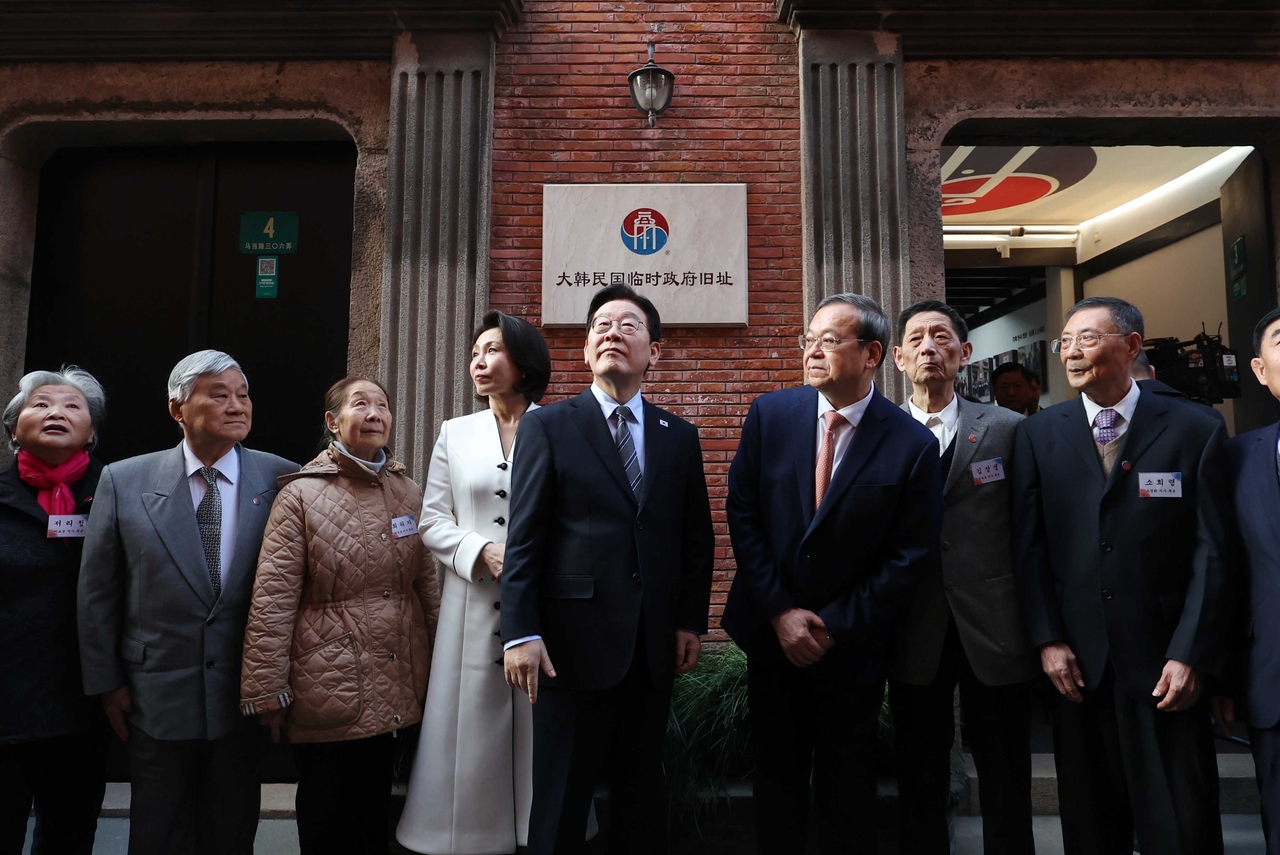
SHANGHAI — President Lee Jae Myung finished his trip to China with a symbol-laden stop at the former headquarters of South Korea’s provisional government here, invoking a shared historical backdrop to Korea’s independence movement during Japan’s colonial rule.
The visit capped his four-day tour that took Lee from Beijing, the seat of political power, to Shanghai, China’s commercial hub.
A South Korean Air Force aircraft carrying Lee and his delegation arrived at Seoul Air Base in Seongnam at 9:37 p.m. Wednesday.
Before returning to Seoul, Lee and first lady Kim Hea Kyung attended a ceremony marking the 100th anniversary of the establishment of the provisional government.
The government-in-exile is widely seen as a wellspring of Korea’s democratic origins and its independence struggle under Japanese rule.
The timing added another layer of symbolism: 2026 also marks the 150th birth anniversary of Kim Koo, the revered independence leader who headed the provisional government.
Rep. Kim Yong-man of the ruling Democratic Party of Korea, Kim Koo’s grandson, also attended the event at Madang Road, where the provisional government — founded in 1919 — was based from 1926 to 1932 for nearly six years after repeatedly relocating to evade Imperial Japan’s repression.
“The history of Korea’s independence movement cannot be told without China. Nearly half of Korea’s independence movement sites are located in China, making it the principal stage of our struggle,” Lee said in commemorative remarks.
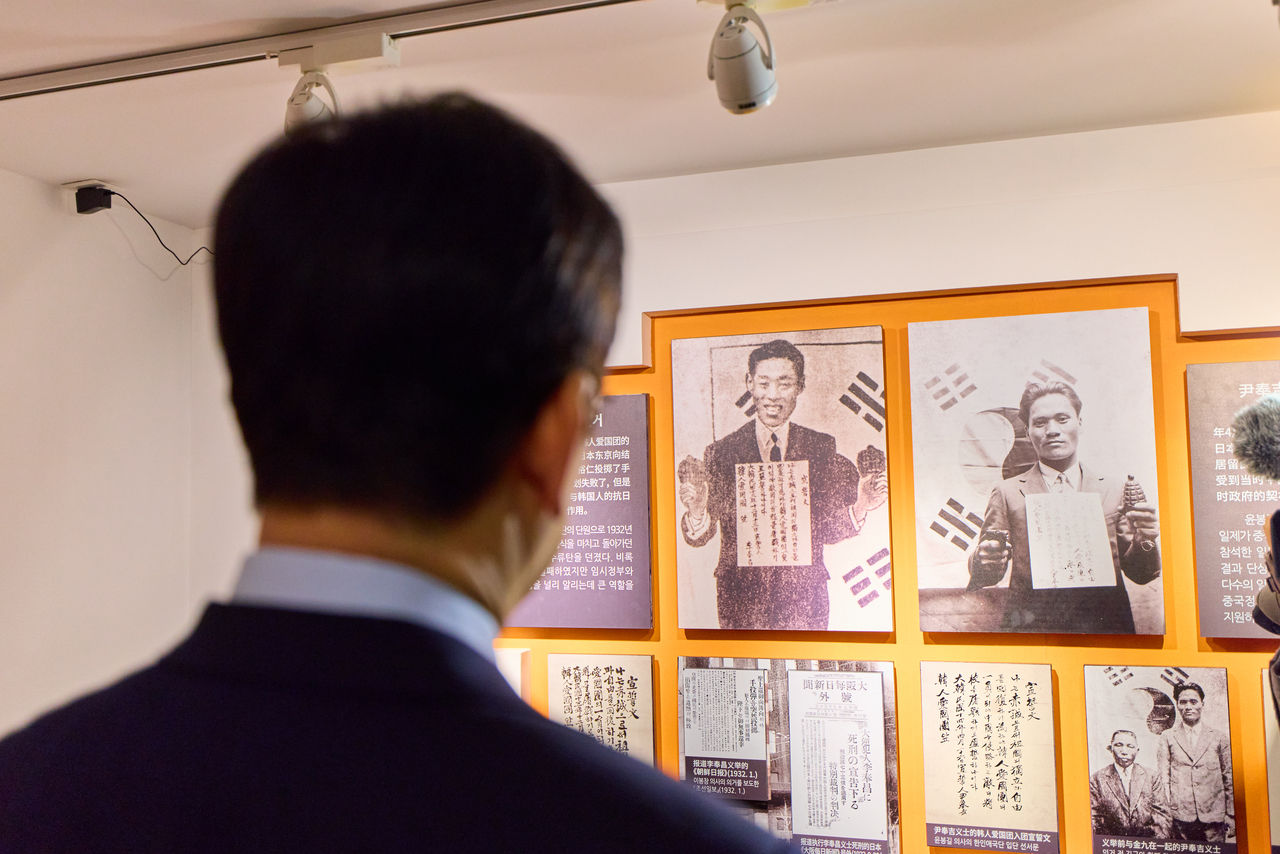
Shanghai, in particular, carries deep symbolism: it is where Kim Koo began writing his autobiography, Baekbeomilji, and where the legendary independence fighter Yun Bong-gil threw bombs at Hongkou Park — now known as Lu Xun Park — targeting senior leaders of the Japanese Imperial Army in 1932.
“The Shanghai headquarters once faced the risk of demolition, but it was successfully restored in 1993 and has been preserved for 33 years to this day thanks to the Chinese government’s active cooperation,” Lee said.
Lee expressed his “deepest gratitude to the Chinese government for safeguarding this site under difficult circumstances.”
Lee said he emphasized that “Korea’s independence movement history forms the foundation of today’s Korea–China friendship and cooperation” during his three-day stay in Beijing from Sunday to Tuesday.
During his second summit with President Xi Jinping on Monday, Lee asked for Xi’s continued interest and support in locating the remains of Ahn Jung-geun — the revered independence fighter — and preserving historic sites in China.
South Korea has long sought to recover Ahn’s remains. He was executed at a Japanese prison in Ryojun — now called Lushun — in Dalian on March 26, 1910, and is believed to have been buried near the prison.
Ahn’s execution came after he shot Ito Hirobumi, Japan’s first resident-general in Korea, at a railway station in Harbin, China, in 1909.
“Setting history right is, I believe, the path to opening the future together,” Lee said. “I hope today’s ceremony serves as a meaningful opportunity to honor the sacrifices of our forebears and further strengthen friendship and cooperation between Korea and China.”
In his remarks, Rep. Kim Yong-man also underscored that “China is inseparable from the very beginnings of the Provisional Government of the Republic of Korea.”
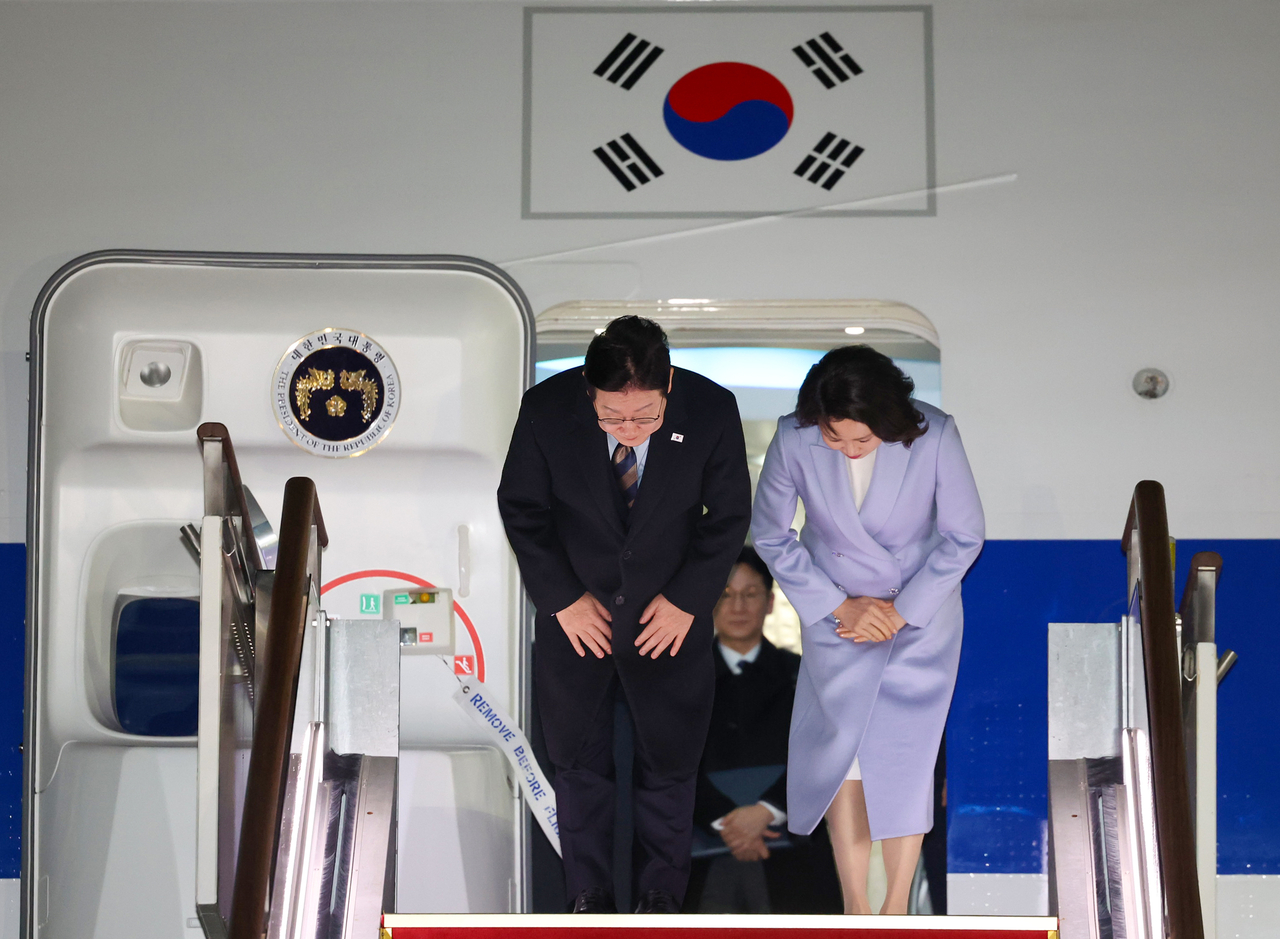
During the packed state visit, Lee held his second summit with Xi on Monday, which Cheong Wa Dae viewed as having "consolidated the momentum toward a full restoration of South Korea–China relations."
The meeting came hours after a large-scale Korea–China business forum that drew a heavyweight lineup, including the heads of South Korea’s four largest conglomerates — Samsung, SK, Hyundai Motor Group and LG — alongside executives from the fashion, entertainment and gaming industries.
Lee’s trip included a business delegation of about 400 people from 161 Korean companies, the first of its kind to accompany a South Korean president to China since 2017.
On Tuesday, Lee held back-to-back meetings with China’s second- and third-highest-ranking officials: Zhao Leji, chairman of the Standing Committee of the National People’s Congress, and Premier Li Qiang, China’s top economic policymaker, for talks and a working luncheon.
Lee then flew to Shanghai on Tuesday afternoon for a two-day visit, which included a dinner banquet hosted that evening by Chen Jining, Shanghai’s Communist Party secretary, to discuss local-level cooperation and public sentiment.
On Wednesday, Lee attended a Korea–China venture and startup summit bringing together entrepreneurs and business leaders from both countries, where he reiterated his broader message.
“Through my visit to China, I aim to bring our cooperative relationship — which has been somewhat strained — back onto a normal track, and beyond that, to build a new, future-oriented partnership,” Lee told participants.
dagyumji@heraldcorp.com