South Korea’s most troubling jobs problem is hiding in plain sight. By the headline figures, the labor market appears robust. Employment rates have reached record highs. The jobless rate sits near what economists would regard as full employment.
한국의 가장 걱정스러운 고용 문제는 눈에 뻔히 잘 보이는 곳에 숨어있다. 대표적인 수치들만 보면 고용 시장은 활기차 보인다. 고용률은 역대급으로 높은 수준에 달했다. 실업률은 경제학자들이 완전고용 상태라고 칭할만한 수준에 가깝다.
Yet beneath this reassuring surface, a quiet erosion is unfolding. For 19 consecutive months, youth employment has declined. The economy is creating jobs, just not for the generation expected to sustain it.
겉보기에는 고무적이나 실상을 들여다보면 기반은 조용히 무너져내리고 있다. 19개월 연속 청년 고용률은 계속 감소했다. 경제는 일자리를 창출하고 있기는 하지만 경제를 지속성장시켜 가야할 세대를 위한 일자리는 아니다.
This is not a cyclical dip or a passing mismatch. It is a structural failure that standard indicators struggle to capture. Government data shows that the employment rate for those aged 15-29 fell to 44.3 percent in November, below the rate for people over 60.
주기적으로 감소하는 것이나 일시적으로 어긋난 것이 아니다. 통상적인 지표로는 포착해내기 어려운 구조적인 실패다. 정부가 제시한 데이터에 따르면 15~29세 청년층의 고용률은 11월 44.3퍼센트로 하락해 60세 이상 고령층의 고용률보다 낮다.
More than 700,000 people in their 20s and 30s are now classified as economically inactive, opting to remain at rest rather than search for work. They do not appear in unemployment figures, yet they sit at the center of the country’s economic vulnerability.
20대와 30대 중 70만명 이상이 구직을 하기보다는 계속 휴식하는 것을 선택해 현재 경제활동을 하지 않는 것으로 분류된다. 이들은 실업률에 잡히지 않으나 국가의 경제적인 약점의 중심에 자리한다.
The most immediate driver is a sharp contraction on the supply of quality jobs. Large corporations shed roughly 80,000 positions in a single year, the steepest decline on record. Small and medium-sized firms also posted their first net job losses since data collection began. Manufacturing, construction and other key sectors continue to retrench.
우선 당장 보이는 원인은 제대로 된 일자리의 공급이 급격히 줄었다는 것이다. 대기업들은 1년에 대략 8만개의 일자리를 없애 통계 작성 이래 가장 큰 폭의 감소를 기록했다. 중소기업들 또한 집계 사상 최초로 감소를 기록했다. 제조업, 건설업 그리고 여타 주요 산업들도 계속해서 구조조정 중이다.
Overall job growth has slowed to its weakest pace on record even as aggregate totals rise, lifted largely by publicly funded care and welfare positions concentrated among older workers.
노령층 근로자에 집중된 국가 주도 돌봄 및 복지 관련 일자리의 확대가 주를 이루어 일자리의 전체 숫자는 늘었음에도 전반적인 일자리 성장세는 사상 최저 수준으로 떨어졌다.
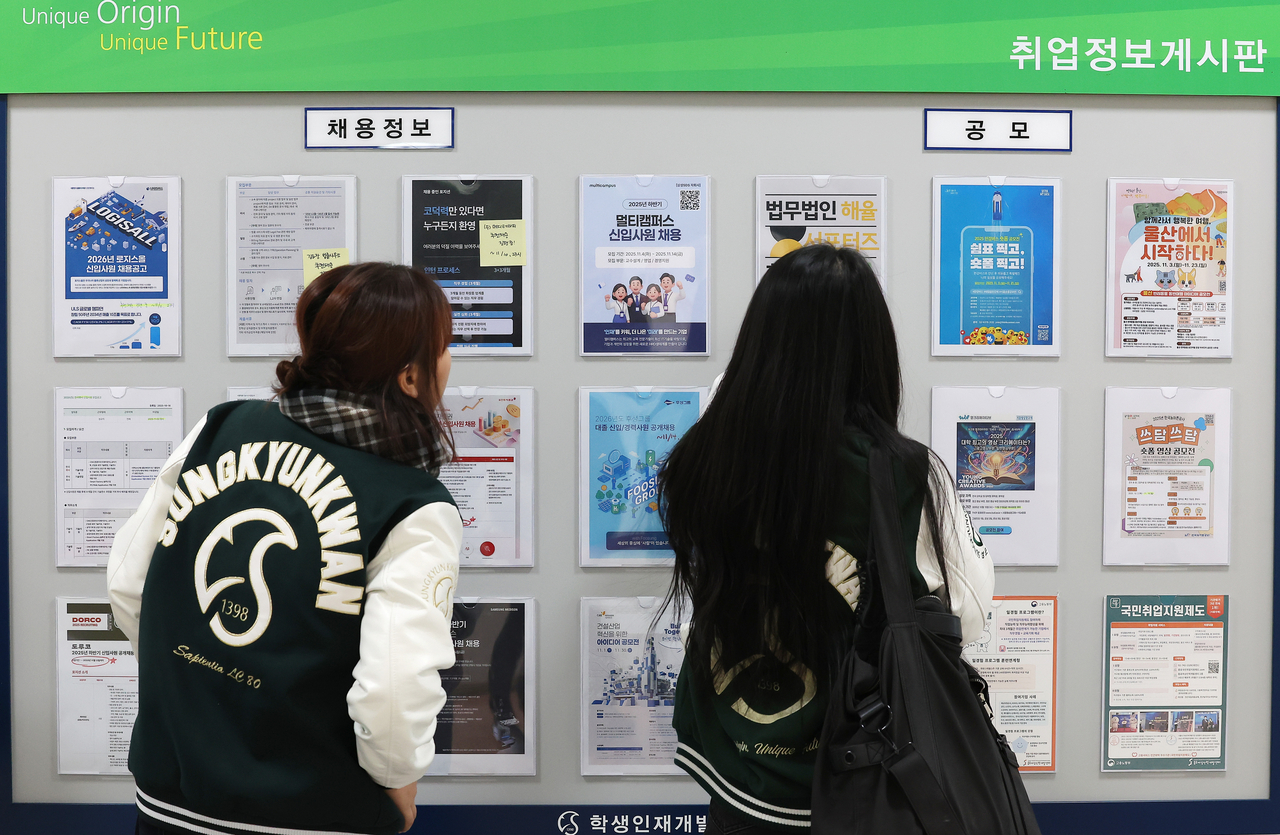
Hiring practices have shifted just as dramatically. Mass entry-level recruitment has been replaced by rolling, experience-driven hiring. For companies navigating uncertainty, the logic is clear. For new graduates, the entry gate often closes before it comes into view.
채용 형태 역시 크게 변화했다. 대규모로 신입 사원을 채용하던 기업들이 수시로 경력에 기반한 채용으로 대신하고 있다. 불확실한 상황을 헤쳐나가야 하는 회사들의 논리는 명확하다. 갓 졸업한 사회초년생들에게 입구는 종종 눈에 보이기도 전에 닫혀버린다.
Alongside this contraction, a deeper distortion has taken hold. While young people face dwindling opportunities, fast-growing industries are short of workers. By 2029, sectors such as AI, cloud computing and big data are projected to face shortages approaching 580,000 workers. Education and training systems have lagged behind the pace of industrial change. At the same time, top science students are flowing into medical schools at unprecedented rates, weakening the domestic pipeline for advanced technology talent.
이렇게 위축된 상황에 더불어 더 심각한 왜곡현상이 생기고 있다. 청년층에게는 기회가 줄어들고 있는 반면 급신장하는 업계에는 일손이 부족하다. 2029년까지 인공지능, 클라우드 컴퓨팅 그리고 빅데이터와 같은 분야에서는 58만명에 가까운 인력이 부족할 것으로 예상된다. 교육 및 인재양성 시스템은 산업의 변화속도에 따르지 못해왔다. 게다가 과학에 두각을 나타내는 학생들이 전대미문의 수준으로 의대에 집중되어 국내에서 첨단 기술 관련 인재를 배출해낼 경로는 약화되고 있다.
The consequences extend well beyond foregone jobs. Surveys show that more than 60 percent of college seniors and recent graduates are either passively job seeking or have disengaged altogether. After submitting an average of more than 13 applications, their document screening success rate remains barely above 2 percent.
그 결과는 단순히 일하기를 포기하는 수준이 아니다. 조사에 따르면 대학 4학년 및 최근 졸업한 학생들의 60퍼센트 이상이 소극적으로 취업을 준비중이거나 아예 구직활동을 하지 않는 것으로 밝혀졌다. 평균 13개 이상의 지원서를 제출한 지원자들의 서류 전형 합격률은 2퍼센트를 겨우 넘었다.
Repeated rejection gradually gives way to withdrawal. The longer young people remain outside the labor market, the steeper the barrier to reentry becomes.
반복되는 실패는 점차 청년들을 무기력감에 빠지게 만든다. 젊은이들이 노동 시장에서 밀려나 있는 시간이 길어질수록 재진입장벽은 더 높아질 것이다.
Policy responses have struggled to match the scale of the challenge. Training programs and internships have expanded, but their reach is inherently limited. They serve those still inclined to participate, not the growing cohort that has stepped away entirely. High-profile efforts to prod large firms into announcing hiring plans have produced headlines rather than lasting momentum.
어려움의 수준에 상응하는 정책을 도입하는 것은 어려움을 겪어왔다. 인재양성 프로그램과 인턴십을 확장해왔으나 그 적용범위는 내재적으로 한계가 있다. 이러한 제도는 그럼에도 일자리를 구하려는 이들에게는 효용이 있지만 점차 증가하는, 완전히 구직을 단념한 청년들에게는 도움이 되지 않는다. 대기업들을 압박해 채용 계획을 발표하게 하는 보여주기식 노력들은 지속성있는 동력을 만들어내기 보다는 기사를 양산했다.
At its core, this is an ecosystem failure. Labor markets, education systems and industrial policy are moving out of sync. Addressing it will require more than incremental fixes. Firms need incentives and flexibility to hire and train at scale. Education must be closely aligned with emerging industries through deeper collaboration between universities and companies. Government, meanwhile, must actively identify and support economically inactive young people through tailored counseling and career guidance before disengagement becomes permanent.
본질적으로 이는 생태계 자체의 실패다. 노동 시장, 교육 제도 그리고 산업 정책은 모두 제각각으로 움직이고 있다. 문제를 해결하려면 점진적인 해결책으로는 부족할 것이다. 기업들이 대규모로 인력을 채용하고 키우게 하려면 보상과 유연함이 필요하다. 교육은 더 긴밀한 산학 협력을 통해 첨단 산업과 밀접하게 발을 맞춰가야 한다. 한편 정부는 경제활동을 하지 않는 젊은이들이 영원히 그런 상태로 빠져들기 전에 그들을 적극적으로 파악하고 맞춤형 카운셀링과 진로 안내를 통해 지원해야 한다.
South Korea’s employment statistics may look strong, but they rest on a narrowing base. The cost of delayed reforms will not show up in the next data release. It will accumulate quietly, in weaker potential growth and in a workforce that was counted, but never fully mobilized.
한국의 고용 지표는 긍정적으로 보일지 모르나 이는 위태로운 발판 위에 놓여있다. 개혁을 미룬 댓가는 차기 데이터 발표에서 보이지는 않을 것이다. 조용히 축적되어 잠재적 성장을 약화시키고 수치로는 보여지지만 충분히 능력을 발휘하지는 못하는 노동력이라는 결과로 나타날 것이다.
full employment 완전고용
erosion 침식
contraction 수축
retrench 긴축하다
aggregate 통합
rolling 수시로
dwindle 줄어들다
pipeline 공급 경로
foregone 포기한
disengage 철수하다
inherently 내재적으로
cohort 집단
incremental 점진적인
align 나란히 하다
accumulate 누적하다
khnews@heraldcorp.com