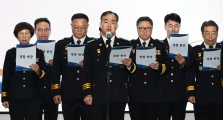
South Korea’s top science and engineering university will launch a stand-alone artificial intelligence college in 2026, a move aimed at rapidly expanding the country’s capacity to train AI specialists amid intensifying competition for global talent.
한국을 대표하는 과학기술 특성화 대학인 한국과학기술원(KAIST)이 2026년 독립적인 인공지능(AI) 단과대학을 설립한다. 이는 글로벌 AI 인재 확보 경쟁이 치열해지는 가운데, 국내 AI 전문 인력 양성 역량을 대폭 확대하기 위한 조치다.
According to the Ministry of Science and ICT and the Korea Advanced Institute of Science and Technology, the KAIST board approved the creation of the new AI college at a meeting on Thursday, with student recruitment set to begin next year.
과학기술정보통신부와 KAIST에 따르면, KAIST 이사회는 목요일 회의에서 AI 단과대학 신설안을 승인했으며, 학생 모집은 내년부터 시작될 예정이다.
KAIST said the initiative marks the first time a Korean university has elevated AI to an independent college-level unit.
국내 대학이 AI를 독립적인 단과대학 단위로 격상한 것은 이번이 처음이라고 KAIST는 밝혔다.
The new college will significantly increase KAIST’s AI education capacity. The university plans to enroll a total of 300 students annually, including 100 undergraduates and 200 graduate students, with the latter split between master’s (150) and doctoral (50) programs, according to KAIST. Overall, student quotas at the university will be expanded by the same number to accommodate the new intake.
새로 설립되는 AI 단과대학은 KAIST의 AI 교육 역량을 크게 확장할 전망이다. KAIST는 학부생 100명, 대학원생 200명(석사 150명·박사 50명) 등 매년 총 300명을 선발할 계획이다. 전체 학생 정원도 이 같은 신규 유입을 수용하기 위해 동일한 규모로 증원된다.
The AI college will comprise four departments covering the full AI value chain, from core software and hardware to industrial applications and societal impact:
AI 단과대학은 핵심 소프트웨어 및 하드웨어부터 산업 응용 분야 및 사회적 영향에 이르기까지 AI 가치 사슬 전반을 포괄하는 4개 학과로 구성된다.
The AI Computing Department will focus on foundational theory, algorithms, mathematics and systems that underpin modern AI models. Government and university briefings said the curriculum will include recent advances such as generative AI, multimodal AI, which integrates text, images and other data types, and agent-based AI systems that can autonomously plan and act.
AI컴퓨팅학과는 현대 AI 모델의 기반이 되는 이론, 알고리즘, 수학, 시스템을 중심으로 교육한다. 정부와 대학 설명에 따르면 생성형 AI, 텍스트·이미지 등 다양한 데이터를 통합하는 멀티모달 AI, 스스로 계획하고 행동하는 에이전트 기반 AI 시스템 등 최신 기술도 교육 과정에 포함된다.
The AI Systems Department will train hardware specialists, with coursework spanning AI semiconductors, high-speed communications and power and thermal management. These areas are critical for running large-scale AI models efficiently, particularly in data centers and edge devices.
AI시스템학과는 AI 반도체, 고속 통신, 전력 및 열 관리 등을 아우르는 교육과정을 통해 하드웨어 전문가를 양성한다. 이러한 분야는 특히 데이터 센터와 엣지 디바이스에서 대규모 AI 모델을 효율적으로 실행하는 데 특히 중요하다.
The AX, or AI Transformation, Department will emphasize practical deployment, applying AI directly to manufacturing, content, bio and materials science and sustainability challenges across industry and society.
AX학과는 실질적인 산업 적용에 중점을 두고, AI를 제조, 콘텐츠, 바이오, 소재 과학, 지속가능성 등 산업·사회 전반의 과제 해결에 직접 활용하는 데 초점을 맞춘다.
The AI Futures Department will focus on ethics, policy, economics and governance, examining how AI reshapes regulation, labor markets and public institutions.
AI미래학과는 윤리, 정책, 경제, 거버넌스를 중심으로 AI가 규제, 노동시장, 공공기관에 미치는 영향을 연구한다.
Undergraduate programs will begin in the spring semester of 2026. Because KAIST operates a department-free system in the first year, students advancing to their second year will be able to choose one of the four AI majors as their primary field of study, the university said. Graduate programs will open in the fall semester of 2026, with detailed admissions quotas by department to be finalized later based on research demand.
학부 과정은 2026년 봄학기부터 시작된다. KAIST는 1학년 무학과 제도를 운영하고 있어, 학생들은 2학년 진급 시 4개 AI 전공 중 하나를 주전공으로 선택하게 된다. 대학원 과정은 2026년 가을학기에 개설되며, 학과별 세부 선발 인원은 연구 수요를 반영해 추후 확정될 예정이다.
The science ministry said the KAIST initiative is part of a broader national policy to secure leading AI technologies and talent. Beginning in 2027, similar AI colleges are planned at Gwangju Institute of Science and Technology, Daegu Gyeongbuk Institute of Science and Technology, and Ulsan National Institute of Science and Technology, each aligned with regional strategic industries, according to the ministry.
과기정통부는 KAIST의 이번 조치가 핵심 AI 기술과 인재를 확보하기 위한 국가 차원의 중장기 정책의 일환이라고 설명했다. 정부는 2027년부터 광주과학기술원(GIST), 대구경북과학기술원(DGIST), 울산과학기술원(UNIST)에도 지역의 전략적 산업과 연계된 AI 단과대학을 순차적으로 설립할 계획이다.
The move comes as KAIST gains stronger global recognition in AI. In ShanghaiRanking Consultancy’s 2025 Global Ranking of Academic Subjects, which introduced AI as a standalone field for the first time, KAIST ranked No. 39 worldwide.
이번 결정은 KAIST의 AI 분야 국제적 인식이 높아지고 있는 흐름 속에서 나왔다. AI를 독립 학문 분야로 처음 도입한 2025년 상하이랭킹 학문 분야별 세계대학 평가에서 KAIST는 AI 분야 세계 39위를 기록했다.
Tip
1. intensifying: 점점 강화되는, 심화되는
2. board: 이사회, 운영위원회
3. intake: 섭취, 흡입, 유입, 신규 입학
4. underpin: 뒷받침하다, 기반이 되다
5. coursework: 교과 과정, 수업 이수 과제
6. deployment: 배치, 활용, 적용
7. regulation: 규제, 규정, 법적 통제
8. demand: 수요, 필요
9. regional: 지역의, 지역적인
10. recognition: 인정, 인식, 공인
khnews@heraldcorp.com