

'Maybe Happy Ending' hit Broadway while Korean-led productions like 'The Great Gatsby' returned home, marking a record-setting year for Korean originals
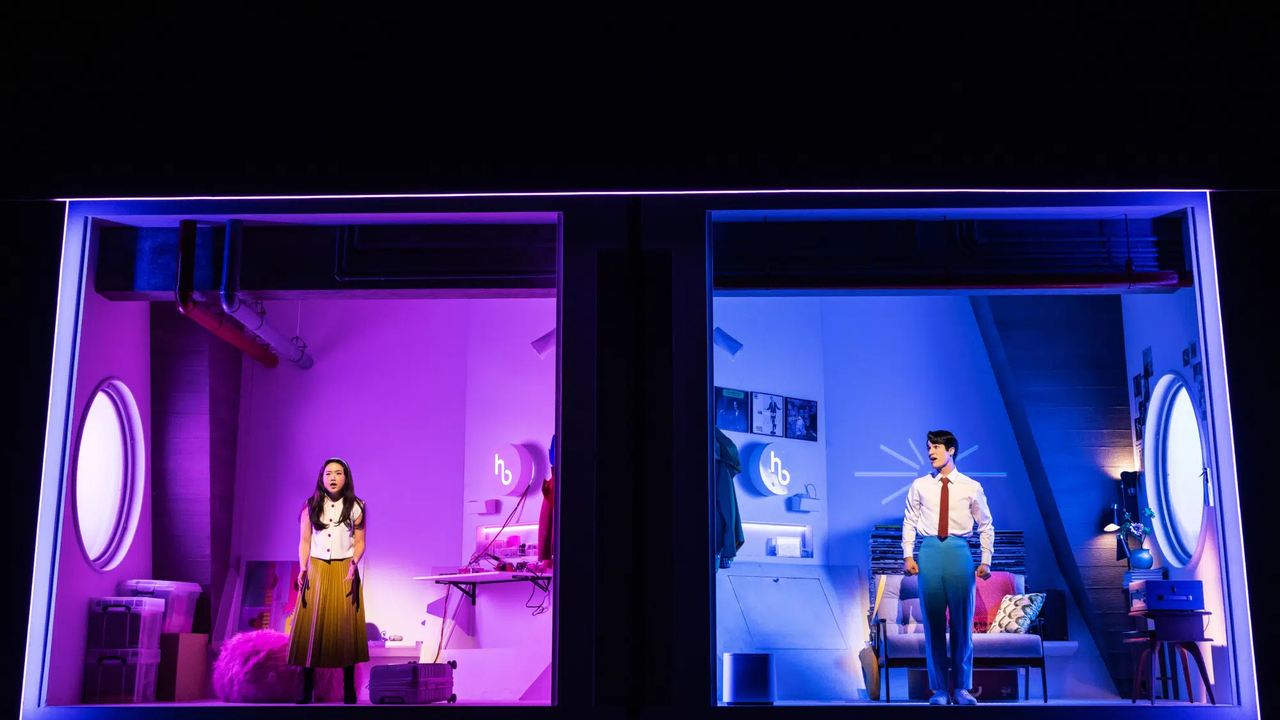
In 2025, the relationship between Korea’s musical theater scene and Broadway shifted in a way that felt less like export and more like exchange.
For years, the flow had largely moved in one direction: Korean producers imported proven Broadway titles, while domestic originals focused primarily on the local market. This year, that structure began to change.
“Maybe Happy Ending,” the Broadway adaptation of the Korean original whose origins go back to 2014 in a small theater in Seoul, swept the Tony Awards in June with six awards, including best musical. Developed by writers Park Chun-hue -- also known as Hue Park -- and Will Aronson, the production’s arrival and reception on the world’s most competitive commercial stage underscored the growing maturity of Korea’s musical scene. The Korean production, which took home six awards from the Korean Musical Awards in January 2018, also returned, celebrating its 10th anniversary.

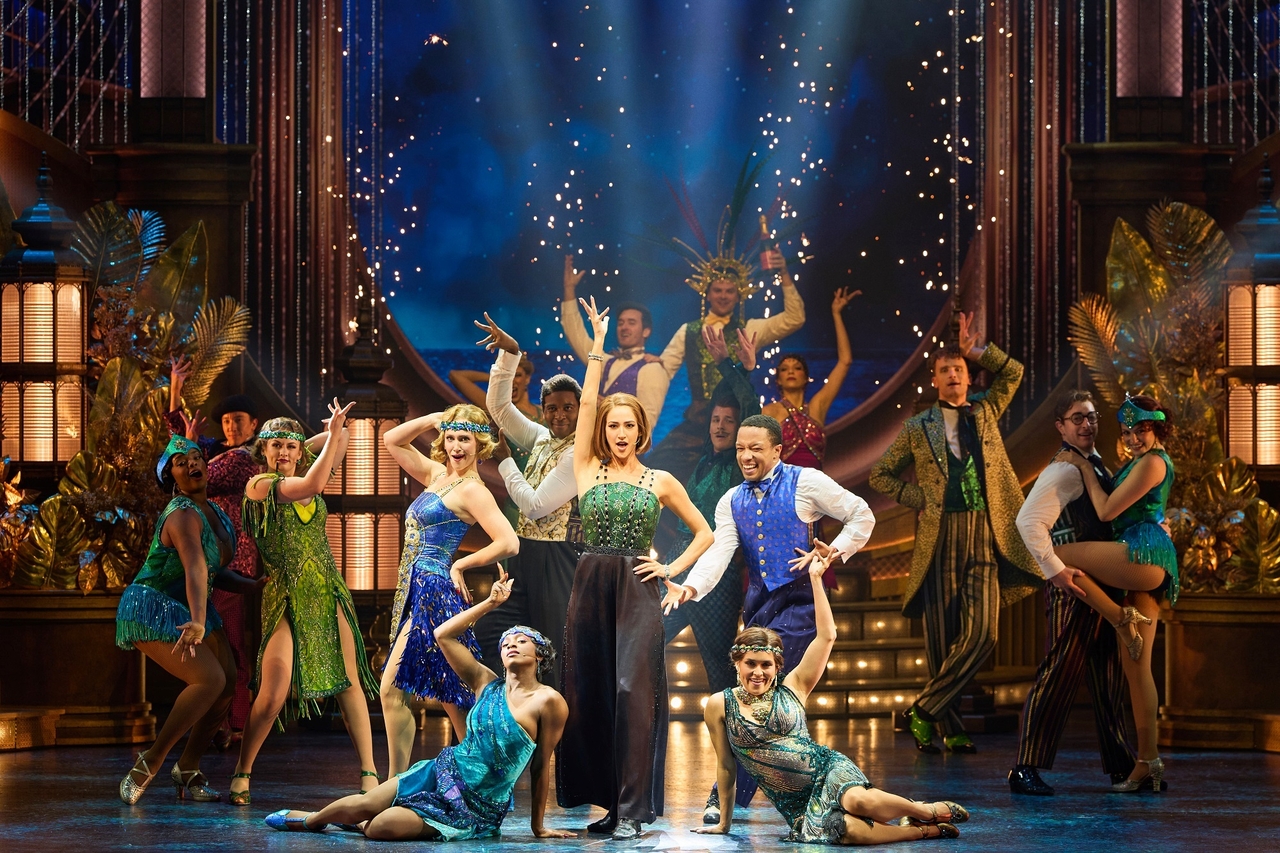
At the same time, the movement ran in the opposite direction. Korean-led Broadway production “The Great Gatsby” returned to Korean stages -- not as licensed imports, but as part of a broader creative circuit shaped by Korean producer Shin Chun-soo operating within the global musical theater system. “The Great Gatsby” ran in Korea from Aug. 1 to Nov. 9, and at one point during its run, three separate productions of the musical were playing simultaneously on Broadway, the West End, and in Seoul.
This two-way movement coincided with a record-setting year for original Korean musicals. An estimated 70 new works were introduced this year, according to Lee Jong-kyu, the chairman of the Korea Musical Association, which hosts the annual Korea Musical Awards.

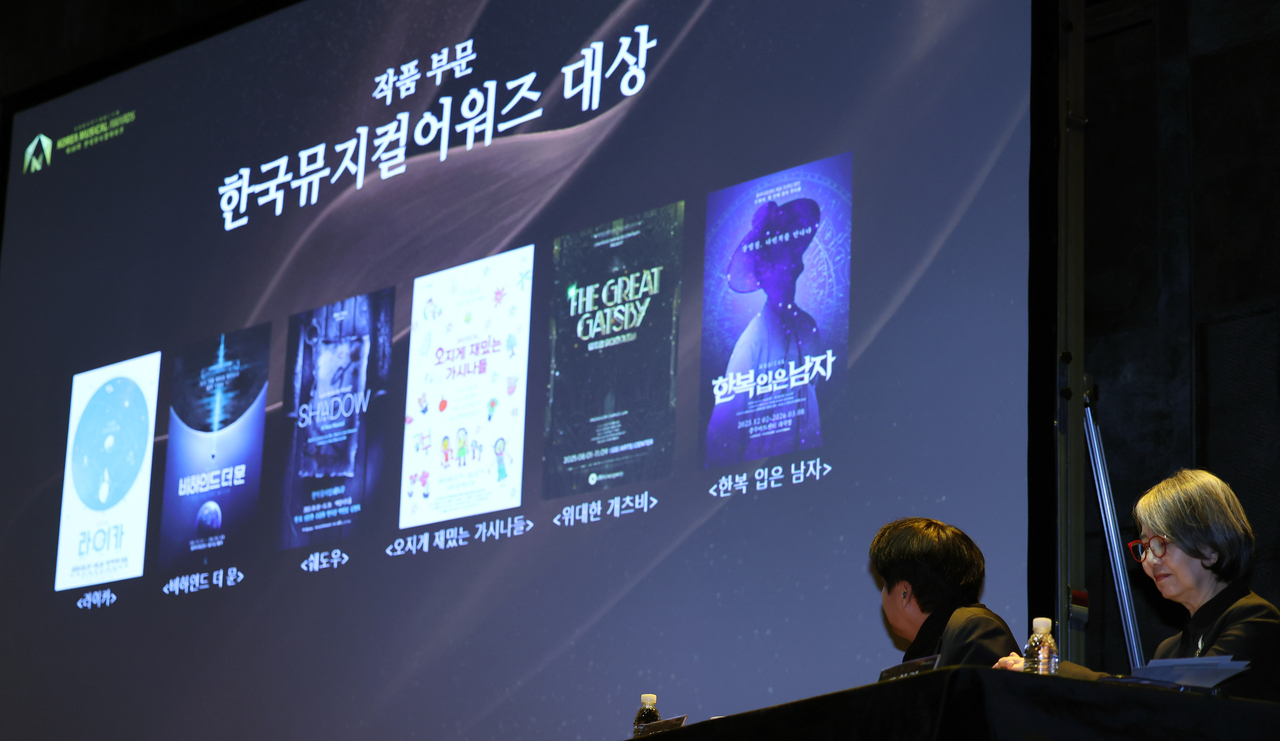
“The Grand Prize at the Korea Musical Awards is limited to newly premiered original works. This year, 45 productions were officially submitted for consideration, and when including works that were not submitted, the total number of new original musicals is estimated to be around 70. This sheer volume was particularly striking, highlighting a clear quantitative increase in original productions,” Lee told reporters during a press conference on Monday.
Lee explained that submissions hit a low in 2021, with only three original musicals submitted to the awards amid the COVID-19 pandemic. The number of new productions submitted has since risen to an all-time high.
Most of these premieres took place in small and mid-sized theaters. While this reflects a certain degree of diversity, it also points to a limitation: large-scale original musicals remain relatively scarce. For the ecosystem to mature further, it needs more original productions to be staged in large theaters, Lee explained.
Out of 45 submissions for the Grand Prize, the Korean Musical Awards — set to take place on Jan. 19 — selected six finalists: four small- and mid-sized productions (“Laika,” “Behind the Moon,” “Shadow” and “Granny Pottery Club”) and two large-scale productions (“The Great Gatsby” and “Man in Hanbok”).

“Granny Pottery Club,” a small theater production, has been nominated for eight categories, becoming the most-nominated musical for this year’s awards. The story depicts the journey of elderly women attending a literacy school in Chilgok, North Gyeongsang Province, as they learn to read and write Korean, compose poetry and reclaim their own voices.
Overall, the Korean Musical Awards received 102 productions and more than 2,000 individual submissions for nomination, also a record high.
The year, fueled by the success of “Maybe Happy Ending,” also translated hype into tangible policy momentum. Funding for K-musical support has been increased sharply to 24.4 billion won ($16.69 million) this year, up from 3.1 billion won previously, with 16 billion won earmarked for a newly launched program dedicated to the development of large-scale original musicals.
Notably, the initiative moves beyond the existing model of supporting completed productions. Instead, it expands support to earlier stages of development, including submissions to overseas festivals and pilot performances carried out in collaboration with local theaters abroad, with the aim of strengthening pathways for international expansion from the outset.
At the National Assembly, the long-anticipated Musical Industry Promotion Act is also under review and is said to be approaching its final legislative phase.
Industry experts see that the legal framework is essential to protect creators’ rights, introduce standard contracts, ensure fair revenue distribution and establish a dedicated agency to support the industry’s growth.
In academia, there was also a move to sustain the momentum. In August, a group of scholars and industry experts came together to establish the Korean Musical Theater Studies Association, with the aim of positioning musical theater as an independent academic discipline.
gypark@heraldcorp.com