As in many countries, South Korea’s single-person households often choose studio or small apartments — commonly called “one-room” or “two-room” here, depending on their size. One of the most popular alternatives is the officetel, a hybrid commercial-residential unit classified as quasi-housing under the Housing Act. As its name suggests, it can be used for both work and living, though most units are occupied solely as residences.
An officetel building typically combines offices, retail spaces and residential units under one roof, functioning as a self-contained microliving environment. They are often located in high-traffic areas with easy access to transportation, shops and restaurants. But despite their convenience, officetel have drawbacks that become especially noticeable in Korea’s humid summers and dry, cold winters.
This column reviews the key advantages and disadvantages — and what prospective tenants should check before signing a lease.
Location and convenience
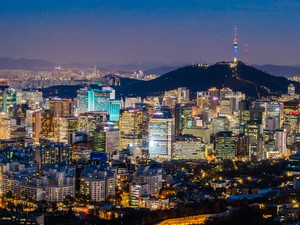
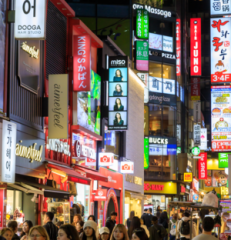
Open a real estate app such as Zigbang and you may notice clusters of officetel around universities and subway stations. This is largely because these areas are zoned as commercial districts, which allow a much higher floor-area ratio than residential zones. Developers can build taller structures on smaller plots of land — a perfect fit for officetel, which rarely include above-ground parking or large communal facilities.
Officetel are also attractive to investors. According to Real Today’s analysis of Korea Real Estate Board data, officetel in Seoul delivered an average return of 4.96 percent as of August — outperforming shop buildings in the city, which yielded 2.89 percent for smaller units and 3.16 percent for larger ones in 2024.
For residents, the main appeal is convenience. Many buildings sit next to major transit lines and have restaurants, cafes, clinics or fitness centers on lower floors. Security is generally stronger than in older one-room buildings, though not necessarily at the level of modern apartment complexes. Some officetel have cameras only at the entrance and in elevators, not in hallways — something to verify during your search.
Short-term living -- and fine print
Officetel are popular among people seeking monthly rental contracts. Although leases typically require at least a one-year commitment and a sizable deposit — often equivalent to 10 months of rent or more — they are still more accessible than apartment jeonse contracts, which demand deposits close to full market value.
Because many tenants stay only temporarily, most officetel units come furnished with a refrigerator, air conditioner, washing machine, stove and other basic appliances. Options vary by unit, so confirm with your realtor what is included.
Reading the contract carefully is essential. Most landlords may be reasonable about issues such as wallpaper changes or appliance wear and tear, but clauses differ widely. You do not want to be responsible for replacing a refrigerator that breaks within a month of moving in.
Some owners also ask tenants not to register their official address at the unit — often because the space is not registered for residential use. While this rarely causes problems, the Housing Lease Protection Act does not apply in such cases. Make sure to ask.
Downsides
Despite their convenience, officetel come with structural and environmental drawbacks, especially for long-term residents.
Many units have windows on only one side, limiting airflow. Those facing busy roads collect dust quickly. Newer buildings have larger windows, but ventilation remains a common complaint.
Poor ventilation also increases fire risks, particularly for those who cook frequently. Some lower-floor units receive little direct sunlight, making them prone to mold — a serious issue in Korea’s humid summers.
Because officetel are categorized as quasi-housing, building requirements are less strict than for apartments. Sound insulation, plumbing noise and wall thickness vary widely. Consulting multiple realtors can help avoid units with structural flaws.
Monthly maintenance fees tend to be higher per square meter than in apartment complexes. Heating is often billed separately, which can add up in winter.
Parking is frequently insufficient. Many buildings rely on automated tower parking systems, which can cause delays and still may not guarantee one spot per resident. Additional parking fees are common.
In older buildings near restaurants, pests can appear — though this is relatively rare. Prospective tenants on lower floors should still ask.
'Pretty garbage'?
A growing trend is the "bokcheung," or multi-level, officetel: a unit with a high ceiling and a mezzanine-like upper space. It offers an airy feel and large windows, but has earned the derisive nickname “pretty garbage.”
The reasons are practical.
Heating and cooling inefficiency is significant — warm air rises in winter, but the mezzanine cannot have floor heating installed because its height (usually 1.5 meters or lower) classifies it as an attic. In summer, the upper space becomes stiflingly hot; in winter, it stays cold.
At 1.5 meters, the upper level is lower than most adults’ standing height, limiting how it can be used. It is also closer to the ceiling of the unit above, increasing noise transfer.
Officetel remain a solid choice for people who value convenience, mobility and short-term living — especially in dense urban areas. But their comfort comes with trade-offs. By checking ventilation, sunlight, building standards, maintenance fees and contract conditions in advance, tenants can avoid many of the common pitfalls and find a suitable place to call home, even if only temporarily.