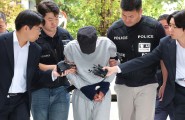

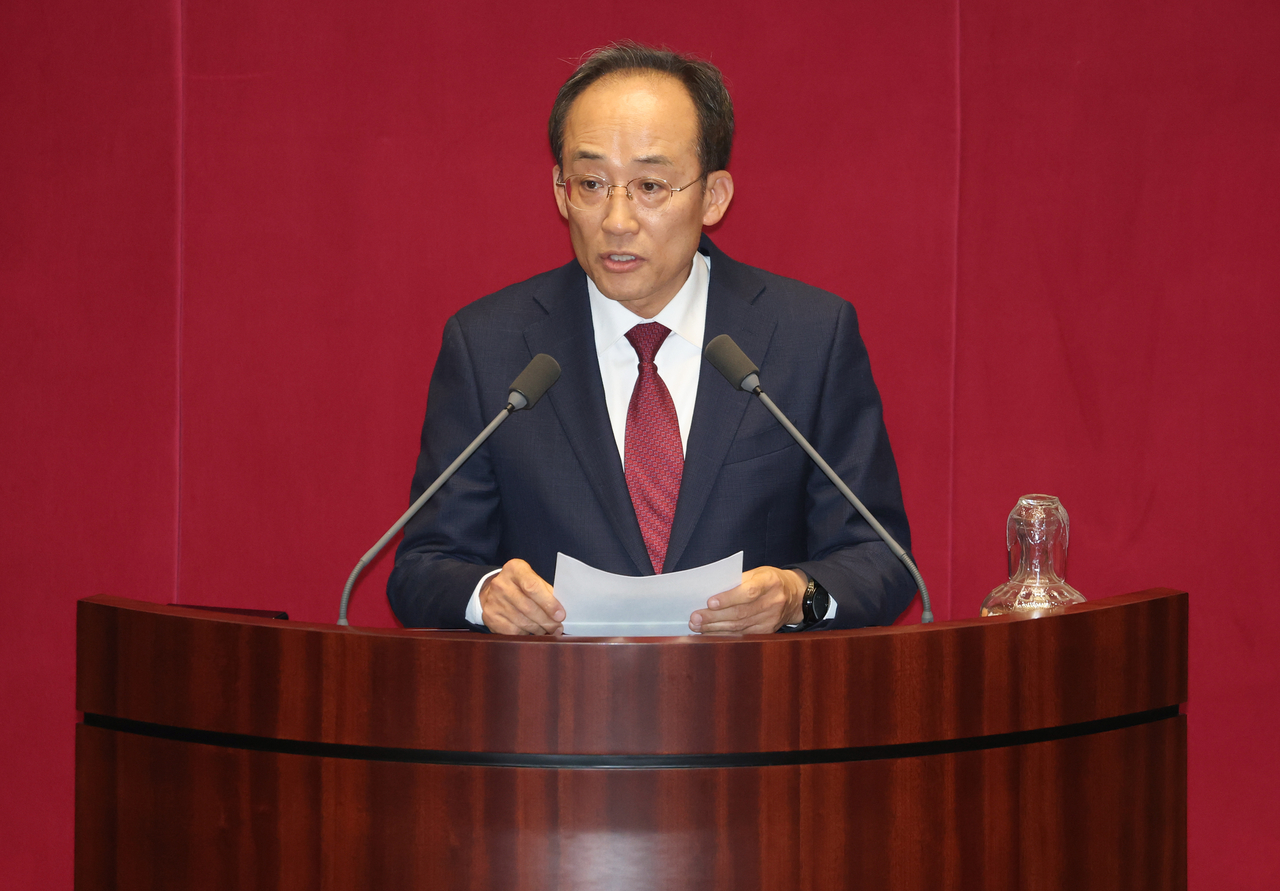
South Korea's National Assembly on Thursday approved a motion to allow the arrest of Rep. Choo Kyung-ho, former floor leader of the main opposition People Power Party, in connection with the martial law declaration by former President Yoon Suk Yeol on Dec. 3 of last year.
The motion, which allows investigators to apply for an arrest warrant for Choo, passed with 172 votes in favor, four against, two abstentions and two invalid ballots out of 180 participating lawmakers. The ruling Democratic Party of Korea holds 166 seats. None of the 107 People Power Party lawmakers took part in the anonymous ballot.
The arrest motion against Choo was requested by the special counsel investigating last year’s martial law incident.
The special counsel claims that Choo changed the locations of his party’s internal meetings several times in an attempt to delay the Assembly’s vote on lifting martial law.
Choo resigned as the People Power Party’s floor leader shortly after Yoon’s martial law imposition.
The special counsel argues this amounted to obstruction of parliamentary proceedings and an act of insurrection. Pointing out the vote was not stopped, the People Power Party rejects the claims, p, labeling them as an unfounded attempt to criminalize political disagreement.
With the arrest motion having passed, Choo will now be legally subject to a hearing on his arrest. Observers say the hearing could take place on or around Tuesday.
Choo used his floor speech ahead of the vote to voice concerns about the warrant, arguing that it and the charges being pursued were politically motivated. He said the special counsel’s claim that he obstructed the vote to lift martial law was “a baseless and malicious political operation,” adding that prosecutors had “created a warrant (proposal) by reframing my routine activities and statements as floor leader.”
Choo insisted he had already stated his intention to forgo parliamentary immunity, but argued that investigators had failed to produce evidence of any conspiracy or to identify a lawmaker who was prevented from voting.
He also accused the Democratic Party and the current administration of “weaponizing” multiple special counsels to “suppress and eliminate the People Power Party,” warning that “unless this vicious cycle of oppression and retaliation ends, any lawmaker could become a victim to political strife.”
People Power Party lawmakers held a protest outside the plenary chamber as the vote kicked off. Song Eon-seog, the current floor leader of the main opposition People Power Party, denounced the special counsel investigation.
“This is not an investigation, but a character assassination. It is a fabrication and the public will not tolerate it.”
The ruling liberal bloc defended the push for Choo’s arrest, arguing that the allegations against him necessitated judicial review and accountability, but did not say why they believed he was likely to abscond, destroy evidence or commit further crimes.
Justice Minister Jung Sung-ho, speaking in a floor address after Choo’s remarks, explained the grounds for requesting parliamentary consent to the arrest, saying that Choo has a “constitutional duty” as a lawmaker to safeguard the Constitution and to end any “unlawful declaration of emergency martial law in order to protect the lives and safety of the people.”
In a written briefing released through its spokesperson in the afternoon, the Democratic Party called the passage of the arrest motion “a rightful decision by the National Assembly and an inevitable outcome,” citing accusations that Choo obstructed the vote to lift martial law and “aided an insurrection” during what the party described as an unprecedented constitutional crisis. It added, “(Choo) should stop hiding behind privilege and excuses, and fully clarify his charges before the judiciary.”
Political observers warned that the approval of the arrest motion could push the main conservative bloc into an even harder-line posture as it seeks to counter the fallout.
Jang Seong-cheol, a political commentator and former aide to the People Power Party, said the approval of Choo’s arrest could solidify the labeling of the main opposition as a “party of insurrection,” with the “accomplice” label potentially expanding to other conservative lawmakers.
If that dynamic takes hold, he said, the party is likely to shift into a more defensive mode, rallying around internal unity. The People Power Party could increasingly lean toward harder-line positions — a shift that could further alienate moderate voters.
Jang further noted that the People Power Party could face significant headwinds heading into next year’s local elections, especially as high-profile lawmakers — including Reps. Na Kyung-won and Kwon Young-se — remain cautious for now, but risk losing support from centrist voters.
With many People Power Party lawmakers reportedly eyeing key posts such as Seoul mayor, Daegu mayor and North Gyeongsang Province governor, and with numerous lower-level officials seeking nominations, he said falling approval ratings would inevitably fuel frustration toward senior party leaders. In a more extreme scenario, he added, pressure to replace the party’s leadership could surface even before the elections.
mkjung@heraldcorp.com
flylikekite@heraldcorp.com
![[World Class] HUFS bets on Songdo, AI to redefine what a global university can do](https://wimg.heraldcorp.com/news/cms/2026/10/18/news-p.v1.20260930.7e4dbeacfc1d4d16848c0e2a441c04e6_R.jpg?type=h&h=120)