
Observers say ruling is not a political achievement by a single administration, but reflects years of government work

South Korea’s victory in its 13-year legal battle with the US private equity fund Lone Star has quickly devolved into a partisan dispute over who deserves credit.
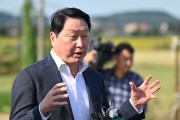
At the center of the political dispute is Han Dong-hoon, the former leader of the main opposition People Power Party and a spurned ally of ousted President Yoon Suk Yeol.
As justice minister under the Yoon Suk Yeol administration, Han rejected the arbitration ruling issued on Aug. 31, 2022, and immediately announced that the country would petition for annulment.
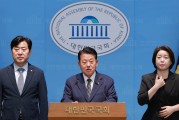
Han accused the Lee Jae Myung administration of trying to claim credit after Prime Minister Kim Min-seok announced in a televised briefing on Tuesday that South Korea had won its case before the annulment committee of the International Center for Settlement of Investment Disputes. The decision wipes out South Korea’s obligation to pay $216.5 million in damages plus accrued interest — totaling roughly 400 billion won ($272.8 million) — under the original ruling.
Kim said the victory was “another major achievement in external affairs under the new administration, following the successful hosting of APEC, summit diplomacy with the United States, China and Japan, and the conclusion of tariff negotiations (with the US).”
Han quickly pushed back against Kim’s announcement.
“The Democratic Party (of Korea) strongly opposed (the annulment case), questioning the chances of success when, as justice minister, I moved forward with the Lone Star ISDS annulment case that we won today,” Han said Tuesday in a Facebook post.
“The Democratic Party administration shouldn’t show up at the finish line to claim credit, but should apologize to the public for nitpicking and opposing the case at the time.”
Han added, during a radio interview with local broadcaster SBS on Wednesday, “I’m certain that if Korea had lost this case, the Democratic Party would have blamed everything on me and told me to pay the damages out of my own pocket.”
The Democratic Party hailed the victory as another key achievement. The praise came after presidential spokesperson Kang Yu-jung said Tuesday that “(since the start of its term) the government has formed a response system at the national level and has done its utmost in responding to the case.”
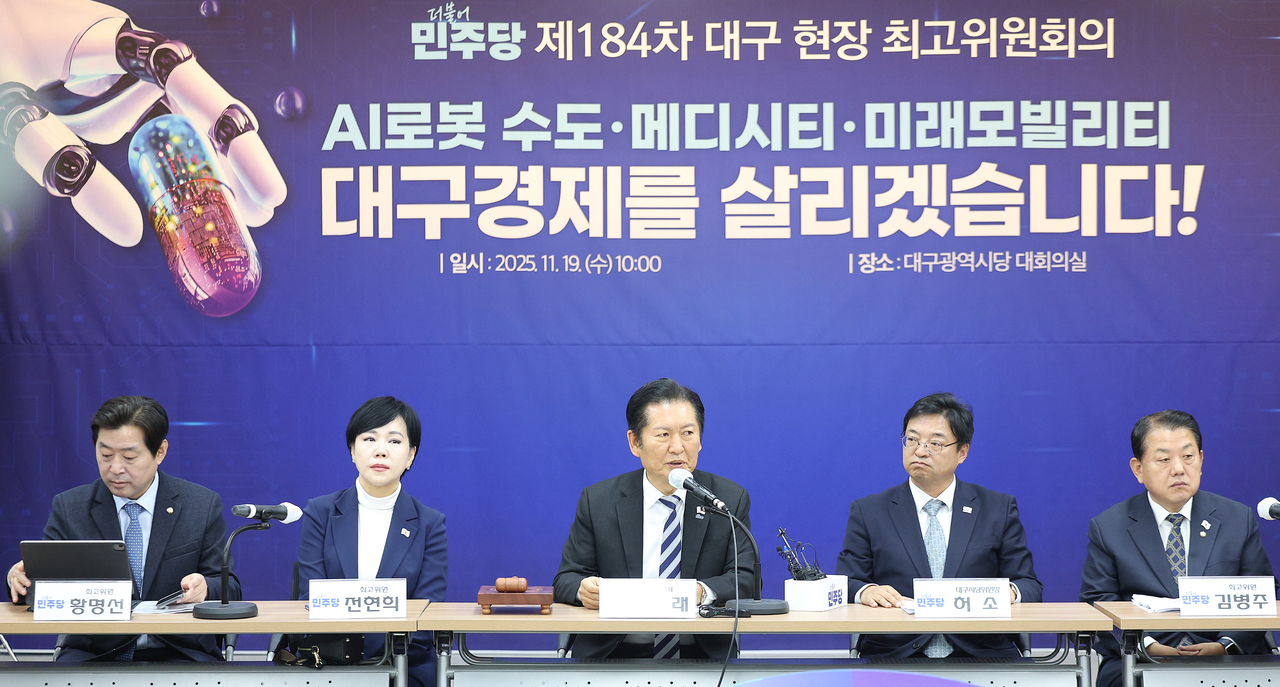
At the party’s Supreme Council meeting in Daegu on Wednesday, Democratic Party leader Rep. Jung Chung-rae said the victory “adds to President Lee Jae Myung’s diplomatic achievements and makes the country proud.”
Rep. Hwang Myeong-seon added that “the Lee Jae Myung administration, which took over the Lone Star lawsuit that had continued for some 13 years, protected the interests of the people based on responsibility and expertise.”
During the meeting, Democratic Party lawmakers said the People Power Party cannot avoid responsibility for the Lone Star case.
The opposition party has pointed to Choo Kyung-ho, who served as deputy prime minister for economic affairs under the Yoon administration, as bearing responsibility for approving Lone Star’s controversial 2003 acquisition of Korea Exchange Bank as the working-level head.
Separately, Han Duck-soo, who served as prime minister under the Yoon administration, has faced criticism for having worked at Kim & Chang, the law firm representing Lone Star, and for remarks that critics say later benefited Lone Star’s case.
The People Power Party insisted that the victory belongs to the previous Yoon administration — not the Lee administration.
“This case clearly shows what kind of decisions a government must make to protect the public’s assets. The previous administration fought the case to the very end on principle — and kept 400 billion won from being lost," the party’s spokesperson Park Sung-hoon said Wednesday.
However, some also argue that the ruling reflects more than a decade of sustained effort by the Justice Ministry and career officials, and is therefore not something for political parties to fight over or claim exclusive credit for.
The case goes back to November 2012, when Lone Star filed a roughly $4.68 billion investor-state dispute claim, alleging that the South Korean government deliberately delayed approval of the sale of Korea Exchange Bank to force down the price.
Democratic Party spokesperson Kim Hyun-jung said Wednesday, “We could have simply said the government handled the case well. There is no need to politicize the matter.”
Kim said what matters more is taking steps to prevent the deeper structural failures at the root of the Lone Star dispute from recurring.
“It’s important to look back at those earlier mistakes and ensure that measures are in place so that such problems never happen again,” he added.
dagyumji@heraldcorp.com