

BBQ, Kyochon, BHC lead charge in taking Korean fried chicken global
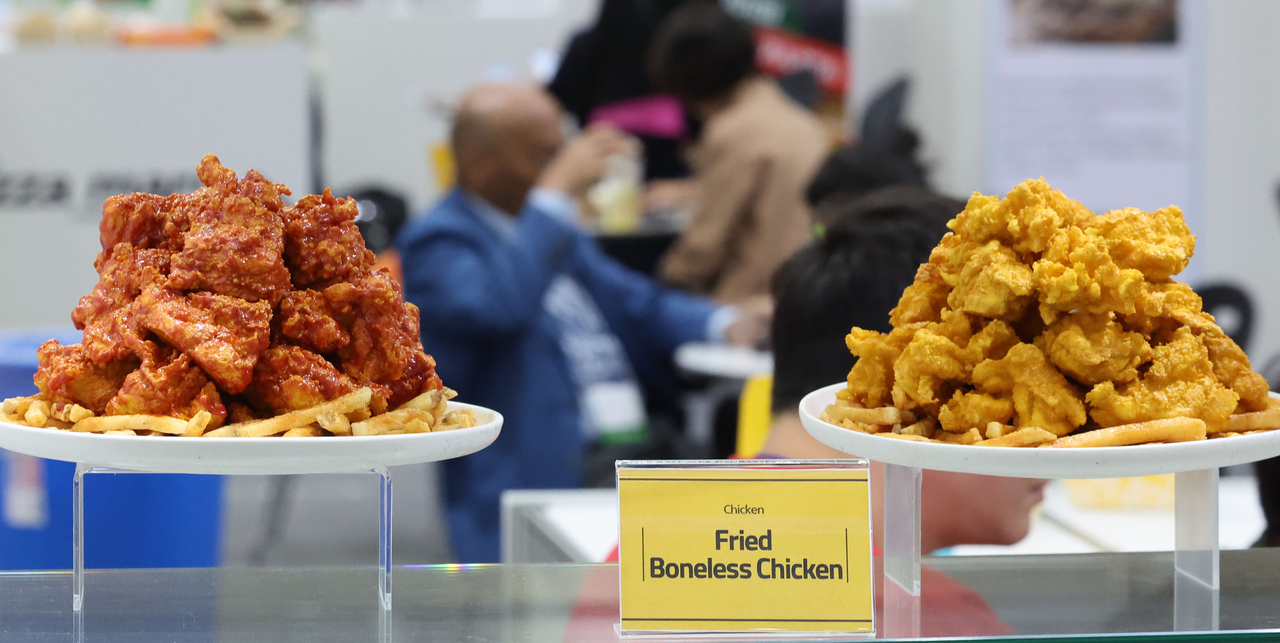
The week of the 2025 Asia-Pacific Economic Cooperation summit in Korea centered around culture as diplomacy, but it was Korean fried chicken that stole the show.
The biggest beneficiary was arguably Kkanbu Chicken. The aptly named franchise — “kkanbu” means “close friend” in Korean — was host to Nvidia founder Jensen Huang, Samsung Electronics Chair Lee Jae-yong and Hyundai Motor Executive Chair Chung Euisun on Oct. 30 on the sidelines of the APEC summit. Over chicken and beer, the three leaders discussed cooperation in AI, semiconductors, software and robotics.
Although the high-profile dinner thrust the 19-year-old franchise into the global spotlight and prompted flurries of overseas expansion inquiries, it has taken a measured approach.
“In the days following the high-profile chimaek dinner, we have received a flood of overseas inquiries from Japan, the United States, Vietnam, Hong Kong and China regarding potential franchise partnerships,” said an official from Kkanbu Chicken.
“We’re not signing contracts tomorrow,” official added. “But we’ve always had plans in view.”
Posting annual sales of about 30 billion won ($20 million) across 162 stores in Korea, Kkanbu currently operates two overseas outlets in the Philippines. The first opened in October 2023 and the second in May 2024.
The company briefly operated a Tokyo location, which ran for about eight months at the partner’s request to gauge local market response, before closing it late last year.
While Kkanbu basked in its viral moment, Korea’s bigger chicken brands were already spreading their wings overseas.
The largest in scale is Genesis BBQ, which, since entering China in 2003, has grown to about 700 outlets across 57 countries, including the United States, Vietnam, India and Costa Rica.
The latest expansion came in early November, with two new outlets opening in South Carolina, marking the company’s entry into its 33rd US state. The company aims to establish outlets in all 50 states.
Kyochon Chicken entered the US market in 2007 and currently operates 84 stores in 15 countries, including 38 in Malaysia, 17 in China and 12 in Indonesia.
BHC Chicken has taken a more measured path. Since its first overseas opening in Hong Kong in 2018, BHC has expanded to seven countries with 29 stores, focusing on Southeast Asia and North America.
According to industry estimates, the combined overseas revenue of Korea’s three largest fried chicken franchises is expected to exceed 200 billion won this year, despite many subsidiaries remaining in the red. BBQ posted overseas sales of around 150 billion won in 2024, while Kyochon and BHC reported far smaller figures at 19.4 billion won and 4.3 billion won, respectively.
“It will take time for chicken chains to turn a profit, given the differing conditions overseas in logistics, rental cost and regulations,” an industry official said. “Even so, sustained global appetite for Korean-style fried chicken suggests that the drive for overseas expansion will continue.”
The major chicken franchises’ pivot toward overseas markets partly comes amid a shrinking domestic market.
According to data from the Fair Trade Commission, the number of chicken franchise brands in Korea peaked at 701 in 2021 but has declined each year since, down to 647 last year. The total number of chicken outlets has also fallen for three consecutive years, dropping by nearly 3,000 from 42,743 in 2020 to 39,789 in 2023, data from the Ministry of Data and Statistics show.
minmin@heraldcorp.com