
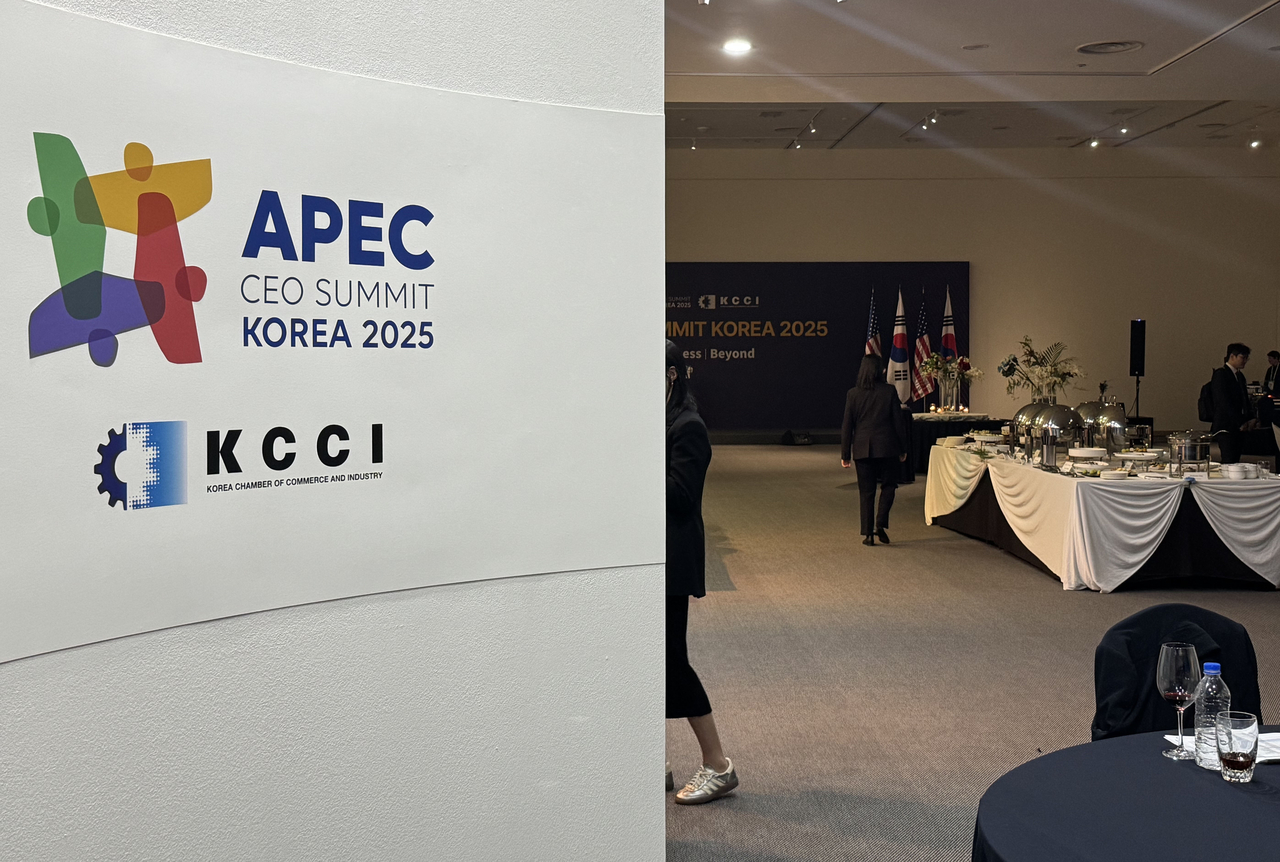
As world leaders, business executives, and media delegates flocked to Gyeongju, the host city of the 2025 Asia-Pacific Economic Cooperation summit, some visitors complained that the city appeared unprepared to host major global events.
Rooms across the city were booked months in advance, and many visitors say the few that remained came with inflated prices and unexpected fees.
A viral video from a travel YouTuber showed a host demanding an extra 50,000 won ($35) in cash for a “mandatory pool heating fee,” even though the pool had closed hours before check-in.
“Getting a place to stay in Gyeongju was like asking for the moon. Prices were outrageous,” a reporter covering APEC told The Korea Herald. “Some outlets booked four months ahead, but others are commuting daily from cities like Ulsan.”
Industry officials say Gyeongju’s limited accommodation means the city is ill-prepared for an international event of this scale. According to a New York Times report, Gyeongju — while rich in UNESCO World Heritage sites and historical landmarks — lacks the infrastructure to accommodate the influx of participants, including heads of state from the US, China, and Japan.
The NYT noted that the city has no international airport and too few high-end hotels to host delegations. Some cruise ships have reportedly been converted into temporary accommodations, while journalists and executives scrambled to secure last-minute rooms amid soaring prices.
According to the APEC organizing committee, around 20,000 people are expected in Gyeongju this week. Twelve major hotels have prepared 35 presidential-level suites for heads of state, while Gyeongsang Province secured 16,838 rooms for business and media delegates, including 4,463 near the conference venue.
The hotel industry reportedly poured trillions of won into renovations, transforming the Bomun Tourist Complex into an “APEC special zone.”
Still, many smaller hotels and guesthouses struggled to meet demand. Some foreign tourists said they headed elsewhere due to high prices and limited availability.
“Our tiny room cost $150 a night — barely enough space to open a suitcase,” said a tourist from the US. “We decided to leave early for Busan.”
Experts say the surge is deterring ordinary visitors.
“APEC’s economic benefits may be short-lived,” said Jeong Ran-su, director of the Future Tourism Strategy Institute. “The price spike and crowding are pushing away tourists.”
The government’s handling of the situation has drawn comparisons to the 2023 Saemangeum World Scout Jamboree, when poor preparation and extreme conditions forced participants to evacuate early.
"While Gyeongju’s heritage is a point of pride, its limited infrastructure once again exposes South Korea’s challenges in balancing global ambitions with on-the-ground readiness," a city official working in Gyeongju said.
jychoi@heraldcorp.com



![[Exclusive] Ateez to return in November](https://wimg.heraldcorp.com/news/cms/2026/09/02/news-p.v1.20260902.76162fb0ba55493aad1c076f240d0750_R.jpg?type=h&h=120)