
'Heritage for Tomorrow' and 'Harmony' exhibitions reflect APEC’s theme through tradition reimagined for today
GYEONGJU, North Gyeongsang Province — As world leaders gather in Gyeongju this week for high-profile APEC 2025 meetings under the theme “Building a Sustainable Tomorrow: Connect, Innovate, Prosper,” a parallel exhibition and its satellite show engage in the same dialogue, translating themes of connection and innovation into the language of Korean craft.
“Heritage for Tomorrow,” at the Cheongun Hybrid Complex, and "Harmony," at the House of Choi, a centuries-old family estate where several world leaders will dine, are showcasing contemporary reinterpretations of Korean craftsmanship and heritage-inspired works through Nov. 30.
'Heritage for Tomorrow'
“Heritage for Tomorrow” offers a glimpse into the excellence of Korean craftsmanship, featuring 66 pieces, including the gat, the traditional Korean hat made world famous by the Saja Boys in “Kpop Demon Hunters,” as well as moon jars and lacquer works by leading artists.
“What I see as the essence of Korean craft is its remarkably flexible attitude: one that is both traditional and innovative, grounded in material experience and wisdom accumulated over centuries,” Rheem Mi-sun, artistic director of "Heritage for Tomorrow," said during a press preview Tuesday.
The exhibition is organized around three key concepts, future, culture and nature, and divided into three sections — Future: Excellence Leading the Way, Culture: Shaped by Collective Wisdom and Nature: Envisioning Sustainability.
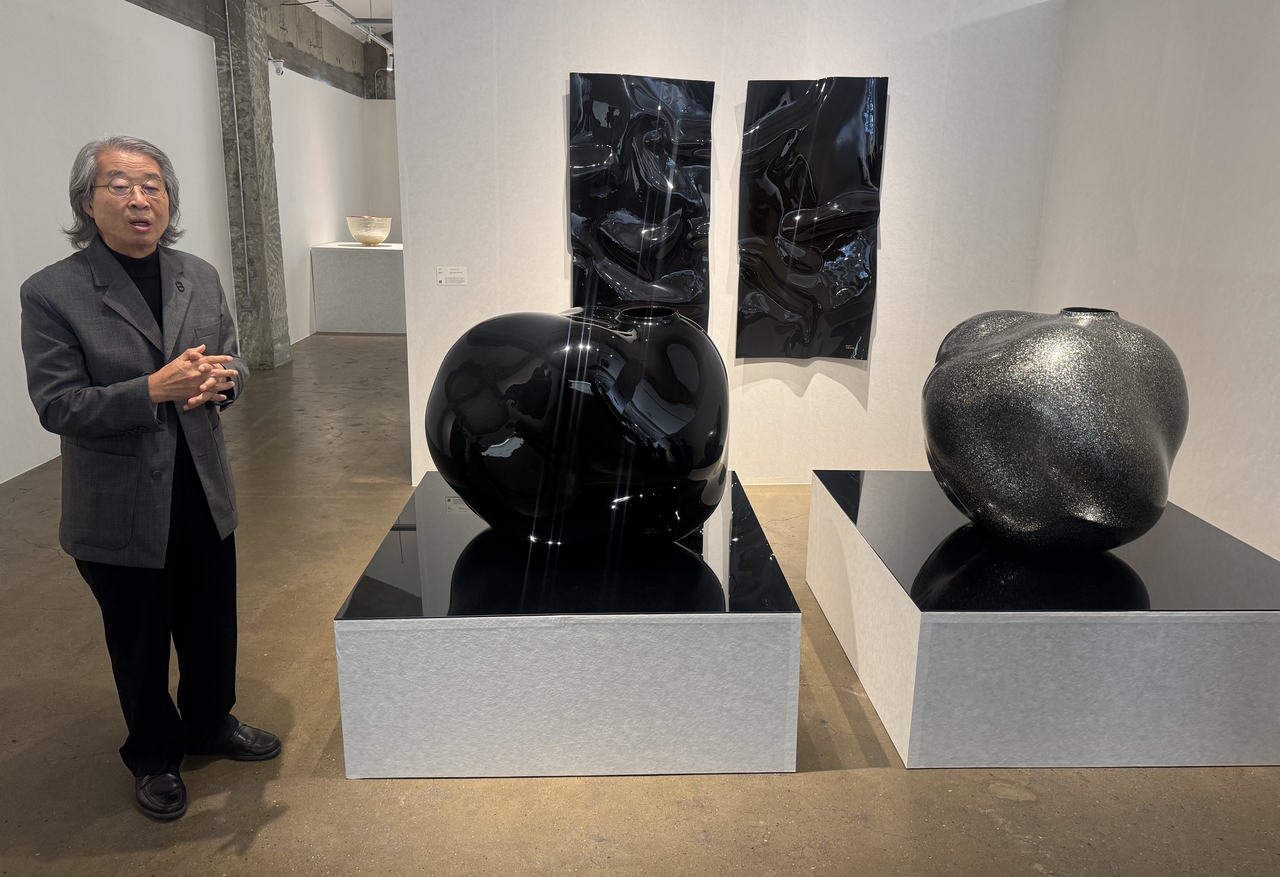
Entering the exhibition, visitors are greeted by mesmerizing works by Chung Hae-cho — “Rhythm of the Mother-of-Pearl, Black Luster.”
Made with hemp cloth, the monumental pieces by the master lacquer artist reveal contrasting “luster rhythms” through their dynamic curves, combining the subtle tension between lacquer and mother-of-pearl.
Nearby, Kim Young-ock’s silver teapots, each formed through thousands of hammer strikes that leave a distinctive surface texture, demonstrate how functionality and beauty can coexist.
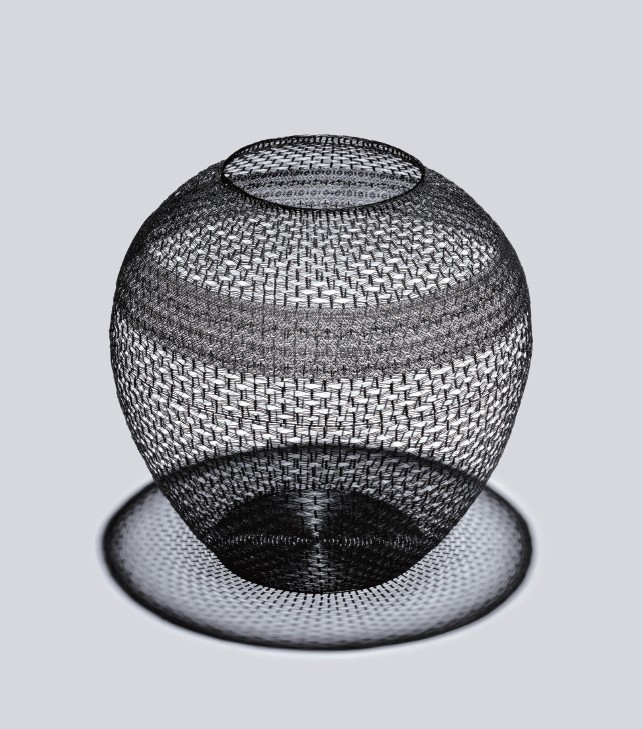
Chang Yeon-soon, a leading figure in contemporary Korean fiber art, presents delicate yet powerful textile pieces, while Choi Sung-jae showcases buncheong ware — a Korean ceramic style from the early Joseon era (1392-1910) — reinterpreted with spontaneous and expressive brushwork.
The section also features art furniture by Choi Byung-hoon, Bahk Jong-sun and Lee Jae-ha, blending sculpture, design and traditional craftsmanship.

The second section highlights the importance of connection, presenting collaborative works by artists across different disciplines. Among them are yugi (brassware) masters from the Yujigang Bangjja, Korea’s National Intangible Cultural Heritage holders spanning three generations, who created a monumental singing bowl and the Cheong Wa Dae Banquet Dinnerware Set.
Another collaboration features Cho Seong-yeon, a master artisan of nubi (traditional quilted stitching), and contemporary artist Lee Seul-gi, who reinterprets Korean proverbs and metaphors through witty, symbolic stitched blankets — such as “To Have a Big Liver” (to be brave), “The Sparrow Follows the Stork with Its Legs Spread” (overreaching ambition), and “The Shoes Have Ears” (things that don’t fit together).
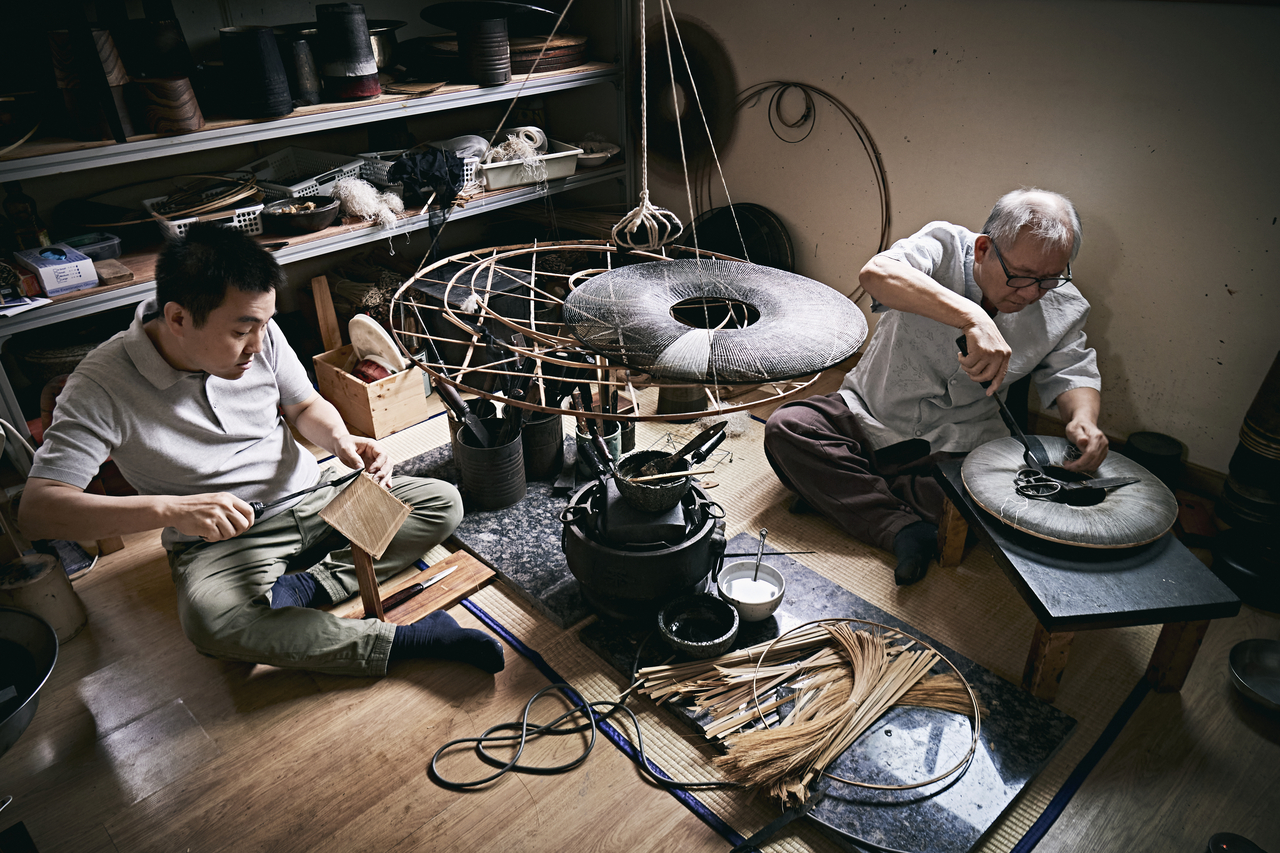
The exhibition also offers a glimpse into the art of the gat, featuring a series of hats crafted by Park Chang-young and his son Park Hyung-park, who have carried on the craft for five generations and are two of the only four remaining gat-making masters in Korea.
The final section contemplates sustainability through the lens of craft, featuring artworks that pursue renewal and circulation through upcycling, pointing to an important direction for the future of craftsmanship.

'Harmony' at House of Choi
House of Choi, the modern brand of a family renowned for its noblesse oblige spanning more than 300 years, runs Yosukgong 1779, a restaurant that serves family recipes passed down generations, where several world leaders are set to dine during the week of APEC events.
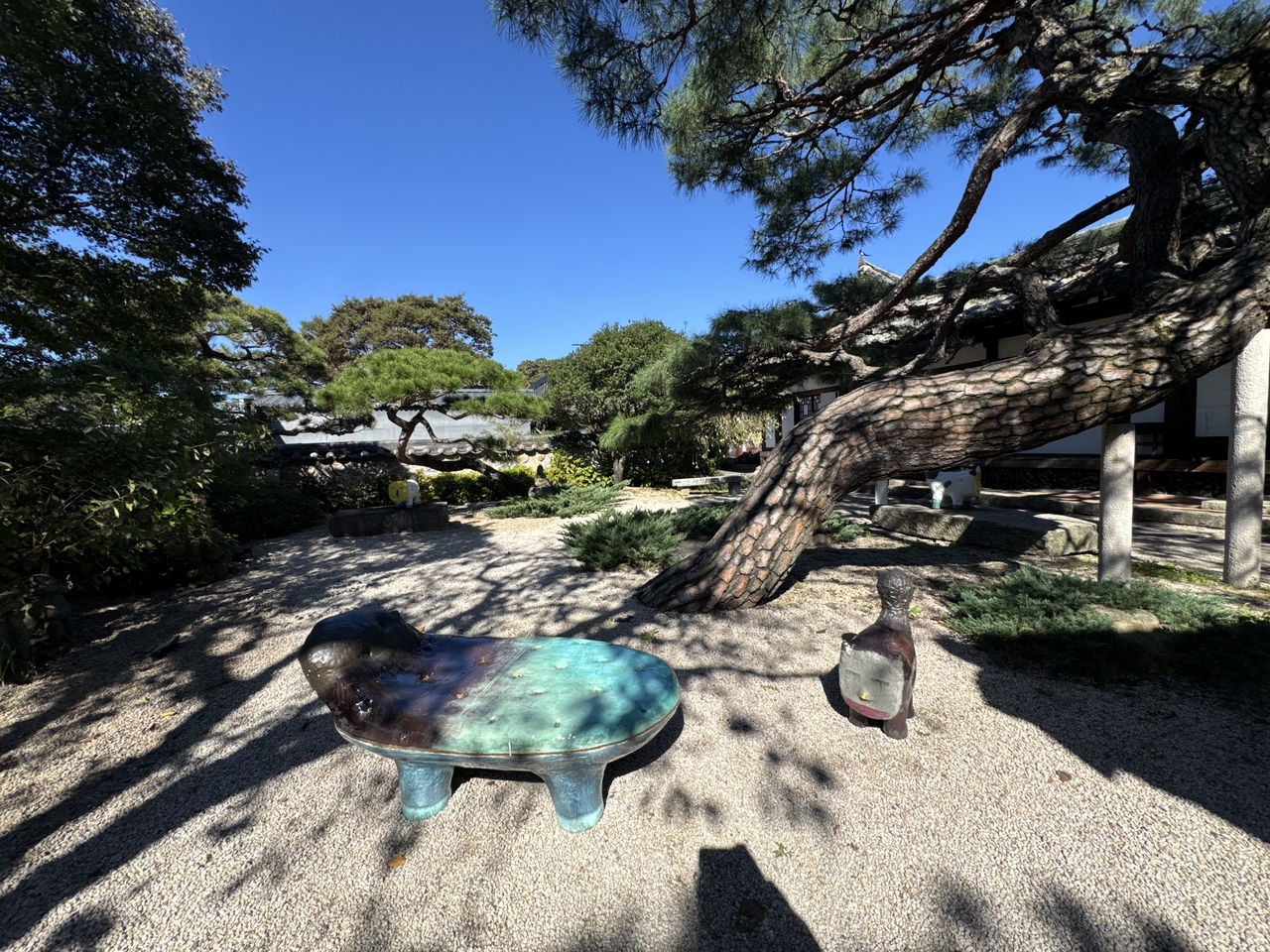
While the leaders enjoy traditional Korean cuisine at the hanok complex featuring a centuries-old tree, they will also experience Korean craftsmanship — from tables and dishware to decorative objects that embody the harmony of function and artistry.
It is also part of a satellite exhibition of “Heritage for Tomorrow,” titled “Harmony,” placing works by six artists who carry on Korea’s traditional techniques while embracing contemporary expression.
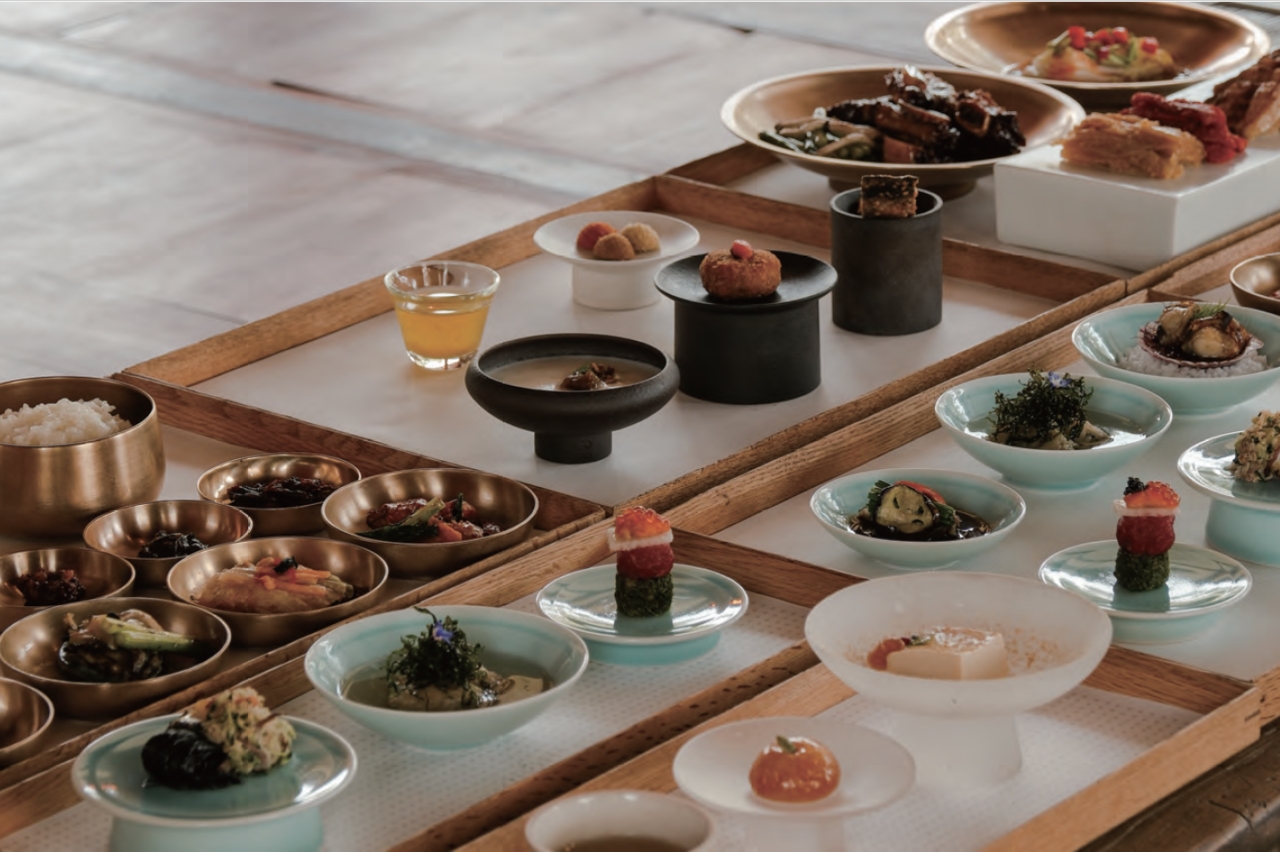
The highlight is works by ceramist Yoon Kwang-cho, a resident of Gyeongju for more than 30 years, who explored new ways of expressing contemporary buncheong.
“Throwing clay on the wheel requires a kind of technical experience,” he said. “As your technique improves, your output grows, but so does complacency,” he said, explaining a drastic change in his style from the 1970s to the 1980s.
“When tension fades, creativity suffers. A technician thrives on repetition, but an artist needs constant tension and renewal.”

The exhibition also includes works by Lee Hun Chung, widely recognized for his mastery of 15th-century Korean celadon glazing techniques, who creates distinctive contemporary ceramic works, and Yoo Euijeong, whose pieces explore the inherent nature of clay and embody a hybrid sense of temporality.
gypark@heraldcorp.com


![[World Class] HUFS bets on Songdo, AI to redefine what a global university can do](https://wimg.heraldcorp.com/news/cms/2026/10/18/news-p.v1.20260930.7e4dbeacfc1d4d16848c0e2a441c04e6_R.jpg?type=h&h=120)