
Eyes on whether Seoul, Washington will unveil tariff, nuclear pacts at APEC summit
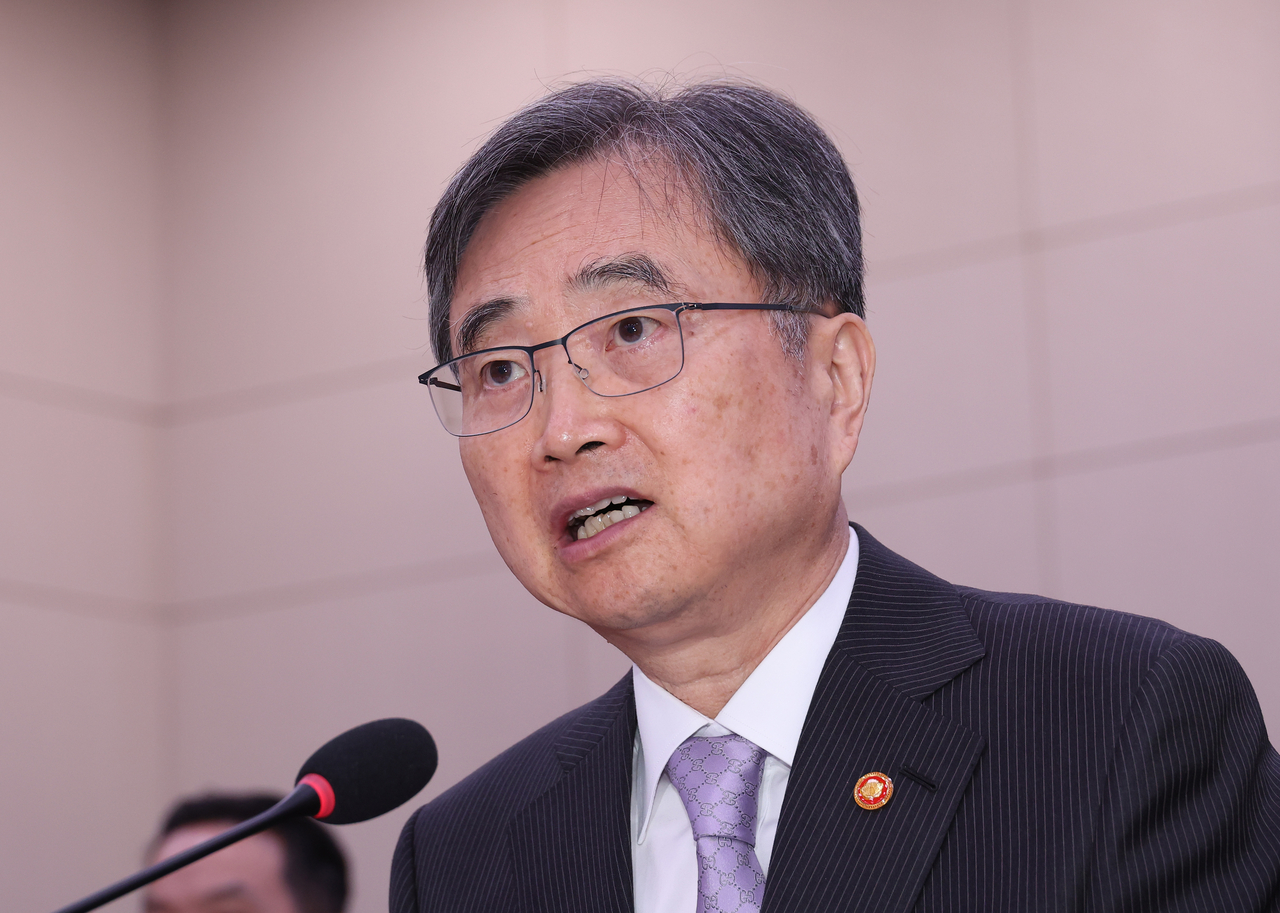
South Korea and the United States will soon begin talks to revise their civil nuclear cooperation pact, seeking to expand Seoul's rights over uranium enrichment and spent-fuel reprocessing, according to the country's top diplomat.
Foreign Minister Cho Hyun revealed on Thursday that Seoul and Washington have been in discussions over revisions to their current civil nuclear cooperation agreement before its expiration in 2035 as part of broader bilateral security negotiations.
"We are now keeping all spent nuclear fuel in storage pools, which are expected to reach saturation before long," Cho said in an MBC radio interview. "Therefore, we’ve emphasized the need to remove, reprocess (spent nuclear fuel)."
Cho further explained that South Korea is the only country that relies entirely on imported fuel among countries with comparable levels of nuclear power capacity. South Korea currently operates 26 commercial nuclear reactors.
"That is why we must be able to produce our own fuel, which requires uranium enrichment, not from a security standpoint but from an industrial perspective," Cho said.
Cho disclosed that Seoul's proposal to amend the agreement and expand its nuclear fuel cycle was accepted by the US.
"As a result, we plan to begin negotiations on the matter soon," Cho underscored.
In response to a question as to whether the two sides "had agreed on the broad direction," Cho confirmed, "Yes, that’s correct."
Cho's remark came as the allies have been doubling down on efforts to formalize their agreement around the two main pillars of security and trade.
Anticipation is mounting over whether both sets of outcomes will be unveiled in a single document, either in the form of a joint statement or a fact sheet, following the second summit between President Lee Jae Myung and US President Donald Trump to be held on the sidelines of next week’s Asia-Pacific Economic Cooperation summit.
Asked about the likelihood of adopting a joint statement during the Lee-Trump summit, Cho gave an affirmative response, saying “yes.” Cho, however, acknowledged the possibility that the ongoing trade negotiations could still be underway during the APEC summit period.
If the allies conclude their tariff negotiations before the Lee-Trump summit, the accompanying security agreement is expected to include a US acknowledgment of the need to expand South Korea’s rights to enrich uranium and reprocess spent nuclear fuel.
A joint document could outline a shared intent to revise the current nuclear cooperation pact ahead of its expiration.
A senior official at the Foreign Ministry in Seoul, speaking on condition of anonymity, explained that the allies are “expected to proceed with necessary follow-up negotiations,” suggesting that talks could resume after the statement is issued.
“The two sides have not yet set any concrete goals, decided on a specific date to launch the negotiations in the foreseeable future or begun preparations toward that end,” the official added.
Nuclear cycle matters for Seoul
The Lee administration has been pushing to amend the current civil nuclear cooperation pact, known as the 123 Agreement, which was signed by the allies in 2015 to take effect for 20 years.
Seoul is permitted to enrich uranium to a level below 20 percent with Washington’s consent, while independent reprocessing of spent fuel remains prohibited under the current agreement.
However, both abilities are vital for South Korea, which relies heavily on nuclear power and aims to boost its role as a nuclear reactor exporter.
Reprocessing helps manage the growing stockpile of spent nuclear fuel and allows for the recycling of valuable uranium. Expertise in spent fuel treatment and disposal would also give South Korea a significant edge in exporting nuclear power plants.
Uranium enrichment rights are important for Seoul to improve energy security by stabilizing the nuclear fuel supply chain against geopolitical risks. The rights are also necessary for obtaining high-assay low-enriched uranium — enriched to below 20 percent — which is essential for the commercial development and export competitiveness of small modular reactors.
However, Washington has been cautious because uranium enrichment and spent fuel reprocessing can be used for nuclear power generation and weapons production.
"What could become an obstacle to moving forward with such negotiations is if we were to say that we should pursue independent nuclear armament," Cho said, acknowledging US concerns. "Even if we do not go that far, if we were to claim that we should acquire enrichment and reprocessing capabilities to become a potential nuclear-armed state, that would run counter to the NPT (Nuclear Non-Proliferation Treaty) regime."
Cho underscored that such nuclear policy debate in South Korea would hamper progress in negotiations.
"Even if the US wanted to accommodate our position, it would inevitably have to raise the issue (to such arguments)," Cho said. "That is why it is crucial that we secure US consent for enrichment and reprocessing strictly on commercial and environmental grounds."
dagyumji@heraldcorp.com