
Culture minister stresses investment over aid for growth of cultural exports
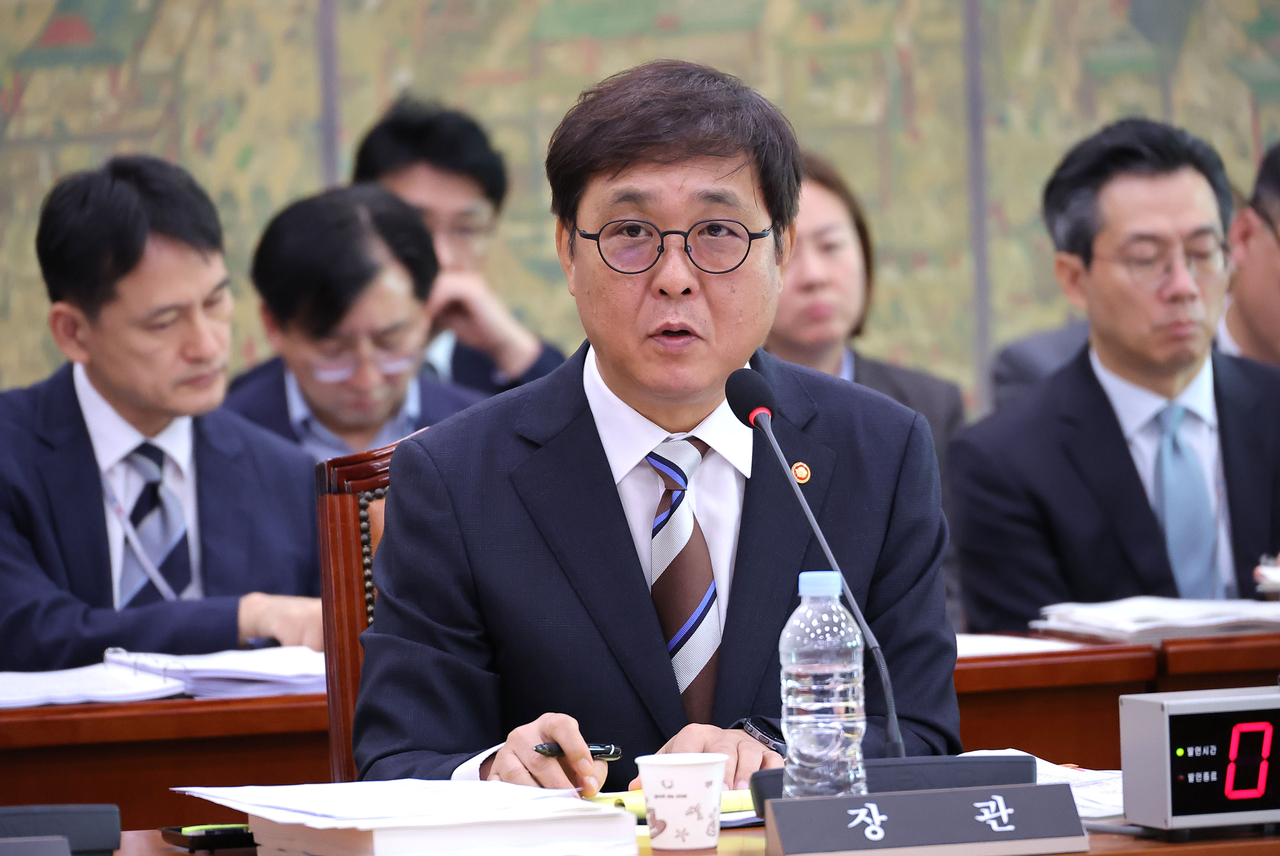
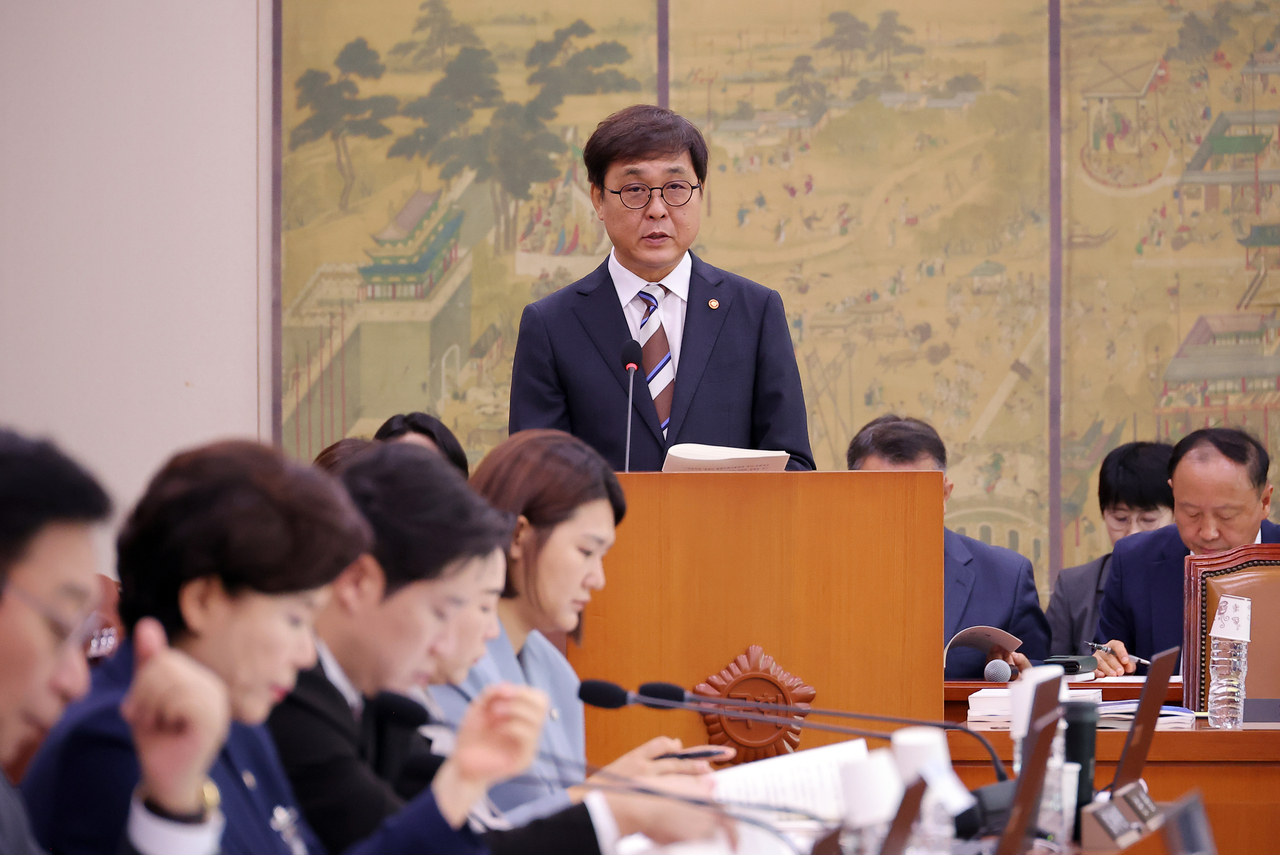
Culture Minister Chae Hwi-young on Tuesday proposed viewing the cultural industry as a sector for investment rather than assistance.
“We must nurture culture as a future growth industry worth over 300 trillion won ($210 billion),” Chae said, speaking at the parliamentary audit by the National Assembly's Culture, Sports and Tourism Committee.
The Lee Jae Myung administration earlier outlined a plan to create a 300 trillion won culture market by 2030, compared with an estimated 206 trillion won in 2023.
Chae said the international success of Korean culture has elevated the country's cultural standing, yet sectors such as film and gaming are showing signs of stagnation.
Chae further stressed the urgency of adapting to the “AI transformation,” reforming outdated systems and expanding access to cultural data.
“K-culture is no longer just a source of pride,” he said. “It is a national strategic industry that drives Korea’s future.”
The minister laid out five key priorities: bolstering the content industry, expanding global engagement, ensuring artistic freedom, revitalizing tourism, and promoting cultural equity across regions and demographics.
“We also plan to expand the number of integrated overseas export hubs, known as Korea Centers, to 30 locations worldwide to strengthen the foundation for content exports, while fostering collaboration among related ministries to strengthen industries tied to K-beauty, K-food and K-fashion," he added.
Chae also highlighted efforts to support mid-budget films, revive game exports and back emerging musicians through overseas showcases.
In tourism, the ministry aims to surpass 30 million inbound visitors by 2030 through visa relaxations, large-scale festivals and region-specific content development.
During the audit, Chae pledged stronger oversight of entertainment agencies, copyright and protection of webtoon creators.
Chae acknowledged insufficient oversight of unregistered entertainment agencies, responding to criticism from Rep. Yang Moon-suk of the Democratic Party of Korea, who cited 2,200 unregistered individual agencies and 4,500 corporate agencies.
“As we enter the era of 300 trillion won in K-culture, it would be a serious problem if agencies were allowed to operate loosely. We will implement measures to ensure unregistered agencies convert to official registration and fall under proper administrative supervision,” Chae said.
Chae also vowed to strengthen regulations on excessive or violent behavior by celebrity bodyguards, following criticism from Rep. Min Hyung-bae of the Democratic Party over reported cases of aggressive security practices.
To address the shortage of K-pop venues, Chae said the ministry was working with the Seoul Metropolitan Government to utilize existing large-scale facilities, including the Seoul World Cup Stadium, more frequently for concerts and cultural events.
Rep. Kim Jae-won of the Rebuilding Korea Party pointed out that while Korean music distributed in China is expected to generate significant royalties, creators are unable to collect them properly due to structural issues. Kim, a former singer, called on the government to take the lead in establishing a fair and transparent royalty distribution system, rather than leaving it solely to the private sector.
Kim’s reference witness, Lee Si-ha of the Korea Music Copyright Association, testified that he recently discovered, when meeting with more than 100 composers and China’s tech giant Tencent, that many intermediary agencies were unlawfully collecting copyright fees.
“We had thought that Korean composers weren’t receiving royalties because Chinese music platforms weren’t paying usage fees,” he said. “But in fact, companies like Tencent had already been paying royalties and it was the uncontracted Korean publishers who were collecting them instead.”
“Securing royalties for Korean music copyrights in China has been a long-held wish of our composers for more than 20 years. Since it’s something we must achieve, I hope every effort will be made to make it happen,” Lee told lawmakers.
In response, the culture minister vowed to launch an immediate check on intermediary agencies.
Lawmakers also urged Naver Webtoon to improve creator protection systems and ensure fair compensation within the platform’s ecosystem.
gypark@heraldcorp.com



![[Exclusive] Ateez to return in November](https://wimg.heraldcorp.com/news/cms/2026/09/02/news-p.v1.20260902.76162fb0ba55493aad1c076f240d0750_R.jpg?type=h&h=120)