
Jin tells lawmakers that military involvement was 'act of rebellion'
South Korea’s top military officer issued a rare public apology Tuesday for the armed forces' role in former President Yoon Suk Yeol’s illegal declaration of martial law last year.
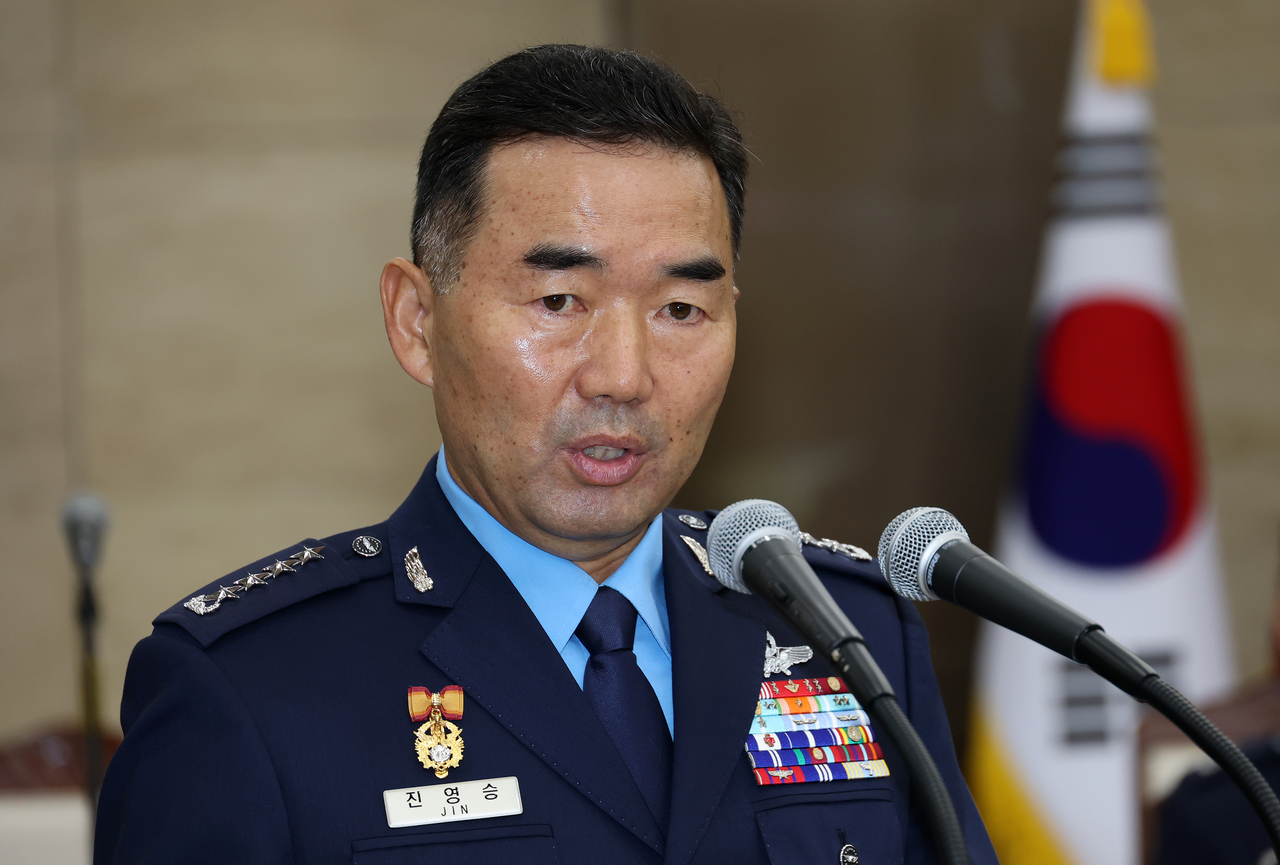
Jin Yong-sung, chair of South Korea's Joint Chiefs of Staff, said during a parliamentary audit that he regarded the military’s involvement in the Dec. 3 decree as “an act of rebellion” against the state.
“As a soldier in uniform, I failed in my duty to protect the nation and its people by premeditating and actively participating in the illegal martial law,” Jin said at the National Assembly. “I sincerely apologize to the people.”
The martial law decree, announced without parliamentary consent on Dec. 3, prompted nationwide outrage and a swift response from lawmakers, who impeached Yoon within weeks. He was later detained on charges of subverting constitutional order.
According to indictments and testimony reviewed by prosecutors, troops were allegedly instructed to storm the National Assembly and forcibly remove lawmakers who were preparing to vote to repeal the decree. Yoon and his defense team have denied authorizing any removal of legislators.
Prosecutors have further alleged that Yoon directed or approved the arrest of opposition politicians and ordered power and water cuts to major broadcasters to impose a media blackout. He is also accused of instructing troops to seize servers belonging to the National Election Commission.
Military records and eyewitness accounts also suggest that helicopters and armored vehicles were deployed near the National Assembly, with elite special forces positioned in the vicinity.
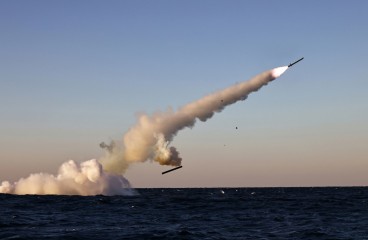
Regarding South Korea’s external threats, Jin warned that North Korea’s recent military parade held Friday in Pyongyang — showcasing intercontinental ballistic missiles and hypersonic glide systems — highlighted the regime’s advancing nuclear capabilities and growing ties with China and Russia. The North’s latest Hwasong-20 intercontinental ballistic missile, which Pyongyang calls its “most powerful nuclear strategic weapon system,” was among the weapons shown at the event marking the 80th anniversary of its ruling Workers’ Party.
“The Korean Peninsula faces a grave threat to peace,” Jin said. “We will maintain readiness to protect our citizens and fight to win if provoked.”
Jin also said there was a “high possibility” that Russia provided technological assistance in the development of Hwasong-20.
“There is sufficient possibility that Russian technology was involved,” Jin said when asked by a lawmaker about the suspected cooperation between Pyongyang and Moscow.
When asked whether South Korea’s defense systems could intercept North Korea’s new hypersonic missile, the Hwasong-11Ma, also showcased during the parade, Jin said interception was possible “even if the success rate may be somewhat lower.”
In a report submitted to the Assembly, the JCS also said they plan to host the 50th US-South Korea Military Committee Meeting in Seoul early next month, bringing together senior commanders from both nations. The meeting will prepare for the annual Security Consultative Meeting between the two countries’ defense ministers, expected to address the future role of US Forces Korea, modernization of the alliance and the long-delayed transfer of wartime operational control to Seoul.
The committee consists of five senior representatives from each side: the combined forces commander, the South Korean chair of the JCS and the Director of Strategic Planning, the US chair of the Joint Chiefs of Staff and the Indo-Pacific commander.
mkjung@heraldcorp.com