

KMA eyes global rollout of NowAlpha for disaster preparedness
SEOGWIPO, Jeju Island — The Korea Meteorological Administration has been teaming up with US tech giant Nvidia to advance artificial intelligence-powered weather forecasting, as climate change drives more frequent extreme events and challenges traditional prediction methods.
The KMA is working with Nvidia to adopt Cosmos, the company's foundation model platform originally designed for autonomous driving and robotics, to enhance rainfall prediction by simulating real-world events. Nvidia will provide model optimization technologies and computing infrastructure, the company said, to boost Korea’s AI-based forecasting capabilities.
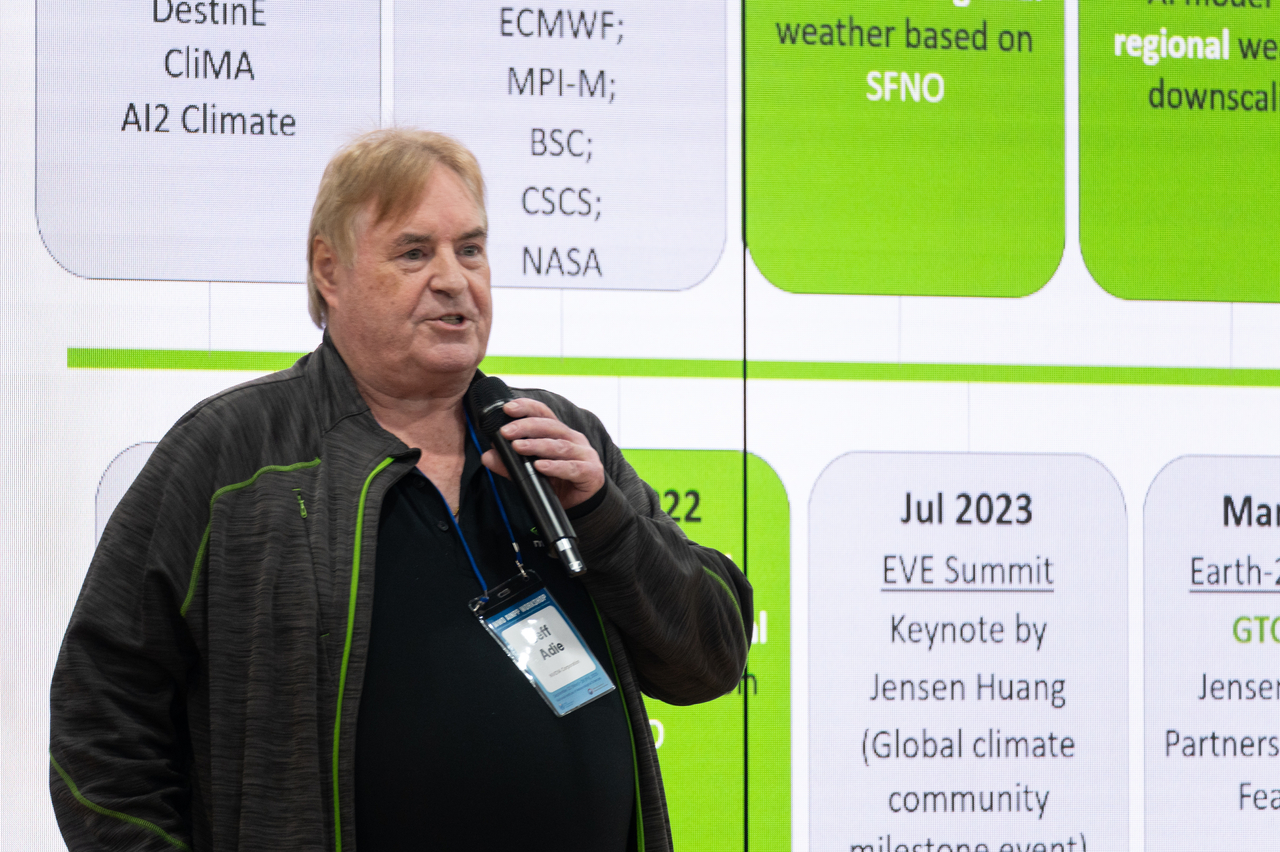
“We aim to ultimately make climate information public so that everyone can access it in the future, with the long-term goal of predicting climate change patterns,” said Jeff Adie, a senior engineer at Nvidia.
Adie added that Nvidia “will be able to provide cutting-edge AI model optimization technologies and computational infrastructure” to the KMA to help develop its AI-based weather prediction model.
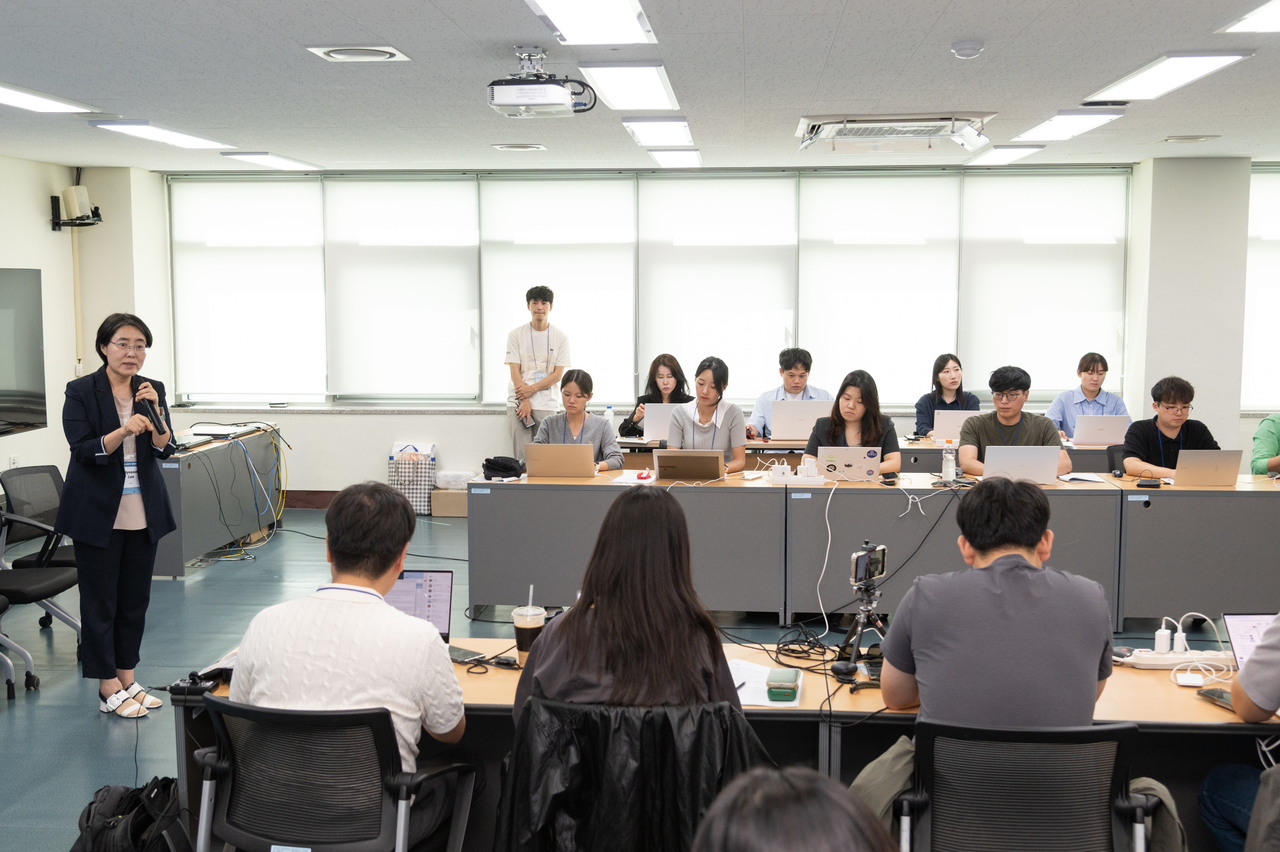
The collaboration was highlighted during the World Meteorological Organization’s AI for Nowcasting Pilot Project workshop, held Sept. 22-26 on Jeju Island. The event brought together 70 experts from tech firms, weather agencies and international organizations, who agreed that AI forecasting is no longer a question of “if,” but “how.”
Meteorology has long relied on physics-based numerical weather prediction models, which simulate atmospheric movements using equations. Systems such as the European Center for Medium-Range Weather Forecasts’ model have been considered the most accurate. But in recent years, AI-driven models like Google’s GraphCast, Huawei’s Pangu-Weather and Nvidia’s FourCastNet have matched or surpassed that numerical weather prediction performance, prompting agencies to accelerate AI adoption.
The KMA has been developing its own system, NowAlpha, since 2020 with the Korea Advanced Institute of Science and Technology. Officially adopted in May, NowAlpha uses radar imagery to predict rainfall up to six hours in advance — a critical window for evacuations and emergency response. Adopting Nvidia's Cosmos to KMA's NowAlpha could enhance the South Korean weather agency's rainfall prediction capabilities by also running simulations similar to real-world events, according to the agency.
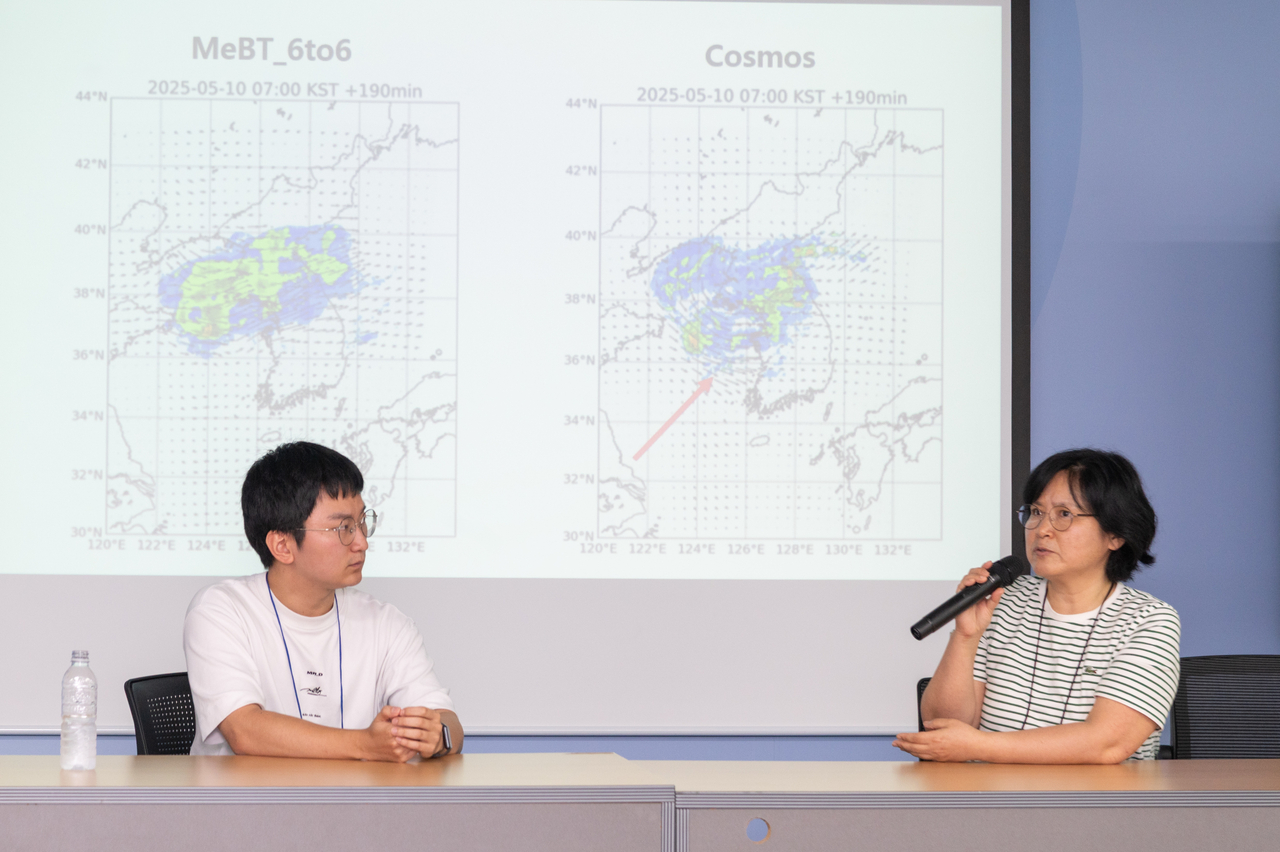
Unlike traditional models that require hours of computation, NowAlpha produces forecasts in as little as three minutes.
“Korea is seeing more frequent, localized downpours, and AI models are proving valuable in filling these short-term forecasting gaps,” a KMA official said.
Still, officials emphasized that AI is not ready to replace physics-based models entirely.
“The system is not yet ready to replace physics-based models, but it is proving valuable in filling forecasting gaps in sudden, short-term events such as localized downpours, which have become more frequent in Korea,” the official said.
To further improve AI forecasting accuracy, vast amounts of data are required — and to meet this demand, companies such as Nvidia and Google are developing methods to better train AI with radar and video imagery.
KMA researchers said once NowAlpha proves reliable, they hope to share it with developing countries to help strengthen disaster preparedness.
Bridging the divide
The World Meteorological Organization has been running AINPP since 2023, aiming to make six-hour forecasts available in developing countries in Africa, Southeast Asia and Latin America.
While developing countries continue to face hurdles such as training personnel and a lack of infrastructure in adopting advanced forecasting technology, officials stress that AI requires fewer resources than supercomputers, making it suitable for countries with limited infrastructure.
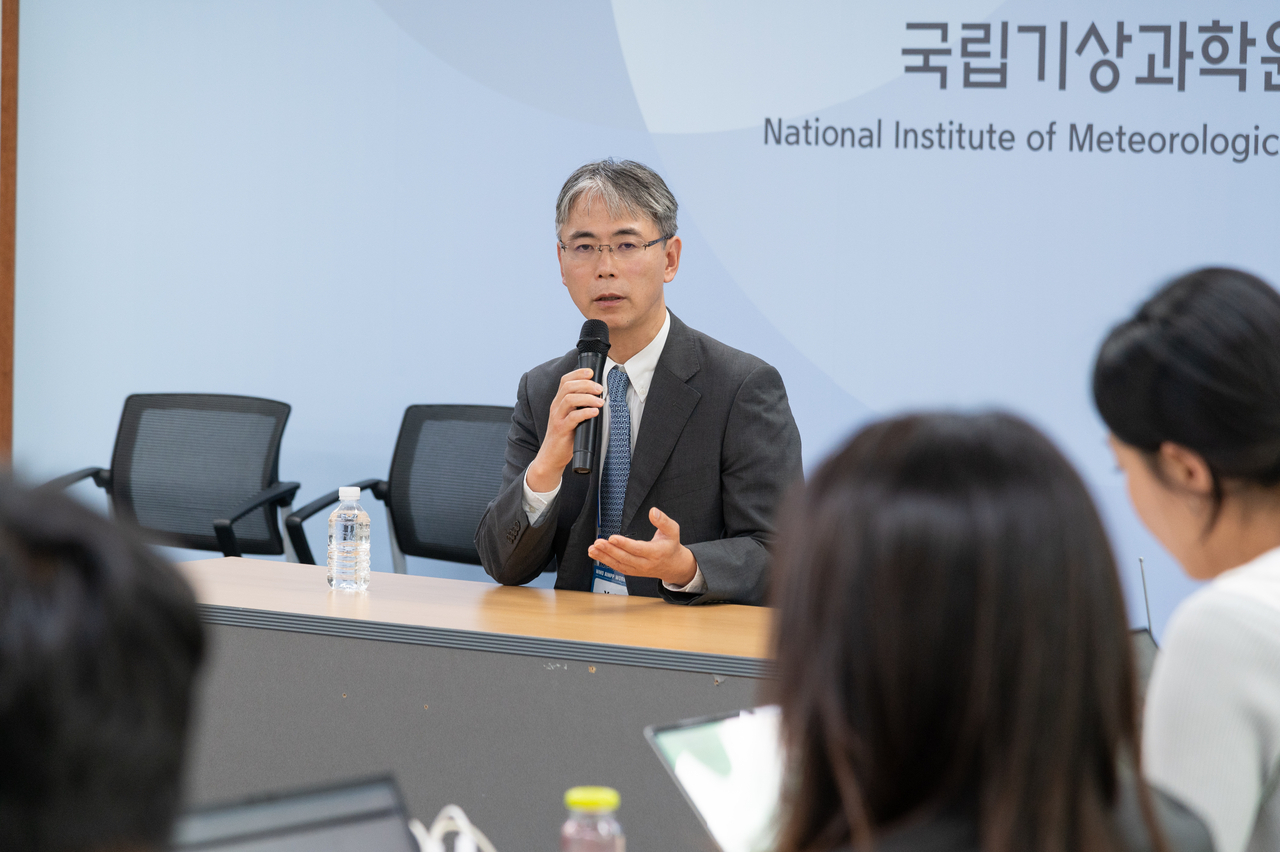
“Forecasting capacity is concentrated in developed countries, while less-developed countries — often the most vulnerable to climate change — lack such capabilities,” said Yuki Honda, who heads the WMO’s integrated processing and forecasting systems division. “AI models can help bridge this gap, and the WMO will work to provide guidelines so all nations can benefit.”
The WMO’s AINPP is slated to run until 2027. After completing further assessments and tests to validate and optimize AI models developed by developed countries and global tech giants, the WMO aims to have AI-based weather prediction models ready to support developing countries’ weather response after 2027.
lee.jungjoo@heraldcorp.com