
Buddhist film festival aims to spread values of peace, compassion through films that transcend regional and generational boundaries
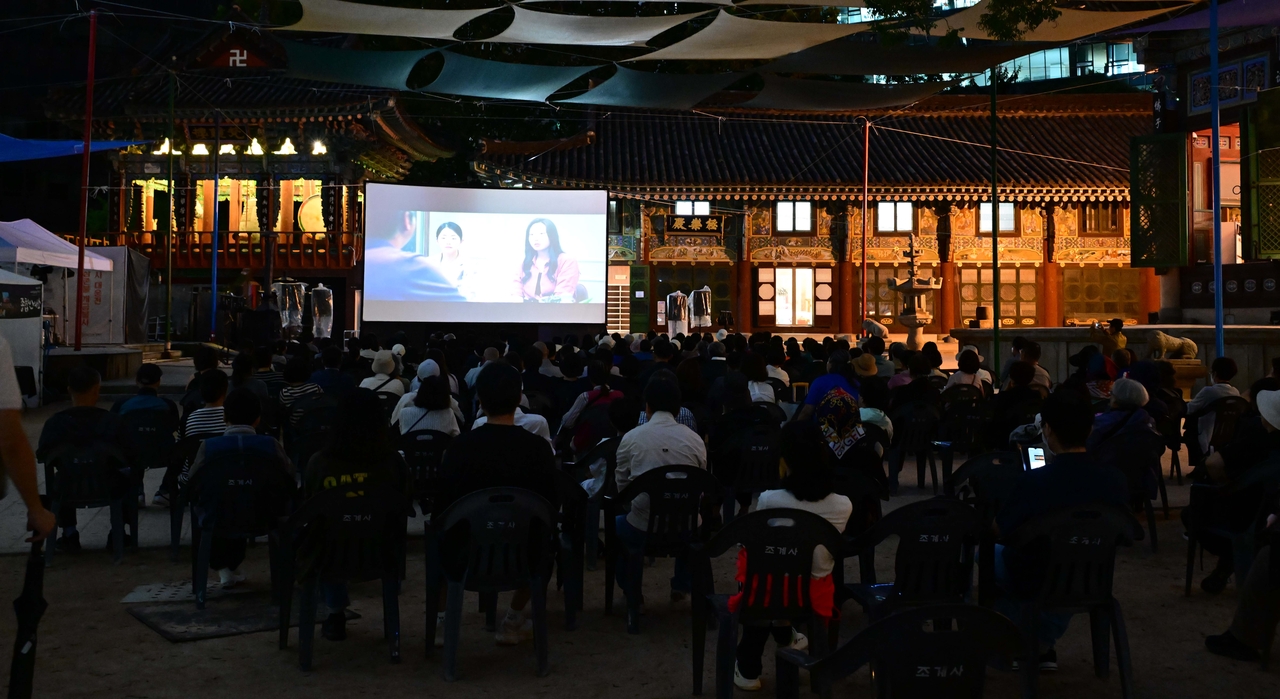
The fifth edition of the One World, One Flower International Buddhist Film Festival came to an end Saturday evening at Jogye Temple in central Seoul, with hundreds of people attending the screening of the closing film "Mungyeong: More than Roads" at the outdoor plaza of Daeungjeon Hall.
The event ran from Aug. 23 until Saturday, screening films that focus on Buddhism as well as those that raise fundamental questions about life, humanity and universal truths.
Held under the theme "Silence in Light," this year's festival received 1,637 submissions from 111 countries. Following preliminary and main screenings, 20 short films from 16 countries advanced to the final competition.
In particular, this year's festival aimed to introduce and share the practices of Korean Buddhism with a wider audience. Activities included temple food experiences, allowing visitors to learn about and taste traditional Buddhist cuisine; a templestay program, offering an immersive experience of monastic life and meditation; and yoga meditation sessions, designed to cultivate mindfulness and connect body and mind through Buddhist-inspired practices.
"I hope that watching Buddhist-themed films has offered a chance to share the Buddha's wisdom, compassion and moments of healing and inspiration. We look forward to welcoming you again next year with an even more enriching selection of Buddhist films," Jung Won-ju, president of the Lay Buddhist Association of the Jogye Order of Korean Buddhism and the chairman of Daewoo E&C and Herald Media Group, said during the closing ceremony.
The opening film, "The Monk and the Gun," directed by Bhutanese filmmaker Pawo Choyning Dorji, blends Bhutanese traditions with contemporary values. Set in the early days of democracy in Bhutan, the film follows a monk navigating the tensions between the sacred and the secular, and between power and spiritual practice, raising profound questions about life. Through its mix of humor, meditation and reflection, the movie conveys the messages that the Buddha's silence is more powerful than weapons and that democracy comes from the human heart.
The closing film, "Mungyeong: More than Roads," directed by Korean director Shin Dong-il, is set in the city of Mungyeong, North Gyeongsang Province. The film follows the main character, Mun-gyeong, as she embarks on a journey to heal from past wounds. As she meets new people and visits serene temples, the film invites viewers to explore Buddhist themes of reflection, reconciliation and the pursuit of inner peace.
Looking back on this year's festival, director Shin said it was "particularly meaningful" that it brought together the spirit of Buddhism and the language of film to connect people.
"The Buddhist film festival will continue to grow as a global platform, spreading the values of peace and compassion through films that transcend regional and generational boundaries," he said.
junheee@heraldcorp.com