

South Korea’s Ministry of Science and ICT and the Financial Services Commission vowed a sweeping government response Friday to a surge in high-profile cyberattacks that have rattled the nation’s telecommunications and financial sectors.
In a joint press briefing, Second Vice ICT Minister Ryu Je-myung stressed the gravity of the recent unauthorized micropayment scandal involving telecom giant KT Corp., pledging a rigorous probe and full disclosure of investigative findings.
“A joint public-private task force is urgently investigating how the attacker’s rogue micro base stations gained access to KT’s internal network and siphoned off personal data,” Ryu said.
The ministry confirmed that at least 362 individuals incurred damages totaling about 240 million won ($172,000), with up to 20,030 users exposed to unauthorized data harvesting. Compromised data includes mobile phone numbers, International Mobile Subscriber Identity (IMSI) numbers and International Mobile Equipment Identity (IMEI) codes.
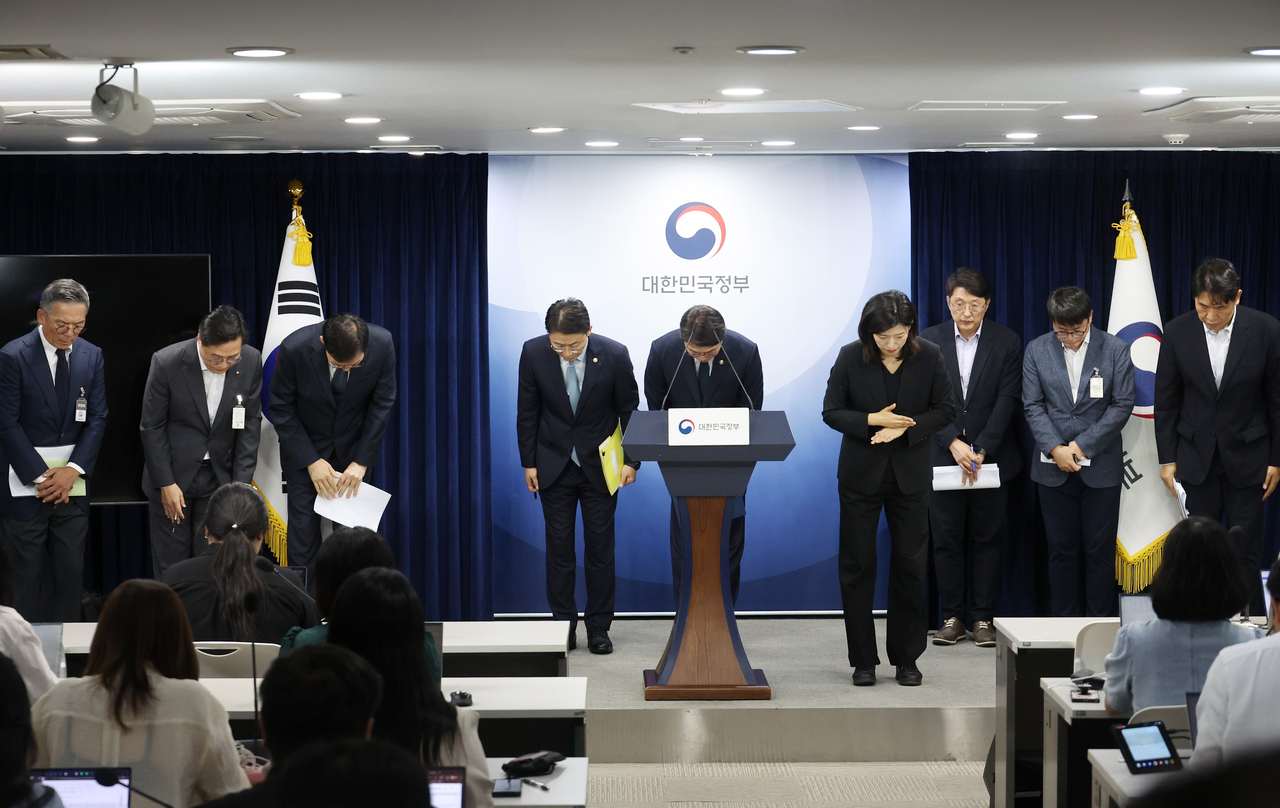
Ryu emphasized that an interagency response — led by the National Security Office and involving both the ICT Ministry and FSC — has been activated to contain broader national security risks.
“We will overhaul the entire security architecture from the ground up,” Ryu said. “This is not a time for temporary patches — we are looking to implement fundamental, long-term solutions.”
The vice minister also previewed major regulatory reforms, “Companies that intentionally delay or fail to report cyber intrusions will face significantly heavier penalties. The government will also be empowered to launch investigations based on circumstantial evidence, even in the absence of a formal corporate disclosure.”
In the same briefing, FSC Vice Chairman Kwon Dae-young revealed that a massive data breach at Lotte Card compromised the personal information of some 2.97 million customers.
Critically, sensitive payment data — including card numbers, expiration dates and CVC codes — was leaked in the case of around 280,000 users, raising serious concerns over potential financial fraud.
“The scale of the Lotte Card breach was far more extensive than initially known,” Kwon said. “We will ensure the company is held to the highest standards in protecting its customers.”
Kwon warned of stern regulatory consequences. “Depending on the outcome of our investigation, we will pursue punitive measures without exception. We consider these breaches in the financial sector to be of the utmost seriousness.”
He criticized the financial industry’s lagging cybersecurity posture, noting that “while hacking technologies advance rapidly, many institutions are still treating security investments as avoidable costs.”
The FSC announced plans to implement fines proportional to the scale of future breaches. Additional measures include strengthening the authority of chief information security officers and mandating stronger consumer disclosure requirements.
On the same day, KT separately reported to the Korea Internet & Security Agency that it had detected four confirmed and two suspected incidents of server intrusion tied to the recent billing fraud case. The KISA is the only organization in Korea dedicated to promoting internet and information security.
The mobile carrier said it had engaged an independent cybersecurity firm to conduct a four-month forensic audit of its internal systems earlier this year, which ultimately led to the recent findings and disclosures to KISA.
yeeun@heraldcorp.com