
Government seeks legislative fix as current law limits preemptive action
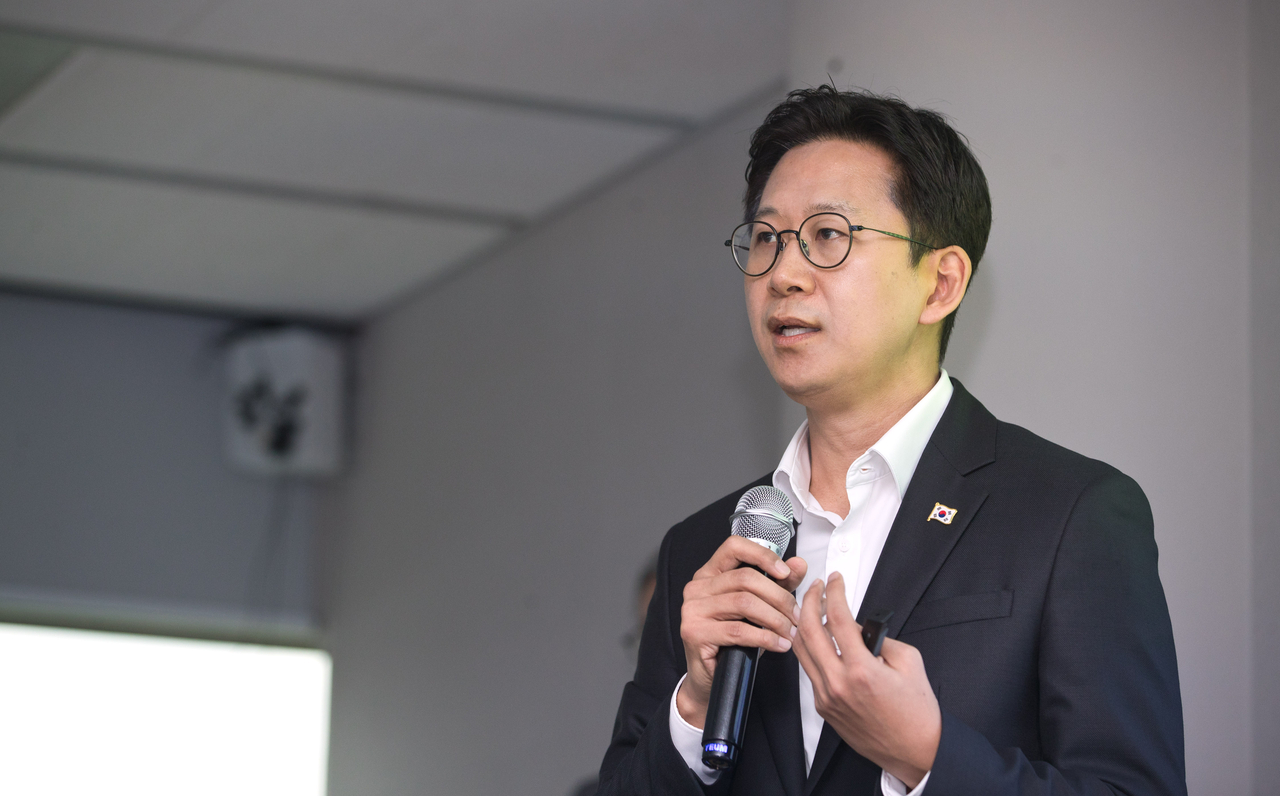
South Korea’s new ICT minister has pledged a fundamental overhaul of the country’s cyber defense system, after a recent breach at KT Corp. exposed major gaps in how authorities and corporations handle cyber incidents.
At his first press briefing since taking office Friday, Minister of Science and ICT Bae Kyung-hoon said the government must move beyond post-incident investigations and build a framework that allows proactive intervention. His remarks come in the wake of unauthorized micropayments charged to nearly 280 KT subscribers, worth over 170 million won ($122,400), in what has been described as one of the most troubling consumer cyber fraud cases in recent years.
“While cause analysis is important, what’s more pressing is reforming a system that only permits investigations after an incident is reported,” Bae said. “We’re actively consulting with the National Assembly to devise the most effective legislative response.”
Under current law, authorities can only launch on-site investigations into cyberattacks if the affected entity voluntarily reports the incident. The KT case has highlighted the risks of that framework. Police reportedly flagged abnormal billing activity early on, but KT delayed reporting the issue after concluding there was “no evidence of hacking.” The hesitation drew sharp criticism from consumers and lawmakers, who accused the company of prioritizing reputational concerns over transparency.
While major firms such as KT and SK Telecom eventually filed reports, many others reportedly remain silent, wary of potential penalties and lawsuits. Critics say this lack of disclosure weakens systemic threat detection and leaves consumers vulnerable.
By contrast, the Personal Information Protection Commission has the authority to initiate investigations without waiting for corporate notification in suspected data breaches. No such authority currently exists for the ICT Ministry in broader cyber incidents.
Bae stressed that telecommunications networks remain prime targets for cybercriminals due to the sheer volume of data exchange and app usage. He warned that both carriers and device makers must introduce “holistic safeguards” to guard against app-based hacking and smishing attacks, adding that the KT case should be treated as a national security issue, not merely a corporate mishap.
The minister also revealed that the government has contacted SK Telecom and LG Uplus to examine similar patterns, including suspicious base station activities, to determine whether the KT incident is part of a wider systemic weakness.
To spearhead reforms, the ministry has set up a cybersecurity reform task force led by Second Vice Minister Ryu Jae-myung. The group will pursue legislative amendments to grant the government greater powers to intervene immediately in large-scale attacks, as well as strengthen security audits and close regulatory loopholes.
“Cyberattacks are evolving rapidly, and attack vectors are becoming more sophisticated. We are not just reacting — we are implementing structural reforms,” Ryu said.
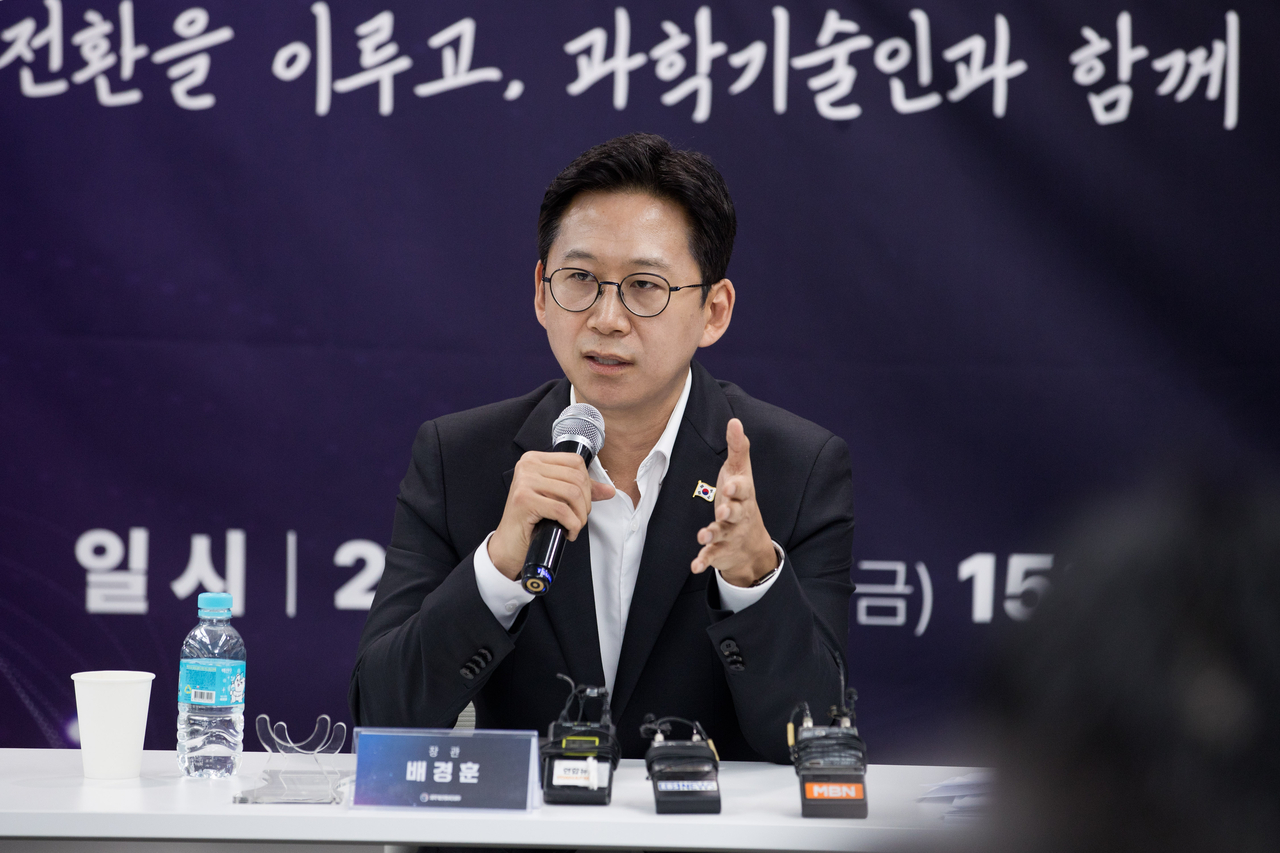
Another key priority is support for small and medium-sized enterprises, which often lack the resources to build robust defenses. “Unlike the major telcos, SMEs are significantly more vulnerable,” Bae said, adding that the government is exploring financial support mechanisms to help them invest in protection.
He called for a unified cybersecurity regime that applies across all sectors, from startups to conglomerates. “Cyber threats do not discriminate based on company size. We must identify and resolve root vulnerabilities systemically,” he said.
Beyond cybersecurity, Bae outlined an ambitious agenda for science and technology. Korea plans to become one of the world’s top three AI powerhouses, with 10.1 trillion won earmarked for the sector in 2026. The initiative will prioritize a domestic AI semiconductor ecosystem, expanded data infrastructure and streamlined regulations.
The government has also pledged a record 35.3 trillion won for research and development in 2026, the largest annual R&D investment in Korea’s history. The plan is designed to position the country among the world’s top five science and technology leaders.
Bae, who previously led LG AI Research, was appointed ICT minister in July under President Lee Jae Myung’s administration. His dual focus on cybersecurity resilience and AI innovation underscores what he called “a national blueprint” for Korea’s digital future.
yeeun@heraldcorp.com