
Six-day Seoul International Writers’ Festival to kick off Friday
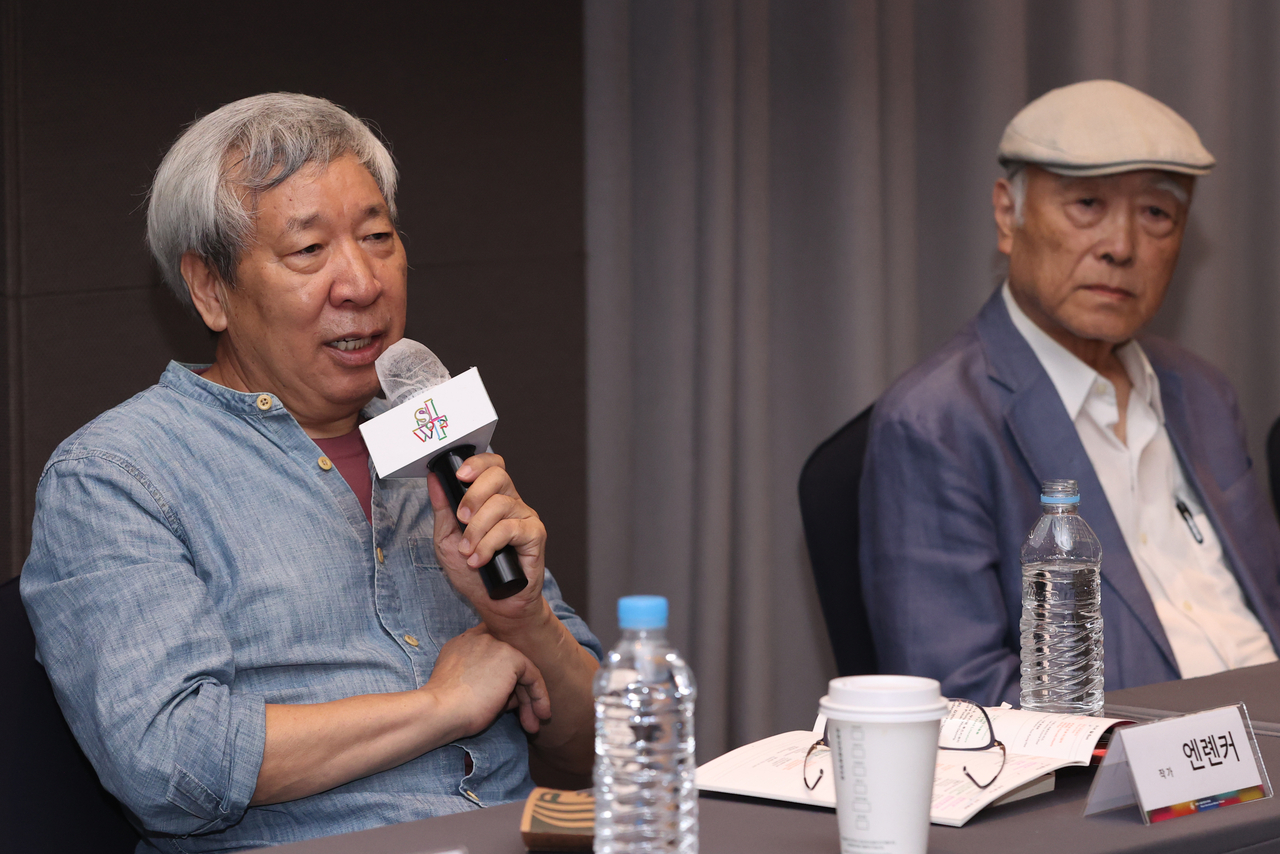
Every nation has its dark chapters and scars. But Chinese novelist Yan Lianke noted that Korea's writers are able to face those shadows openly.
"In China, there are certain wounds left unspoken, something a writer cannot face,” Yan said on Thursday during a press conference in Seoul ahead of the Seoul International Writers’ Festival, which kicks off Friday at Ground Seoul.
“So Chinese literature is under certain constraints. To write in China demands tremendous effort and sacrifice," the Beijing-based novelist added.
The acclaimed Chinese novelist, winner of the Franz Kafka Prize and twice shortlisted for the International Booker Prize, is known for novels sharply critical of Chinese society — many of them banned at home.
On Friday, Yan is scheduled to kick off the opening conversation with Hyun Ki-young, the Jeju-born Korean author whose works, including the novella "Aunt Suni" and the three-volume epic "Oh, Jejudo," have brought attention to the tragedy of the island’s April 3 Uprising in 1948 and the civilian massacre that followed.
Their dialogue will explore a question that has shadowed their lifetime: “How can humans define the tragedies of the 20th century?”
Hyun reflected on Korea’s compressed economic growth. “We cannot say rapid growth was bad, for it brought prosperity. But humanity has been worn down, people have come to pursue only material wealth. In rushing forward, we have overlooked essential truths and pivotal events.”
He highlighted Nobel laureate Han Kang, who last year became the first Asian woman to win the literature prize, crediting her with making historical traumas visible again: “Through her work, forgotten or neglected events such as the Gwangju Uprising and Jeju 4.3 have been brought back to light. Writers must pay attention to such histories.”
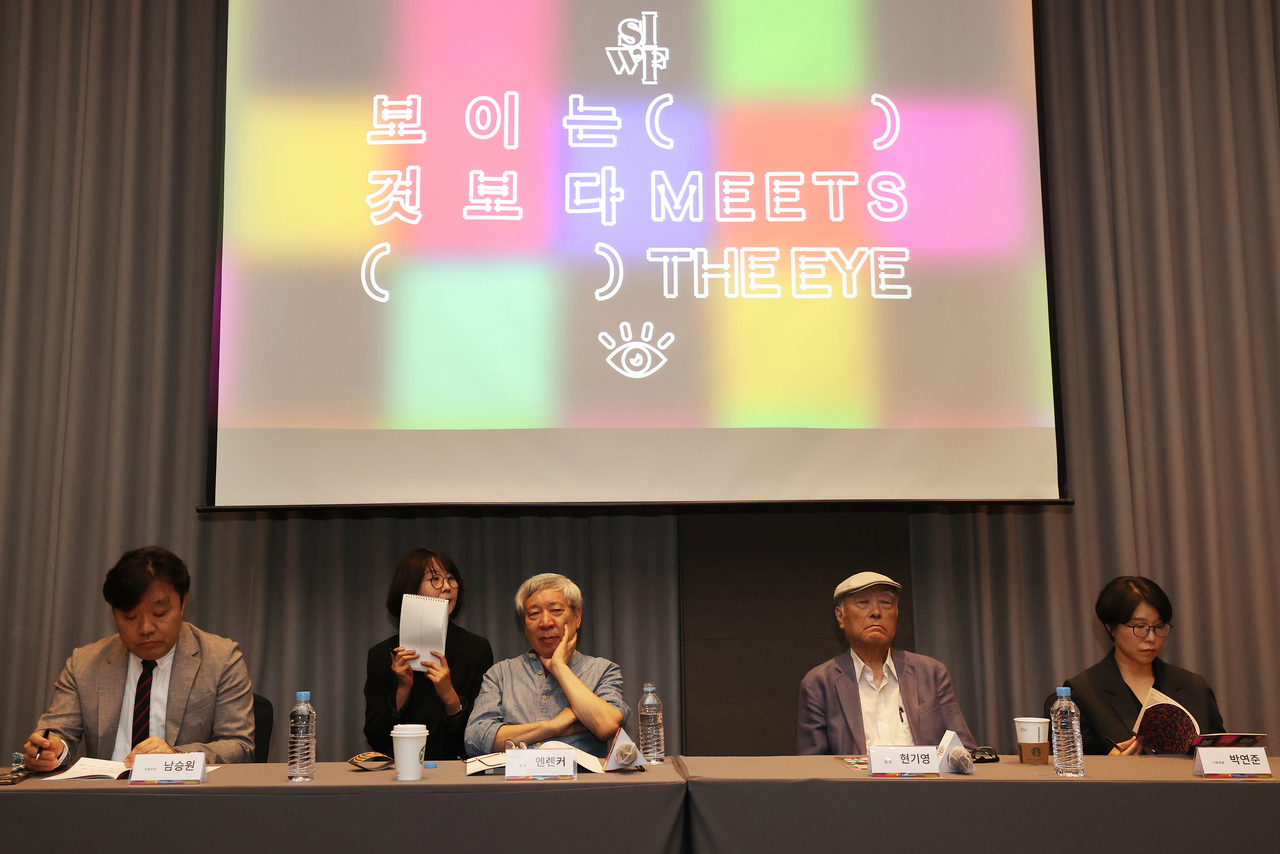
Yan is often mentioned as a strong contender for the Nobel Prize in literature when the announcement approaches each year.
Asked about this year’s prize, to be revealed next month, he said, “There’s no need to pay much attention to speculation. Last year, Han Kang was not mentioned at all and ended up winning, while the writers who were talked about didn’t.”
Still, he added, “I always hoped to see an Asian writer win. Han Kang has brought great honor to Asian literature.”
Now in its 14th year, the Seoul International Writers’ Festival will host 10 international writers from eight countries and 19 Korean authors. This year’s theme, “( ) Meets the Eye,” invites writers to fill in the empty brackets with their own answers.
“I would put ‘the truth of humanity, the truth of literature.’ A writer’s experience, like human experience, is limited. But the truths expressed in literature are infinite. Literature must capture the infinite through the finite,” said Yan.
The six-day literary event, hosted by the Literature Translation Institute of Korea (LTI Korea), runs through Sept. 17. Admission is free with advance online registration, and most programs will also be streamed live on the official website.
hwangdh@heraldcorp.com