

Moms of disabled children kneel again, desperately pleading, as NIMBYs try to chase out special schools
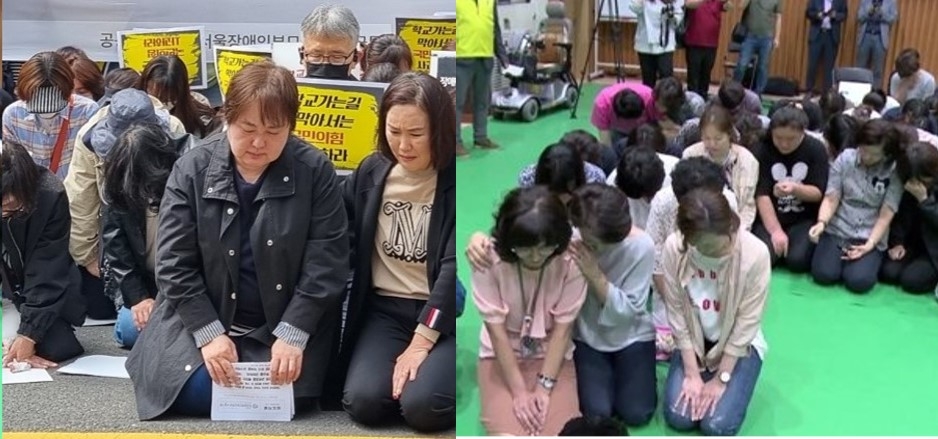
When Kim Nan-hyun saw mothers kneeling on the pavement earlier this year, pleading for a new school for students with disabilities in Seongdong-gu, Seoul, it brought her back to 2017.
Eight years ago, she was among those on knees for a different special school project in a different part of the city.
The project for Seojin School had stalled for years due to fierce opposition from nearby residents and widespread public indifference. Even though her own son, who has autism, was already in high school and wouldn’t benefit directly from the new school, she knelt beside other parents at community meetings, imploring the residents to change their minds.
“Among ourselves, we called it ‘small moms’ and ‘big moms,’” Kim recalled. “The small moms had younger children, in elementary or middle school. We told them not to come. The shock would be too much for them.”
At one community meeting, residents hurled insults, calling them “moms of the retarded” and telling them to leave the neighborhood. Some claimed building a special school would hurt their property values. Chairs were thrown. Some of the disabled children were present in the room, hearing every word.
Images of mothers kneeling amid a barrage of insults spread across the media, sparking public outrage. That was how Seojin School gained approval.
Battle for special schools
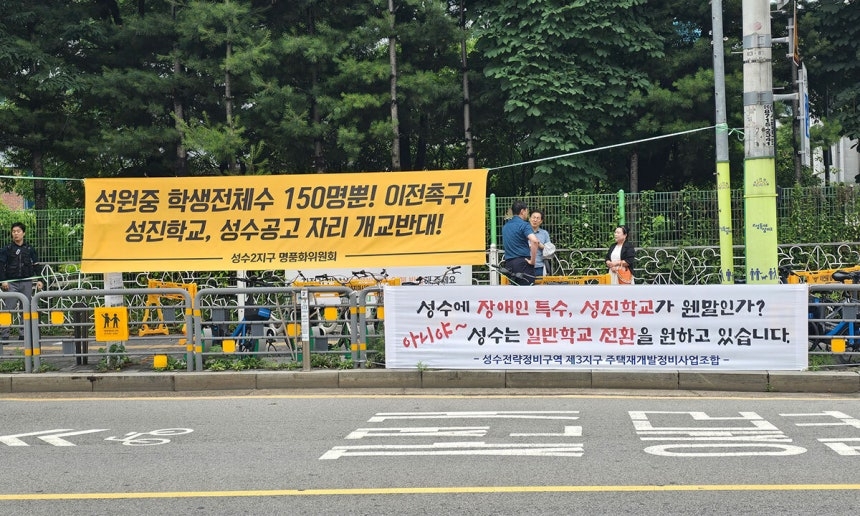
Now in 2025, a nearly identical battle is playing out in Seongdong-gu, where the proposed Sungjin School is facing similar resistance.
Residents are politer this time, more polished in their objections, but their message is the same: Go somewhere else.
But parents can't step back, because they know what it's at stake.
“Once a school loses its proposed site, it never gets another,” Kim explained, referring to the case of Dongin School.
Dongjin School was rejected by residents at its initially proposed site, and then seven more times as each new location drew opposition, before it was ultimately pushed all the way to a Greenbelt area in Sinnae-dong, northern Seoul, where property development is restricted for environmental conservation.
“Access is so poor, they’re still building a bridge,” she said.
Originally planned to open in 2017, Dongjin School is now expected to open in 2027, a full decade late.
To the relief of Kim and other parents of students with disabilities, the plan for Sungjin School took a major step forward this week.
Despite opposition from local residents, an ordinance to establish the school in Seongdong-gu was approved by the Seoul Metropolitan Council’s Education Committee on Wednesday. The proposal now awaits a final vote at the council’s plenary session on Friday.
A vital link
In Korea, children with disabilities are placed in different schools depending on the severity of their conditions: regular classes in regular schools, special classes within regular schools or dedicated special schools. In reality, many who need to attend a special school cannot do so simply because there are no spots available.
According to the Education Ministry, only 25.7 percent of the nation’s 120,735 students eligible for special education are enrolled in special schools this year.
In Seoul, of the 4,270 students enrolled in special schools, 8.3 percent commute more than an hour each way.
Seojin School Vice Principal Jung Mi-kyung, who has taught students with intellectual disabilities for 33 years, said the shortage is “critical.”
Recalling teaching special classes at a mainstream school in Seoul, she said special classes sometimes have more than 15 children, far beyond what is manageable.
“For some children sensitive to noise, the chatter of a regular classroom is unbearable, so they have to wear headsets,” Jung said. “Children with severe intellectual disabilities cannot always sit still. When they get stressed, they scream, wander and disrupt others. It is painful to both themselves and other classmates.”
Special schools offer smaller class sizes and tailored teaching, but their limited number makes admission fiercely competitive.
Noh Min-jung, whose son studies at Seojin School, said mothers compete by exaggerating their child's inability to adapt to regular classes.
“At the interview, if a child turned around when their name was called, they failed. If they could greet the examiner, they failed. So mothers desperately told their children to look dumber.”
“Doing that tore mothers’ hearts apart. But they were so desperate," Noh said.
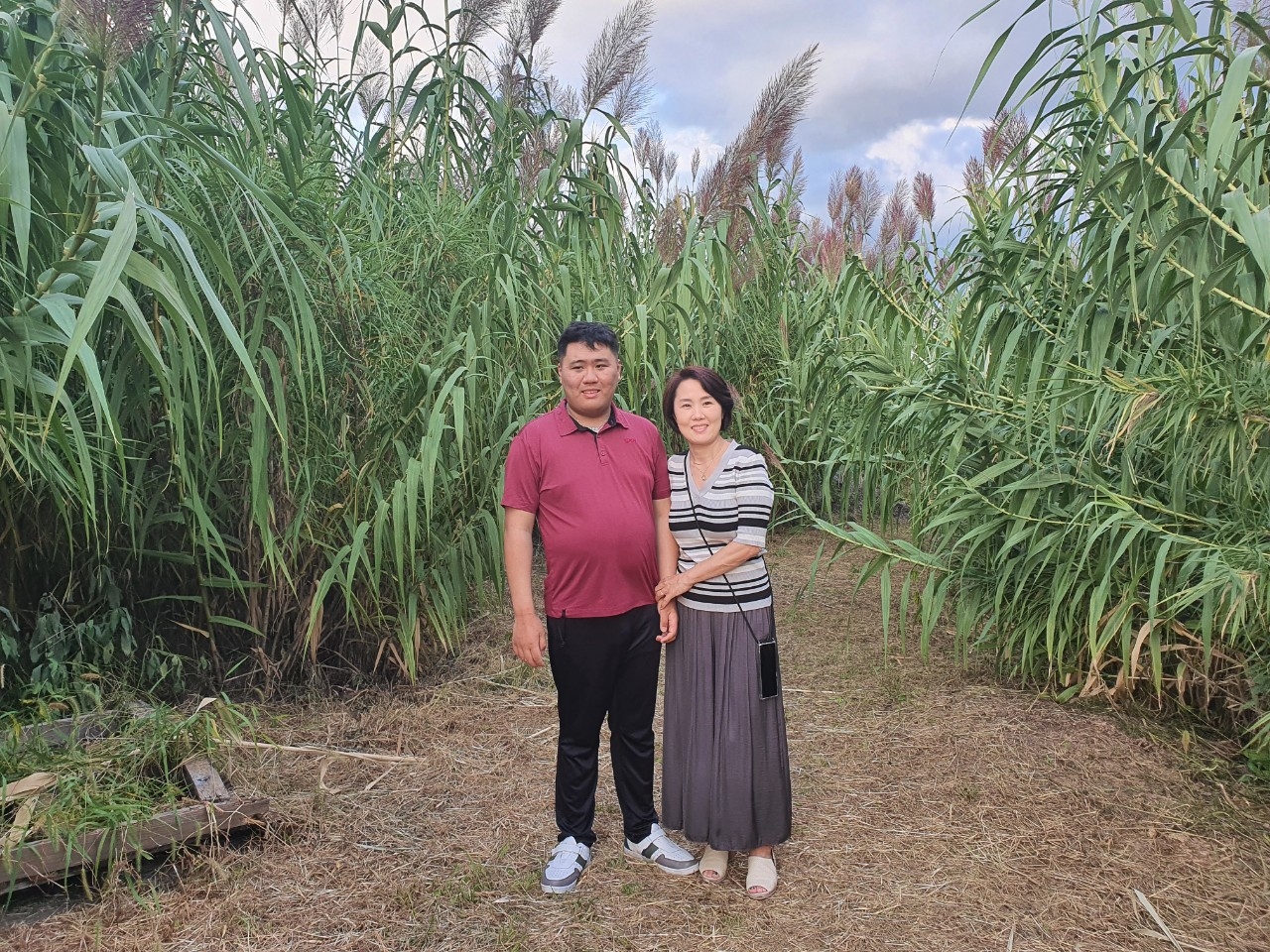
Noh’s son, Park Jae-ha, 14, was diagnosed with autism at age 3. In mainstream elementary school, he often bolted from class or played outside alone. By fourth grade, he moved to Seojin School.
“Here, he could stay in the room,” Noh said. “He learned to cheer at sports day. To vote in school elections.”
“School life is society itself. It’s not just academics — it’s how to live with others,” Noh said. She said she feels both grateful and sorry at the time, thinking of other children who can not attend the special school.
Social worker Ryu Jae-hoon explained people with intellectual disabilities require individualized education and systematic support according to their developmental level, which often makes it difficult for them to keep up in regular schools.
“In mainstream classrooms, some students feel left out because of differences in learning pace and comprehension, whereas in special classes they are able to experience a sense of achievement through tailored instruction,” he said.
He added that special schools and special classes provide not only educational support but also opportunities for therapy, vocational training and overall personal development.
“As a result, among adults with developmental disabilities, there is a marked difference in educational outcomes between those who have received individualized support and those who have not,” Ryu said.
Vicious opposition
"Institutions for students with disabilities are treated like prisons or incinerators — things nobody wants nearby," said one official at the Seoul Metropolitan Office of Education’s special education division, speaking bitterly on condition of anonymity.
Such resistance reflects how Koreans view disability in general, he went on.
“We are a society obsessed with efficiency and being No. 1 and many think walking slowly with someone disabled drags them down.”
Social worker Ryu said low public awareness and persistent prejudice often prevent people with disabilities from being recognized as equal members of society.
“But when opportunities are created for people to interact with individuals with special needs, we see meaningful, positive change,” he said.
For example, in community-led disability awareness campaigns, residents who directly engaged with people with intellectual disabilities showed noticeable shifts in attitude. Such continuous and structured efforts to improve awareness are crucial in promoting social inclusion for people with disabilities, according to him.
Seojin School, built partly thanks to the mothers in 2017 pleading on their knees amid insults, occupies a site where an elementary school once stood.
Gongjin Elementary School, located near public rental apartments, served mostly low-income families. When new private apartments were built in the area, their residents demanded the authorities redraw school zones so that they could send their children to other schools, leaving Gongjin to the rental housing community.
As the rental housing community aged, there were no longer enough children to keep the elementary school running, and the school eventually closed. The vacant site became a political hot potato, eventually leading to the 2017 clash over building a special school there.
One resident told Kim Nan-hyun that "They tried to get rid of a garbage truck (children from public housing), but ended up with a dung cart (children with disabilities) instead.”
“It hurt,” Kim said. “To hear our children compared to filth. But it also revealed something about how this society views its most vulnerable.”
shinjh@heraldcorp.com