
North Korean leader Kim Jong-un returned from a five-day trip to Beijing with more than photos of himself standing shoulder to shoulder with Chinese President Xi Jinping and Russian President Vladimir Putin — the leaders of two officially recognized nuclear-weapon states.
The tableau, which had eluded both Kim’s grandfather and father, carries geostrategic ramifications for an emerging tripartite axis of the countries seeking to reshape the world order.
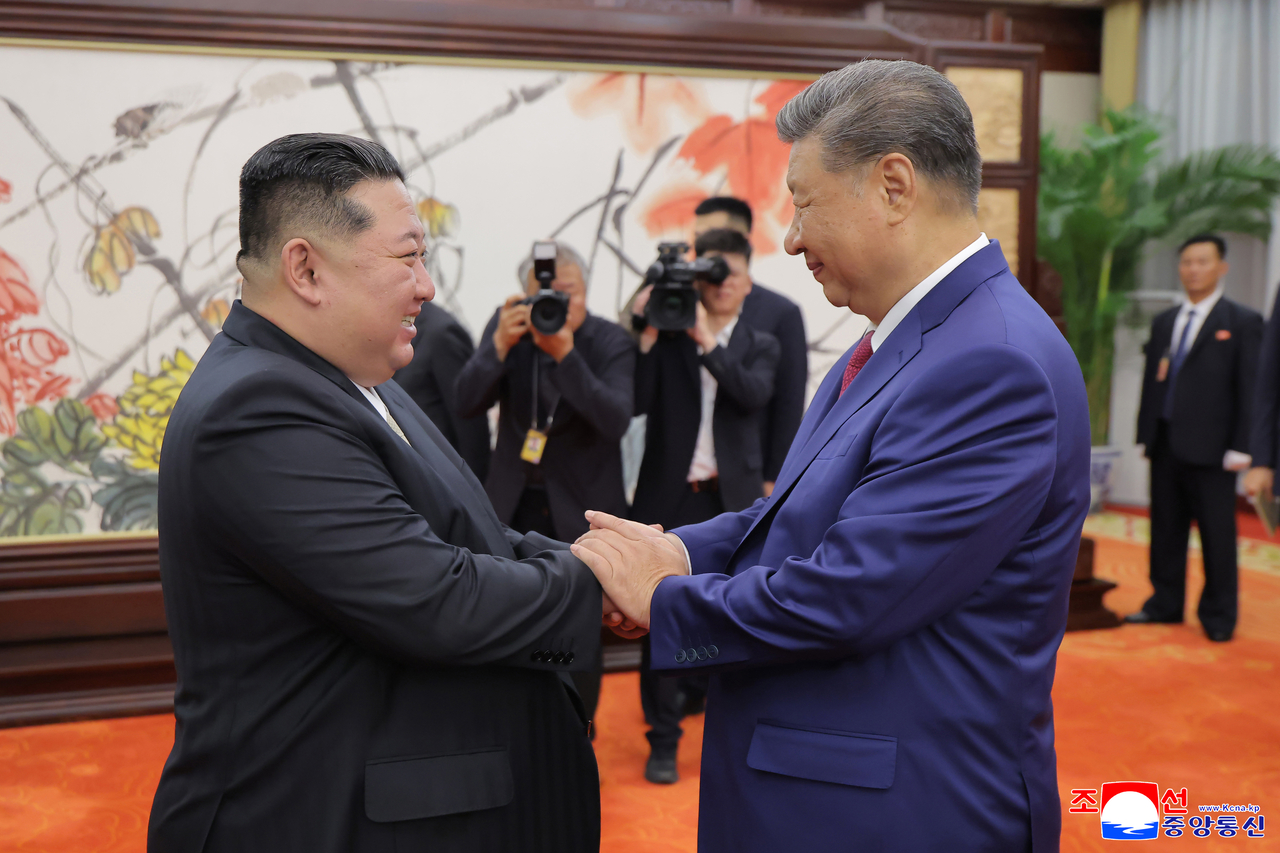
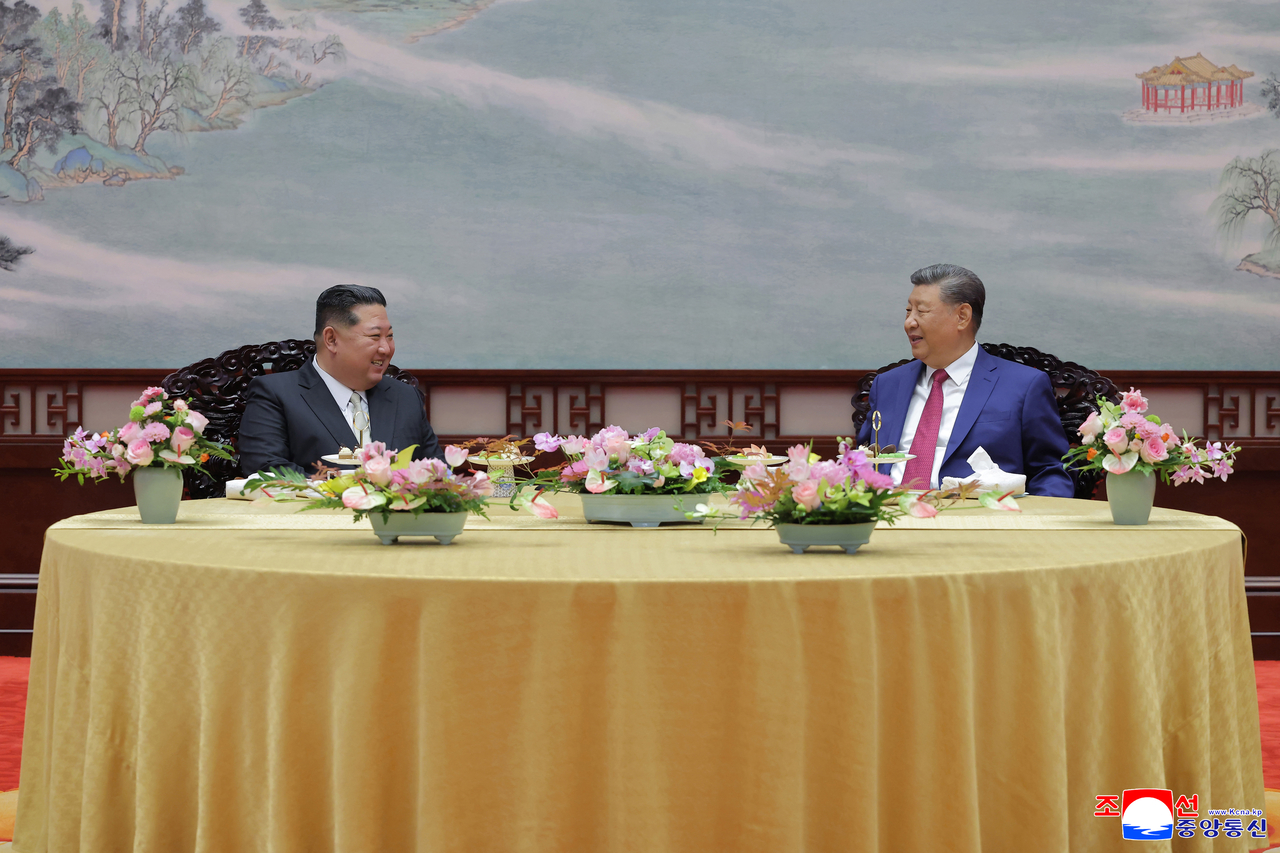
Far more significant, however, was Kim’s meeting with Xi on Thursday — their first in more than six years, since June 2019 — which resulted in Xi’s public pledge of “unchanged” support for Pyongyang despite the shifting global order.
Observers in Seoul noted that the carefully worded statement issued by Beijing after the Kim-Xi meeting notably did not include the principle of denuclearization, which has long been a key part of China’s policy on the Korean Peninsula. This may signal a policy shift toward tacit acquiescence to North Korea’s nuclear possession.
The Kim-Xi summit was a manifestation of bilateral efforts to repair frayed ties between China and North Korea, even as Pyongyang deepens its alignment with Russia through a treaty-forged military alliance.
“The CPC and the Chinese government attach great importance to the traditional friendship between China and the DPRK, and stand ready to maintain, consolidate and develop China-DPRK relations,” Xi was quoted as saying in an English statement issued by the Chinese Foreign Ministry. “No matter how the international landscape may evolve, this position will stay unchanged.”
The CPC stands for the Communist Party of China, and the DPRK is an abbreviation of North Korea’s official name, the Democratic People’s Republic of Korea.
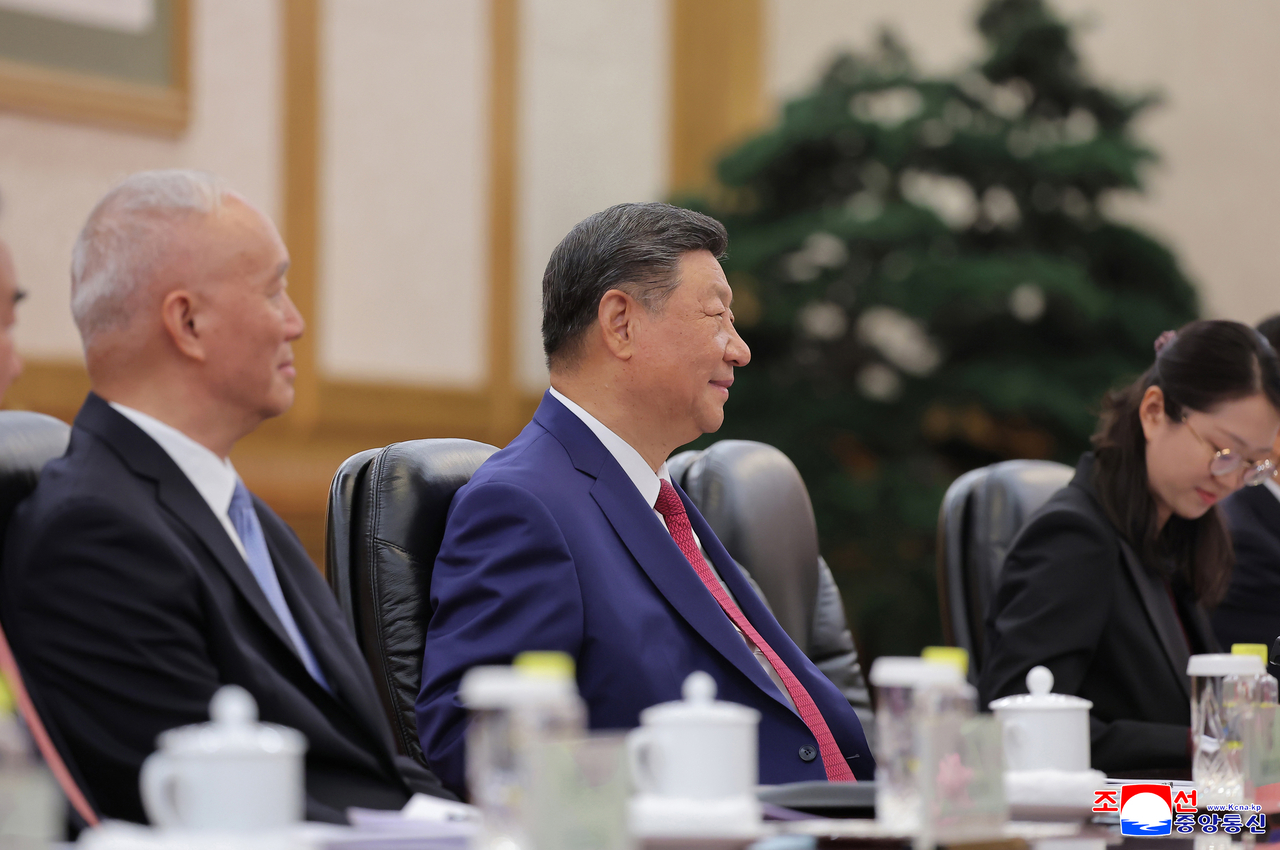
Xi also pledged to "work with the DPRK to step up high-level exchanges and strategic communication" during his meeting with Kim at a critical juncture, with observers bracing for the possibility of Xi visiting Pyongyang. It would be the first such trip since June 2019 and a reciprocal gesture for Kim’s visit to Beijing, his first since January 2019.
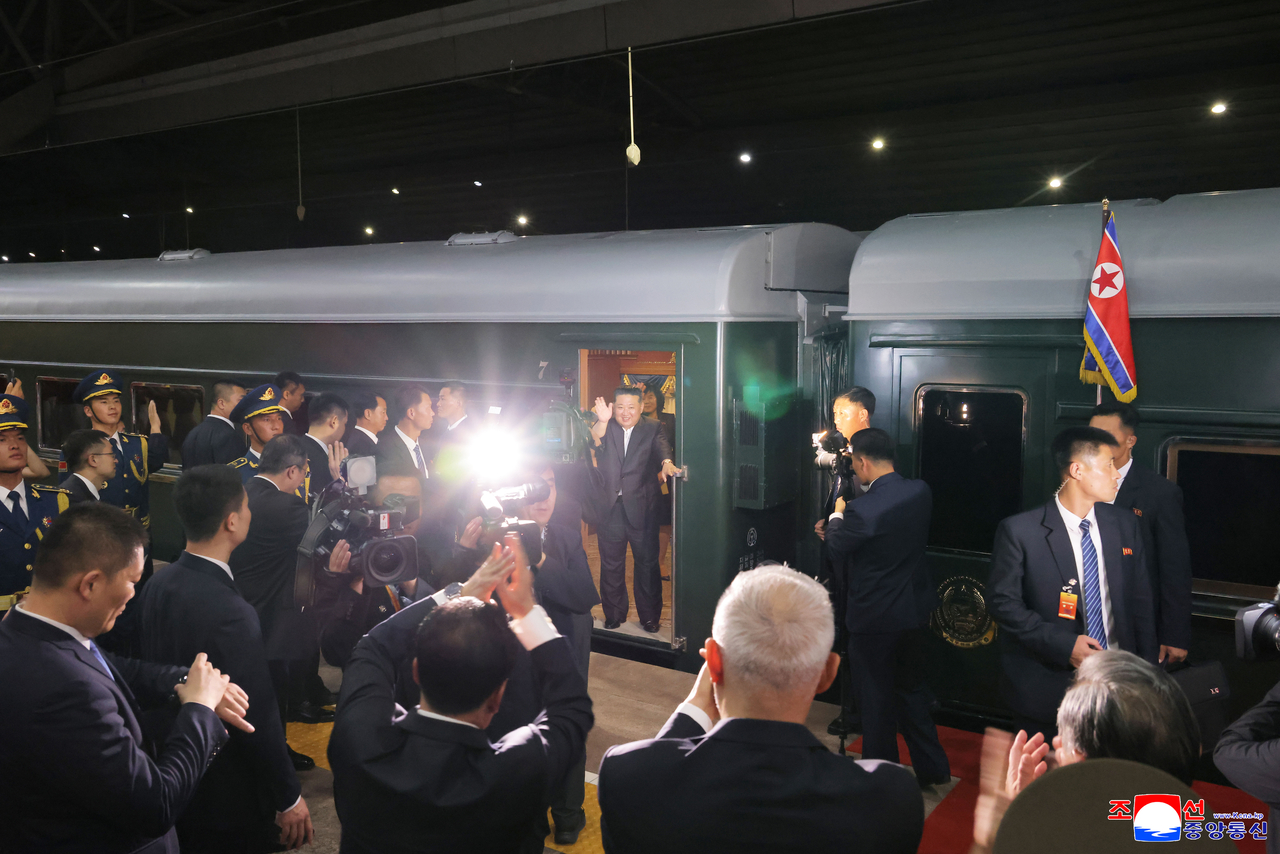
Kim traveled to attend China’s Victory Day celebrations on Wednesday, marking the 80th anniversary of the end of World War II following Japan’s surrender.
In return, Kim said the “DPRK will continue to firmly support China’s position on Taiwan, Xizang, Xinjiang and other issues concerning China’s core interests,” according to the statement issued by China’s Foreign Ministry.
Kim also expressed the country’s desire to strengthen economic and trade ties with China, vital lifelines for the country.
“The DPRK will deepen mutually beneficial economic and trade cooperation with China and work for more fruitful outcomes,” Kim was quoted as saying.
This detail, however, was omitted from the North Korean state media report on his meeting with Xi released Friday.
Beijing’s silence fuels speculation
Also noteworthy is the omission of any reference to North Korea’s intent to pursue “denuclearization,” a term that appeared in statements issued after the five summits between Kim and Xi from 2018 to 2019 — four of them held in China.
China’s statement briefly disclosed, “The DPRK commends China for its just position on the Korean Peninsula issue,” citing Kim’s remarks.
Observers in Seoul interpreted the implications of the omission in each statement as signals of China’s acquiescence to North Korea’s nuclear weapons possession.
“The point emphasized during the talks — unchanging relations despite changes in the international situation — also contains the aspect of providing grounds for North Korea to adhere to nuclear possession,” said Lim Eul-chul, a professor at Kyungnam University's Institute for Far Eastern Studies.
“China’s show of support for North Korea’s core interests can also be interpreted as, in effect, tacitly accepting North Korea’s status as a nuclear-weapon state.”
Hong Min, a senior research fellow at the government-funded Korea Institute for National Unification, raised the possibility of China altering its three main principles on the Korean Peninsula: denuclearization, maintaining peace and stability, and resolving issues through dialogue and negotiations.
Hong noted the Chinese side mentioned only “peace and stability on the Korean Peninsula” among the three principles in its own statement.
“Thereby, it is difficult to rule out the possibility that China has in fact provisionally shifted its position to support the legitimacy of North Korea’s nuclear possession by revising the principle of denuclearization,” Hong said.
Hong further pointed out that “China may also be seeking to pressure South Korea and the United States by indirectly supporting North Korea’s nuclear possession, in response to mounting pressure directed at China.”
Hong cited the modernization of the South Korea–US alliance and the deepening trilateral cooperation among South Korea, the United States and Japan as examples.
“However, for the time being, China is unlikely to clarify its position and will instead observe the attitudes of South Korea and the US, considering the ripple effects that any revision or change of the three principles would bring, while also possibly using this as diplomatic leverage,” Hong added.
In response to the omission of “denuclearization” in each statement, South Korea’s Foreign Ministry said, “China has consistently reaffirmed on various occasions, including during the visit of the presidential special envoy to China from Aug. 24 to 27, that there has been no change in its basic position on the Korean Peninsula issue.”
“Our government will continue to closely communicate and cooperate with China, while persistently urging China to play a constructive role in bringing North Korea back to the dialogue table,” a Foreign Ministry official said on condition of anonymity.
dagyumji@heraldcorp.com

![[Exclusive] Ateez to return in November](https://wimg.heraldcorp.com/news/cms/2026/09/02/news-p.v1.20260902.76162fb0ba55493aad1c076f240d0750_R.jpg?type=h&h=120)