
Ahead of summit, Lee downplays USFK flexibility, farm market opening
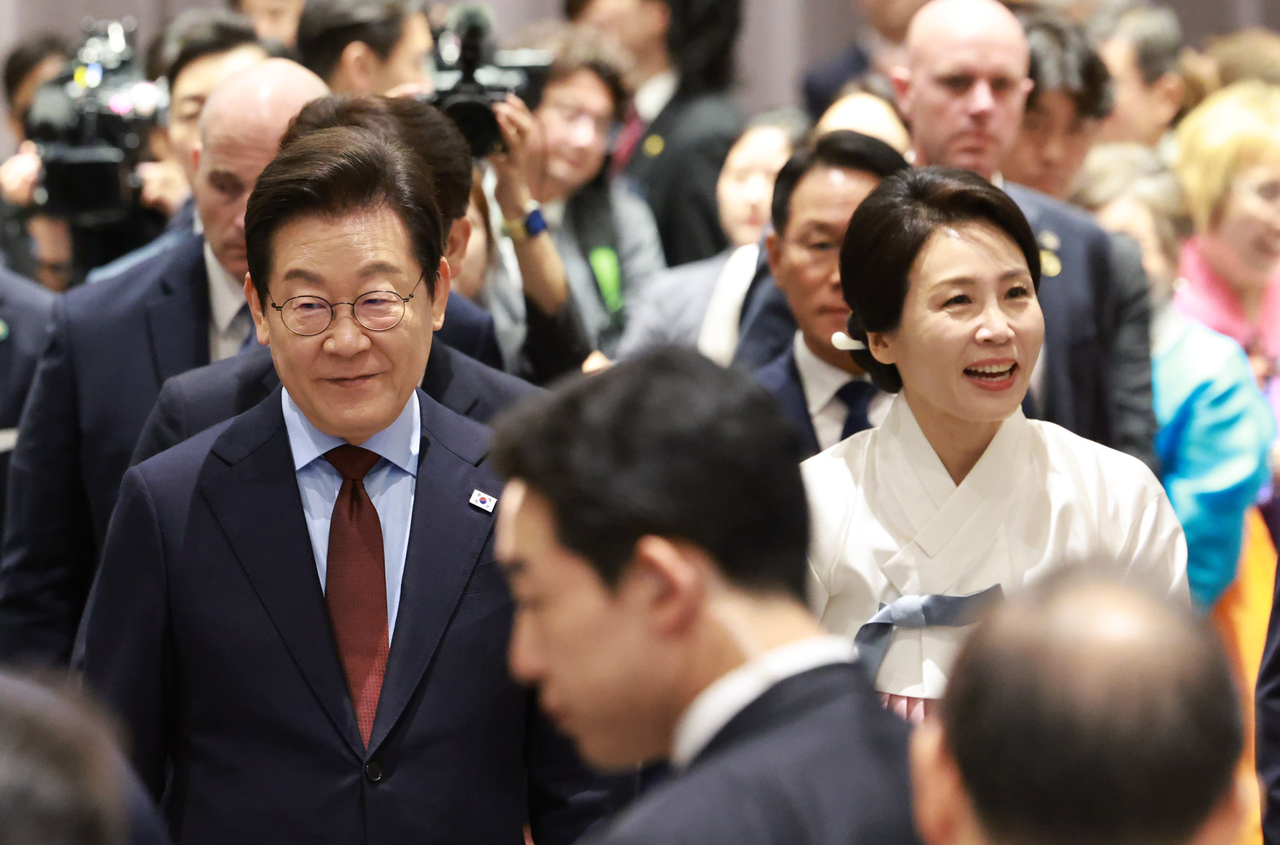
South Korean President Lee Jae Myung and US President Donald Trump are set to meet for their first summit in Washington on Monday, where they are expected to address a wide range of issues, from trade tariffs and defense spending to the strategic future of the US-South Korea alliance. The high-profile meeting comes amid shifting regional dynamics in East Asia and growing demand for a change in alliance commitments, signaling a pivotal moment for both countries’ economic and security cooperation.
Lee's summit with Trump comes as a trade deal between Seoul and Washington was announced in late July. The two countries agreed to lower tariffs on most South Korean goods, including cars, to 15 percent from the initially suggested 25 percent. In return, South Korea pledged to invest $350 billion in US projects controlled and selected by Washington -- including shipbuilding projects -- in addition to a purchase of $100 billion worth of liquefied natural gas from the US.
Amid speculation that Washington might call for greater concessions from Seoul, Lee pledged to prioritize South Korea's national interest by saying that it cannot concede to all the requests that Washington may be pushing for.
"As nationalism rises, safeguarding our national interests seems to require much more effort than in the past," Lee told reporters during his flight from Tokyo to Washington on Air Force One Sunday.
"It is clear that South Korea is also a sovereign state. We may not be able to meet the expectations of our citizens, but we have a responsibility to at least not disappoint them."
Regarding speculation that the US could renew its push for a further opening of Korea's agricultural market -- which was not agreed to in the July trade deal -- Lee said, "The deal was confirmed through direct announcement by the US president and mutual approval by the presidents of South Korea and the US. I don't think we can easily say, 'We'll change it if you tell us to change it.'"
Ahead of the summit, Lee also said that Seoul would not easily embrace the concept of strategic flexibility, which could potentially redefine the role of some 28,500 US troops in South Korea, thereby potentially undermining South Korea and its allies' deterrence against North Korea.
"It's true that we are facing the demand for strategic flexibility (with respect to US forces in South Korea), but it's hard to concede that from our perspective," Lee said.
However, Lee said the gap between interpretations of so-called “alliance modernization” is expected to narrow.
"We need discussions on ways to adopt a forward-looking strategy for US troops in South Korea," Lee said. "Each side uses words that carry slightly different meanings, and narrowing those differences is what negotiation is about. I can’t say our positions are completely aligned, but the atmosphere is far less tense than it might appear."
Regarding other possible agenda items for the summit, Lee did not elaborate on his goals concerning the key agenda items for the upcoming summit, such as the defense cost-sharing for the stationing of US troops on the Korean Peninsula.
Lee also declined to comment on the possibility of bringing up revisions to the US-South Korea Agreement for Peaceful Nuclear Cooperation, commonly known as the 123 Agreement. The agreement, last revised in 2015 and effective until 2035, restricts South Korea’s enrichment of uranium and reprocessing of used nuclear fuel for civil use.
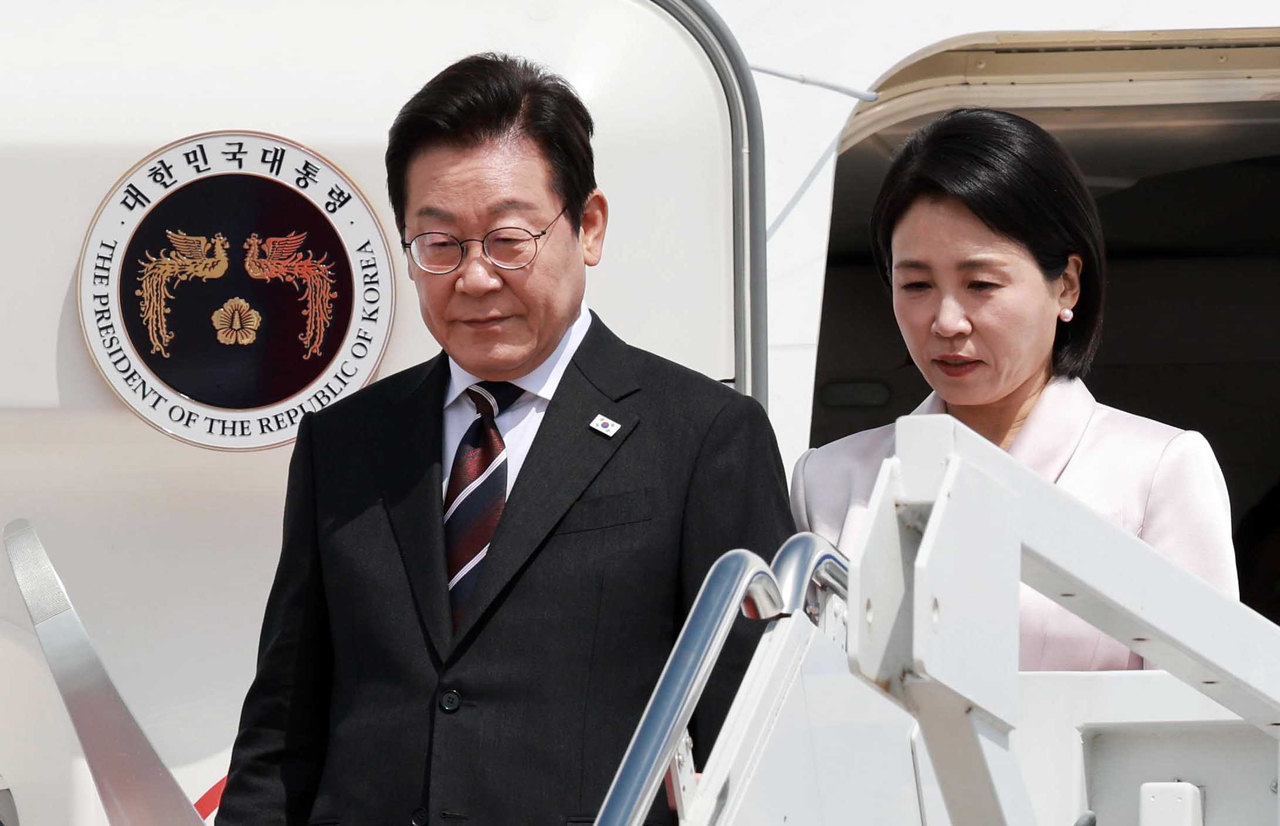
Lee and his wife Kim Hea Kyung landed at Joint Base Andrews in Maryland Sunday afternoon. According to the White House, Lee was to be received by Trump at noon on Monday local time. The bilateral meeting was scheduled to kick off at the Oval Office at 12:15 p.m., followed by a bilateral lunch at the Cabinet Room at 12:45 p.m.
Lee's summit with Trump was set to take place two days after his summit with Japanese Prime Minister Shigeru Ishiba on Saturday, held at Ishiba's official residence in Tokyo.
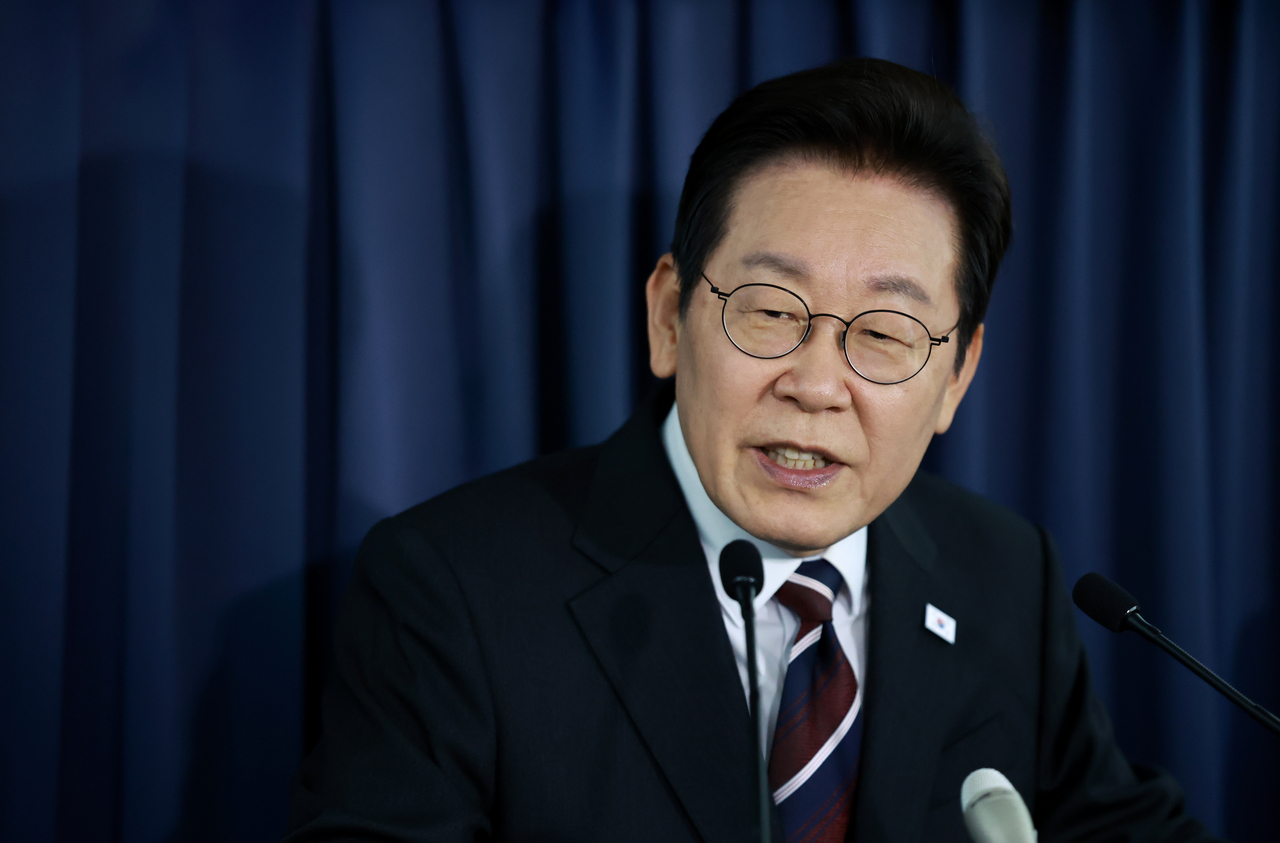
As for what was discussed during his meeting with Ishiba, Lee said Ishiba offered him "very detailed" advice, without elaborating further.
When asked about why he chose to stop by Japan before going to the US -- becoming the first South Korean president to have done so in the past six decades of diplomatic ties with Japan -- Lee said his strategic choice would help push through the trilateral cooperation of Seoul, Tokyo and Washington.
"A stopover in Japan, which is closer to South Korea, would be more effective in terms of trilateral ties between Korea, the US and Japan," he said, adding that he did not have to be "bound by precedent."
Monday's summit will be the first one between Lee and Trump. Lee was initially scheduled to meet Trump in June, a few weeks after his inauguration, on the sidelines of the Group of Seven summit in Canada, but the meeting did not take place due to Trump's early departure from the summit venue.
consnow@heraldcorp.com