
Lee Jae Myung administration's first economic blueprint leans on AI to revive slowing momentum
President Lee Jae Myung's administration has pledged to lift South Korea’s potential growth rate to 3 percent, with sweeping policy support for artificial intelligence and other strategic sectors seen as key to the country’s future.
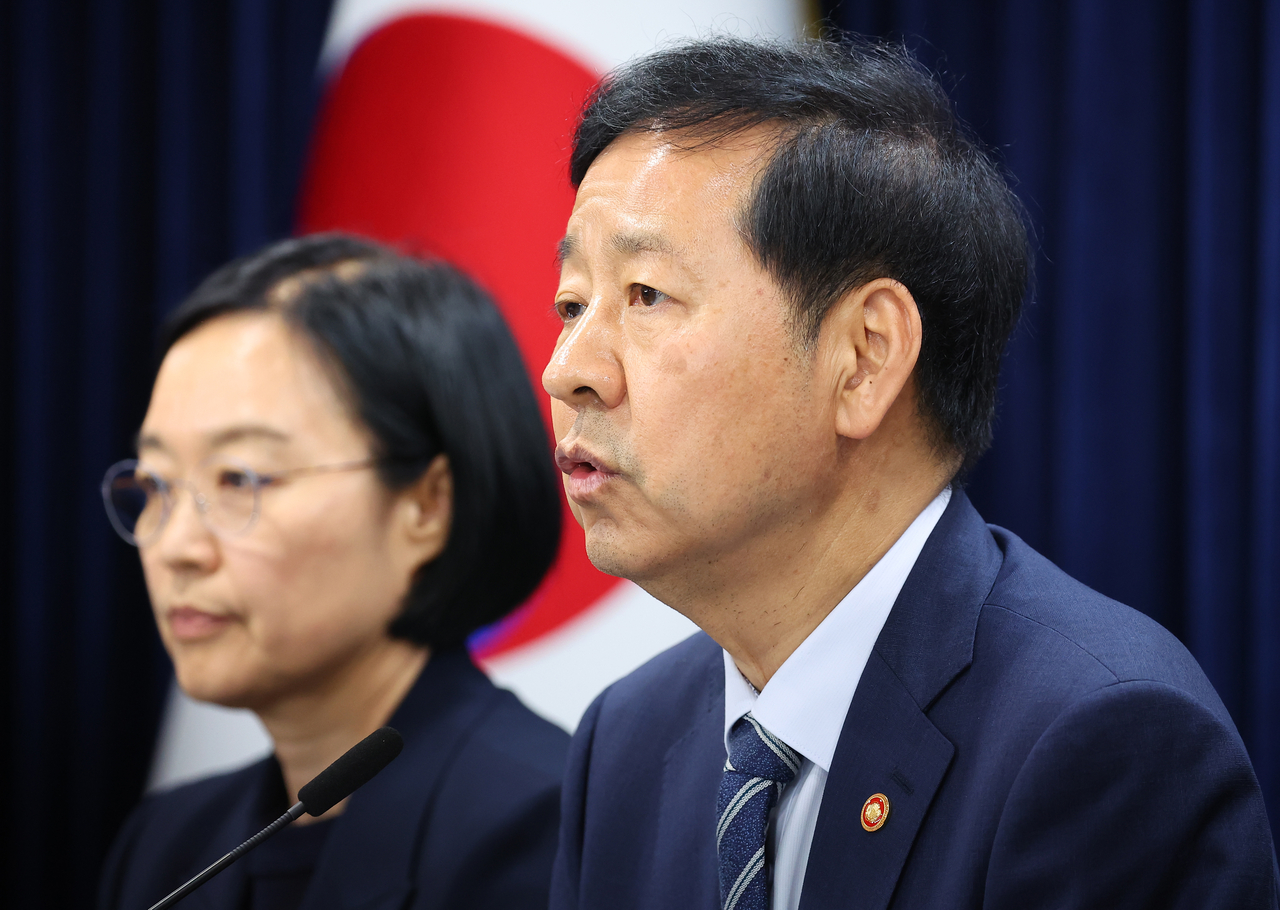
“The Korean economy is facing a rapid decline in its potential growth rate, driven by the shrinking working-age population, an investment slowdown and stagnant productivity, with actual growth lagging even below that potential,” Finance Minister Koo Yun-cheol said Friday during a joint government press briefing held in Seoul. “The AI transformation is the only breakthrough that can reverse the decline caused by demographic shocks.”
The economic blueprint, the first under Lee, was unveiled Friday, nearly three months into his term.
Koo, who also serves as deputy prime minister for the economy, said the priority is to shift Korea’s economic model from the catch-up strategy that fueled past growth to one aimed at global leadership.
“Today, a nation’s competitiveness hinges on producing world-leading products and services,” Koo said. “We will mobilize every possible resource, including fiscal, tax, financial, human, locational and regulatory measures, to fully support their development.”
30 priority projects
The blueprint rests on two slogans: “AI transformation” and “30 priority projects.”
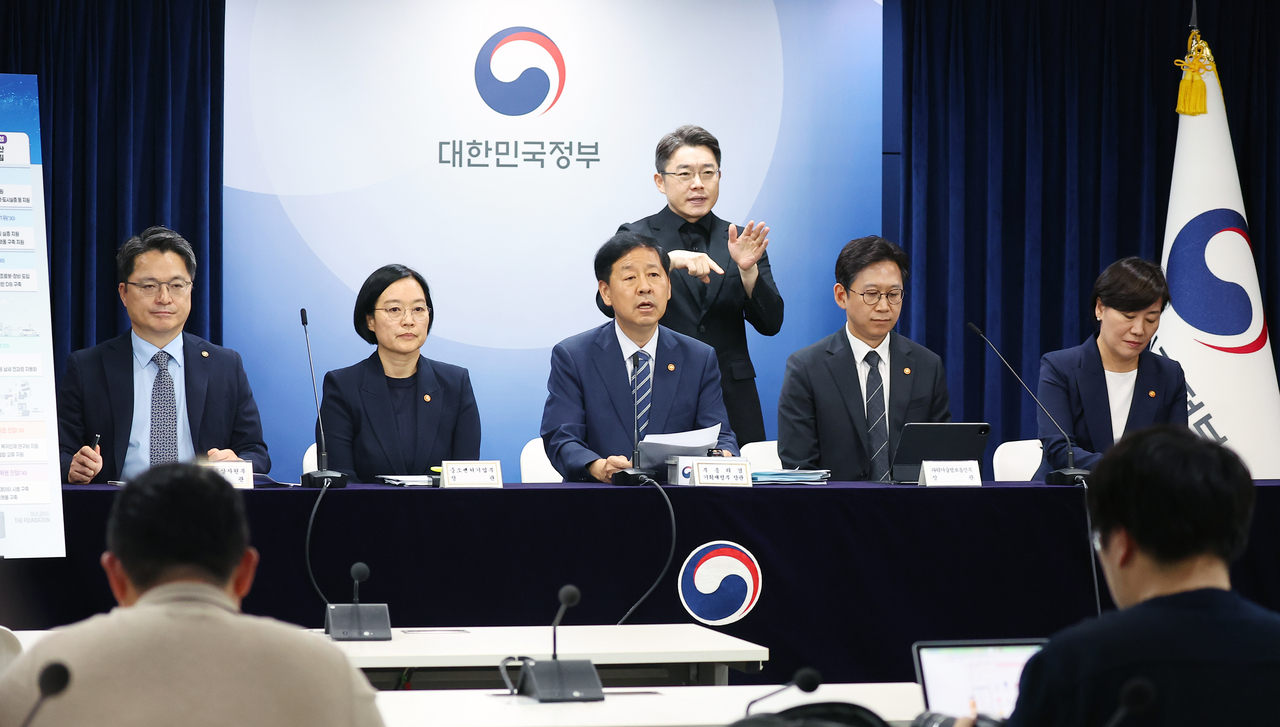
Yoon said the administration has adopted a “select and focus” strategy, channeling resources into high-performing sectors. Of the 30 projects, half are devoted to AI, with the remainder aimed at driving what the government calls a “superinnovation economy.”
The 15 AI initiatives aim to embed the technology into manufacturing sectors such as robotics, autos, shipbuilding and semiconductors, with the goal of making Korea a leader in “physical AI.”
The government pledged to translate AI into measurable economic gains by driving adoption across business, government and society, while expanding infrastructure such as data centers and governance frameworks. It also vowed to retain domestic talent, attract overseas experts and refine regulations to speed deployment.
The “superinnovation” projects target advanced materials, energy resilience and new industries. They seek to boost self-reliance in strategic materials for chips and electric vehicles, while developing alternative energy sources from solar and offshore wind to next-generation grids.
It also plans to expand investment in “K-industries” including biopharmaceuticals, content, beauty and food, backed by a package of fiscal, tax and regulatory measures.
W100tr fund growth fund
The government will launch a National Growth Fund of more than 100 trillion won ($71.8 billion) to back these initiatives.
About 50 trillion won will come from the government under the Advanced Strategic Industry Fund, matched by another 50 trillion won in private capital, with the goal of sharing the benefits of growth with the public.
The private portion will be raised from retail investors, pension funds and financial institutions, while the government’s share will be financed through government-guaranteed bonds and capital from the state-run Korea Development Bank.
The fund will primarily invest in tech and venture firms in key industries and energy infrastructure, with a portion earmarked for the AI sector.
Final details will be set and announced by the Financial Services Commission, which will oversee the fund.
Sharing the growth
The ministry stressed that the benefits of tech-led growth must be shared widely, narrowing gaps between large and small firms, regions and individuals.
The government said it will bolster the social safety net to protect livelihoods, while expanding support to address the demographic crisis caused by an aging population and low birth rate.
It also pledged to promote fairer trade rules and expand measures for mutual growth and performance-sharing between large and smaller companies, alongside tougher regulations and penalties against unfair practices.
To secure a foundation for sustained growth, the government outlined priorities for systemic upgrades, including strengthening corporate governance through regulatory reforms and supporting capital markets, with a road map for potential MSCI inclusion to be unveiled by year-end.
“Through these efforts, we aim to achieve ‘superinnovation growth,’ creating a virtuous cycle between national progress and public well-being,” Koo said.
Recovery to push growth to 0.9%
The government set long-term goals of raising Korea’s potential growth rate to 3 percent, putting the country among the world’s top three in AI and lifting its overall national power to No. 5.
In the near term, officials aim to reverse the current downturn, Deputy Finance Minister Yoon In-dae said Tuesday.
“Achieving 3 percent will not be an easy task,” Yoon said at a briefing. “But our goal is not just economic stabilization. We expect to see potential growth pick up over the next five years.”
Korea’s potential growth has been sliding since 2010 and dropped below 2 percent for the first time this year. Economists warn it could approach zero by 2040 if momentum isn’t restored.
The ministry vowed “immediate implementation” of the plan this year, projecting growth of 0.9 percent in 2025, slightly above the 0.8 percent forecast by major institutions, including the Bank of Korea.
Growth is expected to accelerate to 1.8 percent in 2026.
“Consumer sentiment has improved and exports have picked up since the launch of the new administration, reversing the downturn,” Yoon said. “With the supplementary budget in place, we expect the recovery, led by domestic demand, to broaden.”
jwc@heraldcorp.com