
Currency agenda could surface at upcoming Lee-Trump summit, analysts say
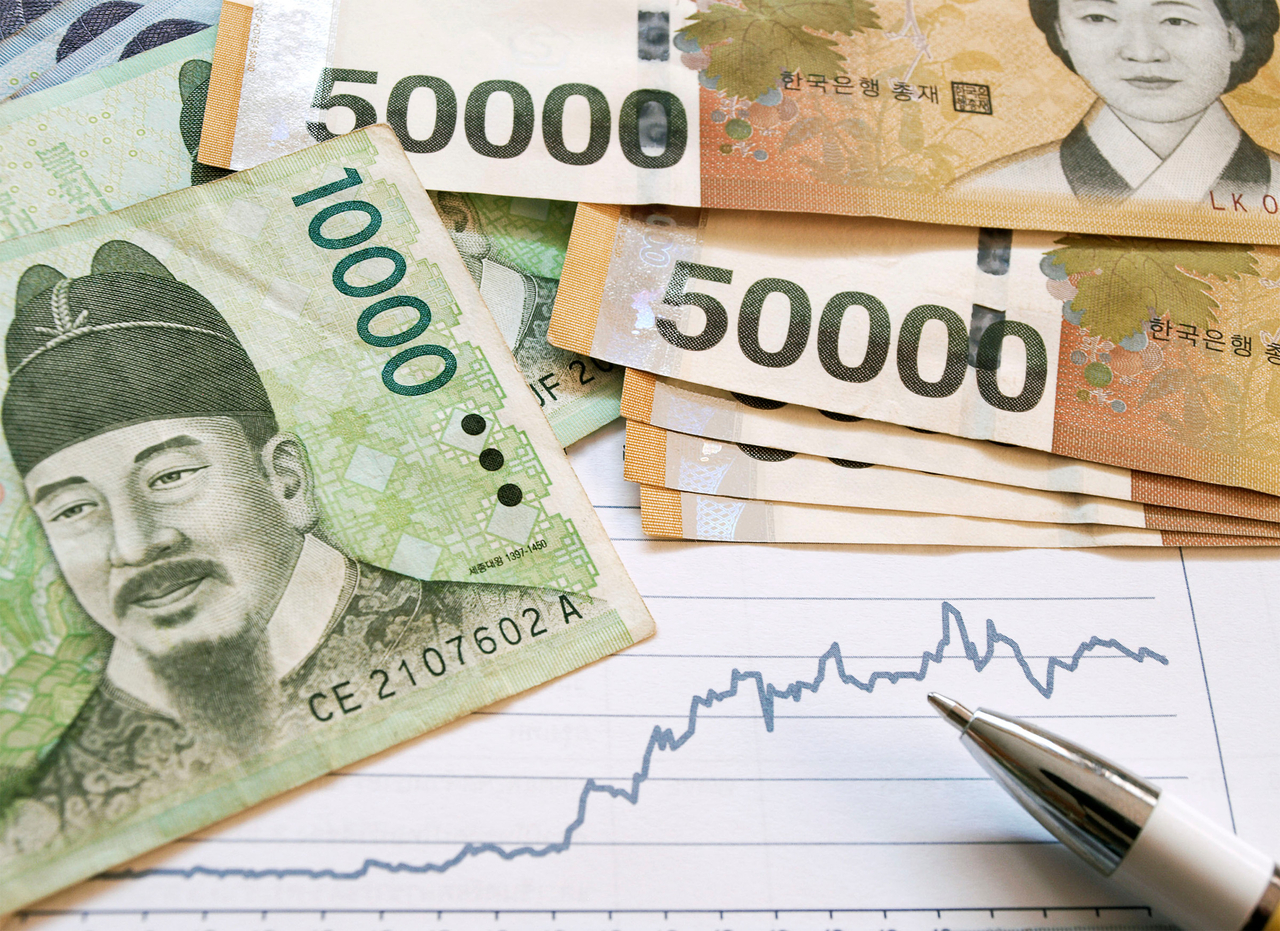
As the US reaches tariff deals with major trading countries, analysts warn that currency measures could become US President Donald Trump’s next target, urging Seoul to brace for potential won appreciation that could hurt Korean exports.
The warning takes on added urgency as Trump and President Lee Jae Myung are set to meet in Washington for their first summit in late August, with observers noting that currency issues, which were left out of the last trade deal between the two countries, could emerge as a key agenda item.
The Korea International Trade Association released a report Wednesday raising the possibility that Trump could push for a weaker dollar to reduce the trade deficit and boost domestic manufacturing.
The warning comes as the US president recently nominated Stephen Miran, currently chair of the Council of Economic Advisers, to fill a vacancy at the Federal Reserve’s Board of Governors. Dubbed the architect of Trump’s tariffs, Miran has proposed the so-called “Mar-a-Lago Accord,” which aims to devalue the greenback.
Trump himself appears to favor a weaker dollar strategy. "Well, I'm a person that likes a strong dollar, but a weak dollar makes you a hell of a lot more money," Trump said in July. He added that when the dollar is strong, "you don't do any tourism" and "can't sell anything."
KITA views the proposed Mar-a-Lago Accord as unlikely to be formally implemented, but it noted that the US could push for currency appreciation among trade partners, including South Korea.
“Even not under the Mar-a-Lago accord, the US could demand a stronger currency from major countries to prevent them from devaluing their currencies to offset tariff impacts,” said Yang Ji-won, a senior researcher at the KITA. “We should prepare for a potential decline in the exchange rate by expanding currency swap arrangements and strengthening foreign exchange market stabilization measures, while supporting exporters in managing currency risks.”
A report published by the US think tank Center for Strategic and International Studies after the trade deal was reached in July reinforced these concerns. CSIS Korea Chair Victor Cha and deputy director Andy Lim suggested that "Trump will use the White House visit not just to celebrate the trade deal but as leverage on South Korea for more concessions on investment, nontariff barriers and currency manipulation."
South Korea has also been redesignated on the US Treasury Department's currency watch list since November, signaling Washington will be closely monitoring Korea's currency practices.
KITA's analysts added that a stronger won would weigh on South Korea's export-driven economy.
“If the won-dollar rate drops 10 percent, it could shrink exports by 0.25 percent while increasing imports by 1.31 percent,” according to KITA’s analysis. It explained that when the won-dollar exchange rate falls, exporter might raise their dollar-denominated export prices to protect won-based profitability. That would risk reducing shipment volumes and ultimately causing greater loss.
For importers, however, a lower exchange rate reduces won-denominated import prices of goods, leading to an increase in import volume.
The report also pointed to risks of exchange rate volatility, noting that a one percent point increase in volatility could cut export volume by 1.54 percent. This is because heightened volatility could deter exporters from signing contracts due to uncertainty, while rising hedging costs could squeeze profit margins and ultimately shrink export volumes.
sahn@heraldcorp.com