Critics say three-year CEO cycles undermine long-term aircraft programs requiring decadelong investments
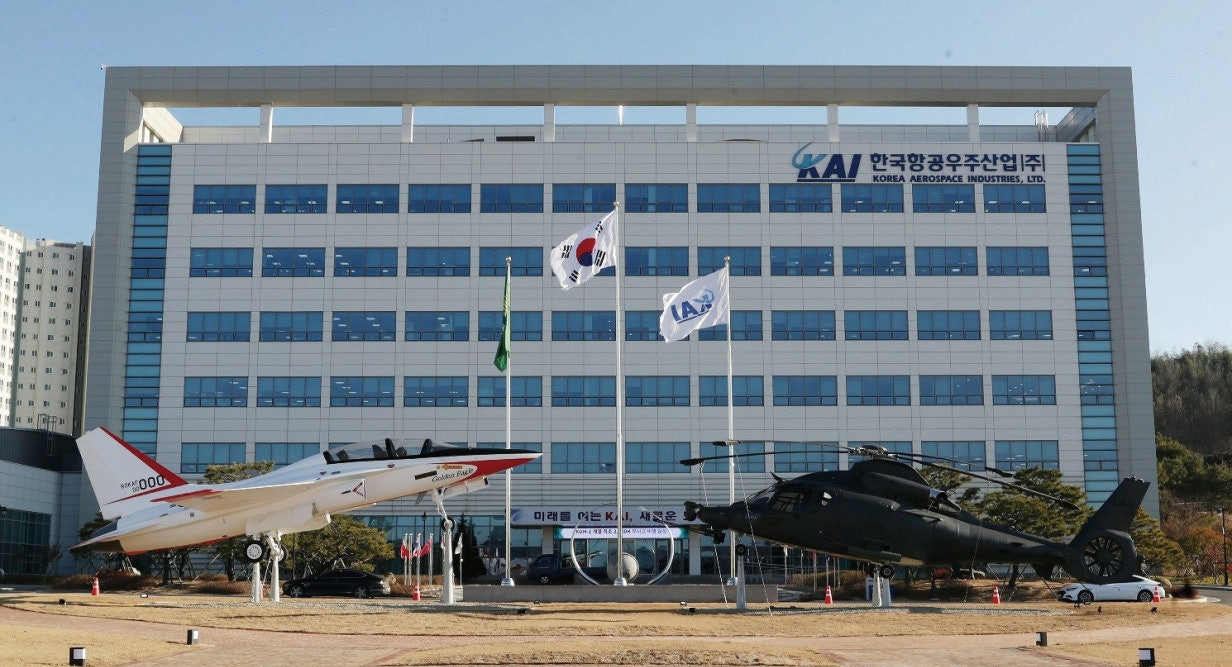
Korea Aerospace Industries has once again found at a crossroads as it awaits the new government’s likely appointment of the company’s next leader while sale rumors are resurfacing.
Kang Goo-young, former CEO of KAI with Air Force pilot background, voluntarily stepped down on July 1. He had previously notified the state-run Export-Import Bank of Korea, the biggest shareholder of KAI, of his resignation intention on the first day of the Lee Jae Myung administration on June 4.
Kang, who was discharged from the Air Force as a lieutenant general, joined former president Yoon Suk Yeol’s presidential election campaign and supported the now-impeached leader in the early months 2022. Kang was eventually appointed as the CEO of Korea’s sole aircraft manufacturer in September that year for a three-year term, about six months after Yoon won the election.
Defense industry stakeholders have been repeatedly calling for a need to for someone with professional expertise to take the role of CEO. But since its establishment in 1999, all but one of KAI’s past eight CEOs ehave been appointed from the outside of the company under political power shifts.
Through media reports, three people have been mentioned as potential candidates for the next leader of the KAI: Ryu Kwang-su, vice president at Hanwha Aerospace and a former KAI executive, Kang Eun-ho, a professor of defense industry at Jeonbuk National University and a former chief of the Defense Acquisition Program Administration, and Moon Sung-wook, a former Minister of Trade, Industry and Energy.
KAI’s labor union castigated two of the three potential nominees — Ryu and Kang — while warning that it would go on a full-scale strike if the fate of its next leader isdetermined by political influence instead of expertise.
The labor union claimed that the former KAI executive had played a key role in stealing core talent from KAI to Hanwha after leaving KAI in 2022.
“If (Ryu) makes a comeback as the CEO, it would mean that KAI will be under control of external capital and lose its technological sovereignty,” the labor union said in a statement. “The labor union will oppose (Ryu’s) comeback attempt no matter what it takes.”
The labor union also raised an objection to Kang, as it mentioned that he was accused of wrongfully reporting business expenses and violating the anti-graft law. The labor union added that there had been rumors that Kang had been working with former KAI executives to take the leadership.
As for Moon, the labor union said he was the only realistic candidate for the job based on his former trade minister tenure, despite lacking working-level experience in the aircraft business.
Defense industry stakeholders point out that the recurring theme of new leadership under new government hinders KAI’s sustainable business strategy in the mid- to long-term.
“The three-year term of KAI’s CEO does not fit the nature of aircraft development, which usually takes over a decade with long-term investments,” said a defense industry official.
“A new CEO might carry out an overhaul of the top level leadership at KAI and that means the continuity of certain businesses are likely to lose steam. What KAI needs is a certified CEO who will not be swayed by politics if the company wants to become a true powerhouse in the global defense industry.”
Noting that more than half of KAI’s revenue comes from contracts with the Korean military, the official added that KAI needs a leader who can win orders abroad moving forward.
Another issue to be resolved is rumors of KAI’s privatization. The state-run Export-Import Bank of Korea holds a 26.41 percent stake as the biggest shareholder, followed by the National Pension Service with an 8.31 percent stake.
The Export-Import Bank of Korea has denied it is eyeing a sale, but this has not stopped Hanwha Group and LIG Nex1 — two of Korea’s biggest defense firms — emerging as mooted candidates to buy out KAI’s government-owned stake.
“(KAI’s) privatization is necessary because we need to bulk up in the global defense market and move up the weight division to have enough competitiveness,” said Choi Gi-il, professor of military studies at Sangji University.
“The way to go about privatization is to let the market lead the process instead of the government trying to control the privatization. If the government is too deeply involved, it might be keeping a certain company in mind and that should never be the case.”
Noting that a KAI takeover by either Hanwha or LIG Nex1 has both upsides and downsides, Choi said privatization would create synergy and bring positive impacts.
“For Hanwha, it’s the Korean version of Lockheed Martin if they acquire KAI and that could benefit the country’s overall competitiveness on the global stage but it could disrupt the balance of the domestic defense industry ecosystem,” he said.
“(For LIG Nex1), it could lead to a healthy competition that can advance the market altogether.”
As Korea’s defense stocks soared over the past year amid increasing demand and prolonged geopolitical uncertainties, KAI’s stock value reached as high as 101,800 won ($73) per share on June 16 this year, more than doubling from its 52-week low of 48,000 won per share on Aug. 5 last year.
KAI posted 3.64 trillion won in revenue and 240.7 billion won in operating profit last year, down 4.9 percent and 2.8 percent from 2023. Despite the year-on-year slip, the aircraft manufacturer’s backlog order reached 24.7 trillion won as of last year.
Announcing its value-up plan in May this year, KAI vowed to strengthen its global competitiveness and push for future businesses with a goal to achieve a compound annual growth rate of 20 percent of higher through 2027.
hwkan@heraldcorp.com