
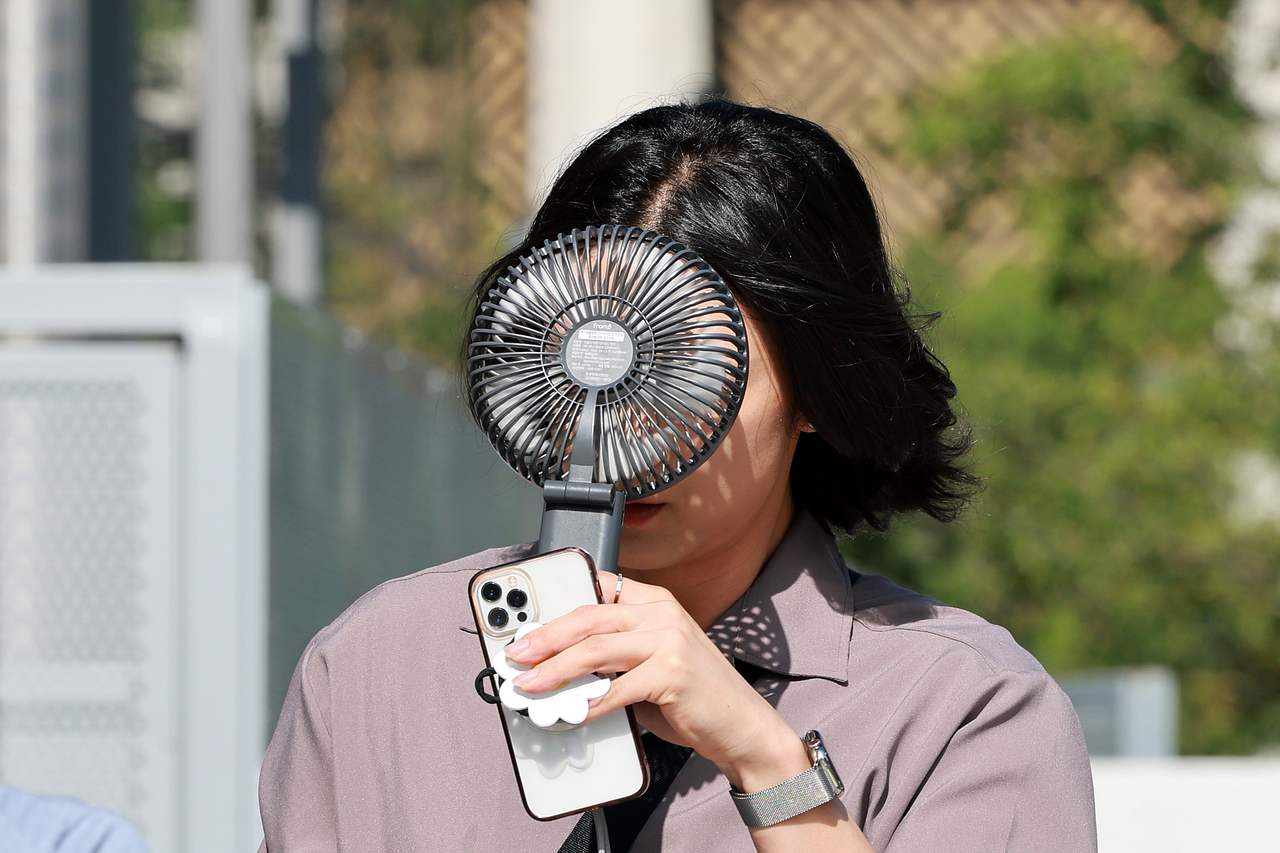
South Korea will remain under the grip of relentless heat through the weekend, with temperatures forecast to reach up to 36 degrees Celsius in the Greater Seoul area, the Korea Meteorological Administration said Friday.
However, a shift in pressure systems early next week could bring monsoon rains and some relief from the heat.
As of 11 a.m., Friday, heat wave warnings and advisories were in effect across most of the country, excluding areas along the east coast. The Greater Seoul region saw temperatures reach as high as 35 C.
According to the KMA, the extreme heat over the past two days is being fueled by the “heat dome” effect. This phenomenon occurs when two powerful high-pressure systems — the North Pacific high-pressure system and the Tibetan high-pressure system — blanket the Korean Peninsula, trapping hot air over the country.
“This heat dome pressure pattern is expected to persist throughout the weekend, before such pressure patterns show a shift on Sunday,” meteorologist Lee Chang-jae told the press during a KMA press briefing.
“As a low-pressure trough moves into the peninsula from the north, the double high-pressure system will break from Sunday, creating a pathway for tropical moisture to move into the peninsula.”
Due to this change in high-pressure systems, temperatures may slightly dip after the weekend.
However, the KMA added that it anticipates heat wave advisories and warnings to remain in effect as the inflow of humid air will maintain high apparent temperatures.
Lee added that as the tropical moisture moves into the Korean Peninsula from Sunday, heavy rainfall events could also be triggered at the same time.
Monsoon rains are anticipated to return on July 16, as significant rainfall is expected to fall in the Greater Seoul region and the eastern parts of Gangwon Province.
By July 18, such showers are likely to spread to the North and South Chungcheong provinces as well as the rest of the southern region and Jeju Island. This precipitation, carried in by the tropical moisture running along the edge of the high-pressure system, could be heavier than initially expected and may continue through July 20.
lee.jungjoo@heraldcorp.com