
Any “substantial adjustment” to the size of the US Forces Korea could be seen as a sign of Washington “reducing” its commitment to maintaining peace and security on the Korean Peninsula and the broader Indo-Pacific region, a former US senior diplomat said Thursday.
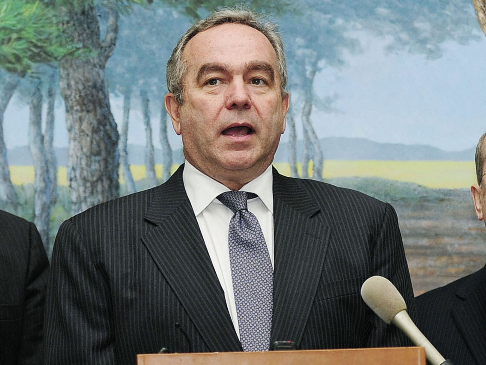
"My worry will be that any substantial adjustment will be misinterpreted (or) will be interpreted as somehow the United States reducing its commitment to peace and stability, or raising questions about whether the US is somehow withdrawing from fundamental commitments in the Indo-Pacific," Kurt Campbell, a former deputy secretary of state said.
His remarks were made during a forum hosted by the Center for Strategic and International Studies in Washington. Campbell served in the position during the former Joe Biden administration.
Campbell’s remarks follow a May report in The Wall Street Journal, which claimed that the Donald Trump administration is weighing the option of pulling out some 4,500 troops, or around 15 percent of the USFK, and moving them to other locations in the Indo-Pacific region, including Guam, which is an American island territory.
The report added to security concerns in South Korea amid volatilities stemming from North Korea’s advancing nuclear weapons program.
The USFK dismissed the report at the time, saying that claims that Washington plans to reduce US troops in South Korea are “not true.”
The WSJ report aligned with a Washington Post report in March that said the second Trump administration plans to “reorient” the US military to prioritize deterring China’s seizure of Taiwan and shoring up homeland defense. It cited secret internal guidance distributed throughout the Pentagon in mid-March.
Campbell pointed to the current security situation surrounding the peninsula, with North Korea’s advancing nuclear weapons program coupled with its strengthening military cooperation with Russia. Taking steps to show US’ commitment to defend South Korea, its decades-long ally, would work in Washington’s strategic interest, he added.
"The fact is we were able to work hard with our ROK friends to take some steps to buttress and underscore our continuing commitment to extended deterrence over the Korean Peninsula," he said.
ROK stands for South Korea’s official name Republic of Korea. Extended deterrence refers to the US commitment to use a full range of military capabilities, including nuclear weapons, to deter attacks on allies.
mkjung@heraldcorp.com