
Results will have substantial impact on candidate's political career, and crucial to getting reimbursed for campaign spending
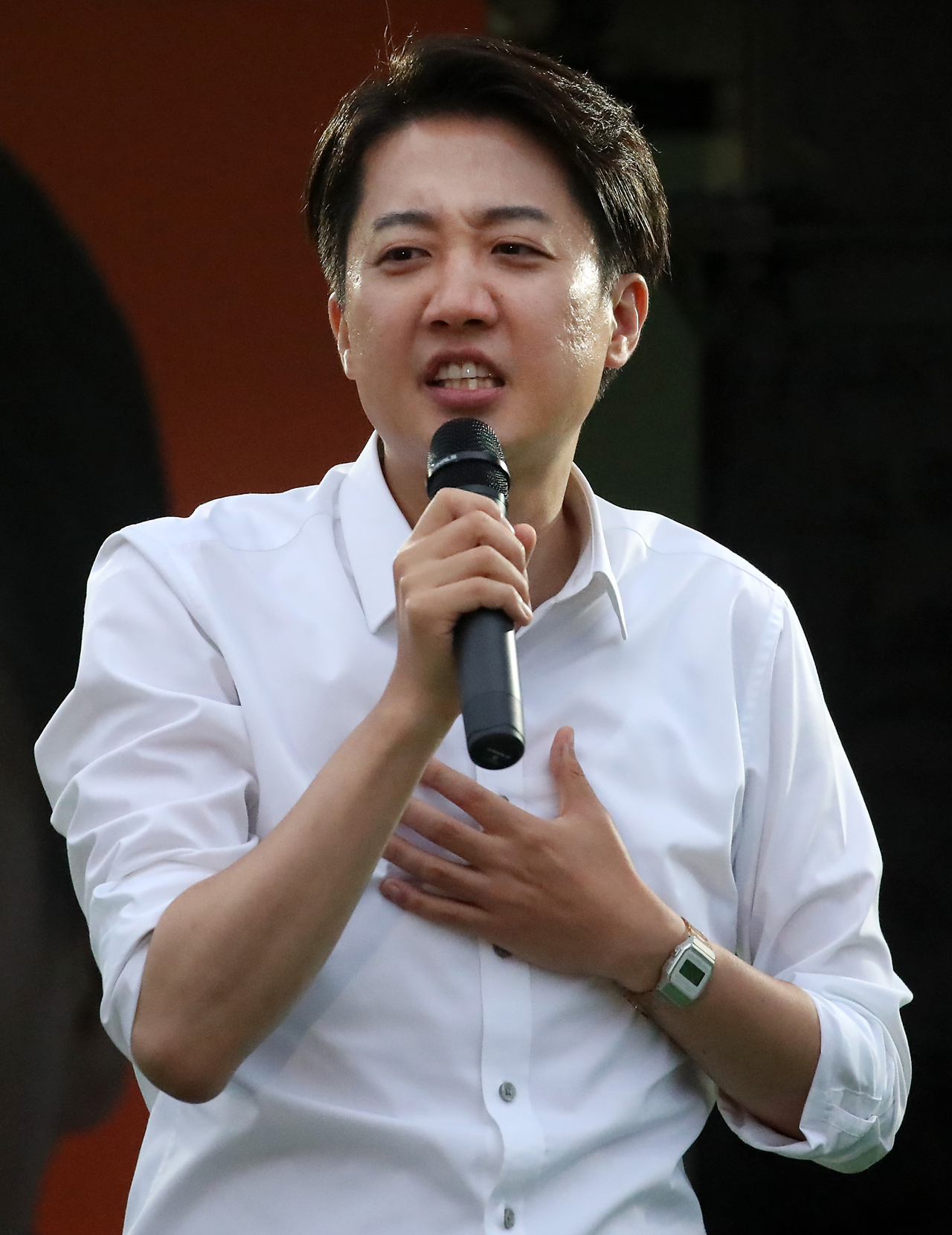
Lee Jun-seok, the candidate for the minor New Reform Party, went into polling day expecting to finish a distant third. But regardless of his low chances of winning, how many votes the 40-year-old politicians garners will likely affect the remainder of his career.
Getting at least 10 percent of the vote on Tuesday will be considered a significant feat for Lee, who leads a minor party with just three members of the National Assembly. South Korean political landscape since the 1990s has been dominated by two major parties fighting for control, and no member of a minor party has ever won the presidency.
Lee's approval ratings were around the 9-10 percent range in the last polls conducted before the blackout period, and him getting a significant amount of votes will solidify his status as a prominent figure in the pan-conservative bloc. While his party is considered centrist in the parliament, Lee is considered right-wing, as he had previously been a leader of the conservative People Power Party.
During his election campaign on Monday in Daegu, the stronghold of the conservative bloc, he urged voters to invest in him with "the seed money for the new conservatives."
Identifying him as a fellow conservative, the People Power Party had called for Lee to unify his campaign with its own candidate Kim Moon-soo, with the party's floor leader urging Lee to make the decision even before the election day. But Lee maintained that he would complete the race.
Money issues
For Lee, the number of votes he secures holds significant financial implications.
His party has just over 120,000 members. In addition to party fees, the National Election Commission allocates separate funding. It allotted 26.53 billion won ($19.5 million) to the largest Democratic Party of Korea in election subsidies, 24.28 billion won to the PPP, and just 1.56 billion won to Lee's party.
Last week, the party said that it spent 4 billion won for the election.
The New Reform Party is entitled to other state subsidies, including the NEC's quarterly subsidies, that work out at around 350 million won, but the financial burden of the presidential race would likely be taxing to the party.
The Public Officials Election Act states that the full expenditure for a presidential campaign shall be reimbursed by the state if the candidate receives at least 15 percent of the vote. Those who get 10 percent of the vote will receive half the amount he or she spent, payment for which is slated for Aug. 12.
Last year, Lee proposed a bill that would lower the threshold for reimbursement, offering candidates who receive more than 5 percent of the vote half of their campaign expenses, and 70 percent reimbursement for those who secure at least 7 percent.
How will Lee's graphic language in TV debate affect the voting?
During the final presidential TV debate last Tuesday, Lee sparked a nationwide controversy by repeating sexually violent language thought to have been used by Democratic Party candidate Lee Jae-myung's son in the past. The gaffe occurred after the opinion polls on each candidate have been conducted, and it is unclear if and how much the dispute affected the New Reform Party's candidate's campaign.
Lee made the comment to criticize the Democratic Party's Lee for his son's inappropriate language, but many expressed shock and concern over the language being used on TV. Multiple lawsuits were filed against him by the Democratic Party and civic groups, and liberal lawmakers submitted a proposal to the National Assembly asking for disciplinary action against him.

Will Lee be blamed for conservative bloc's loss?
Despite the People Power Party's continued calls for Lee to support Kim, he has spoken against the PPP candidate in his campaign, although not nearly as much as he has attacked the Democratic Party candidate.
On Monday, he reiterated his stance that he will not join Kim and said voting for Kim will result in absolving ex-President Yoon Suk Yeol and his followers. The disgraced former leader of Korea, who was impeached after imposing martial law in December of last year, belonged to Kim's party until last month.
With Lee taking a substantial slice of the conservative vote, there is a possibility that he may be subject to criticism if Kim ends up losing to Lee in relatively close race.
The final polls announced last week suggested that the DP candidate would still be a favorite even against their unified front, but with a much-closer margin. A Hankook research survey showed approval ratings of 44 percent for Lee Jae-myung and 41 percent for Kim, if the New Reform Party candidate dropped out to back Kim.
Other polls, such as Gallup Korea, showed that DP's Lee would still hold a 53 percent to 43 percent lead against a unified conservative campaign.
minsikyoon@heraldcorp.com


![[Exclusive] Ateez to return in November](https://wimg.heraldcorp.com/news/cms/2026/09/02/news-p.v1.20260902.76162fb0ba55493aad1c076f240d0750_R.jpg?type=h&h=120)