
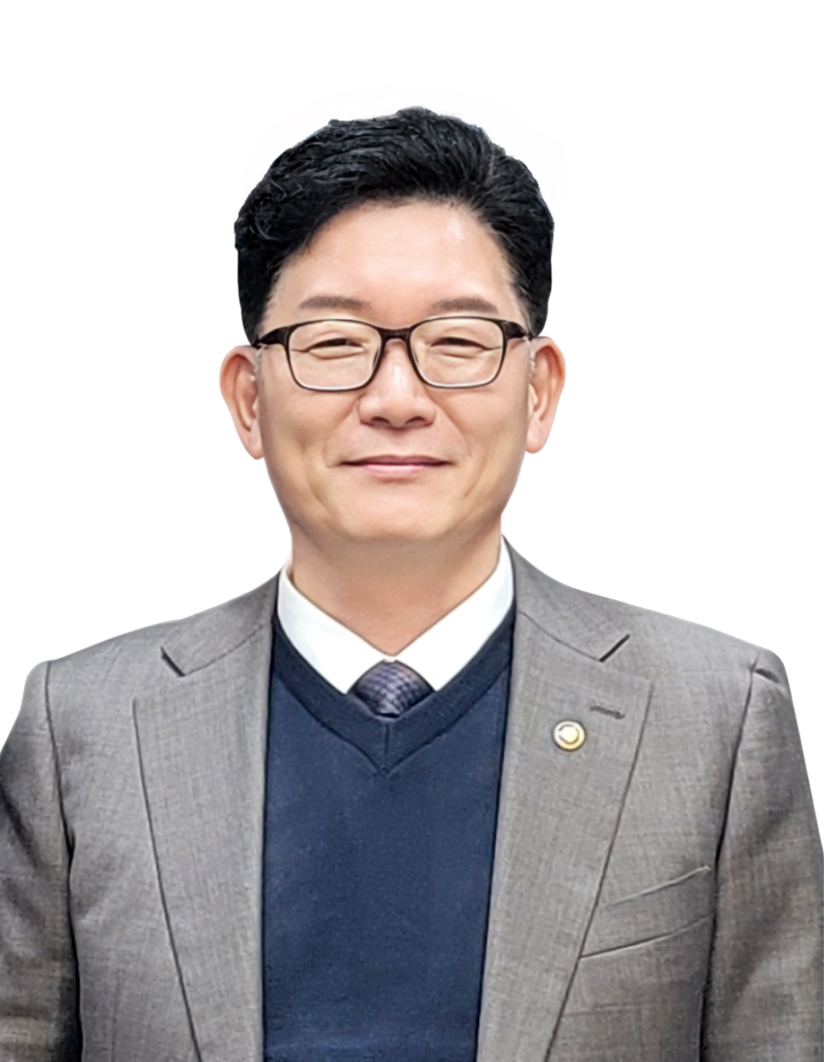
By Ko Kwang-hyo
Carl von Clausewitz, the German military theorist, introduced the concept of the "Fog of War" in his seminal work "On War." He described war as a realm of unpredictable uncertainty, where quick and accurate judgment by commanders is crucial amid incomplete information and unforeseen variables.
Today, the rapidly shifting US tariff policies and the responses from major economies have created a global trade environment reminiscent of Clausewitz’s fog-covered battlefield. In a global economy where visibility is limited and uncertainty prevails, Korean businesses must work to reduce unpredictability while strengthening their strategic decision-making and judgment capabilities.
In this context, a clear understanding of tariff classification and rules of origin becomes a crucial first step in navigating the uncertainty sparked by President Trump’s tariff policies.
Tariff classifications: Small numbers, big consequences
Tariff classification is the process of assigning serial numbers to imported and exported goods based on standards set by the World Customs Organization (WCO). These numbers not only determine applicable tariff rates but also dictate various import and export requirements. While WCO provides a unified framework, individual countries often interpret and apply these standards differently. As a result, the same product can be assigned different codes in different countries.
Since March, the US has imposed a 25 percent tariff on certain items, including steel and aluminum derivatives. The challenge arises because the US applies these tariffs using its own classification system, the Harmonized Tariff Schedule of the United States (HTSUS). For Korean companies accustomed to Korea’s classification system, determining whether their products fall under US tariff targets is not always clear-cut. As tariff differences grow sharper depending on product classification, businesses now face greater pressure to ensure accurate and strategic classification of their goods.
Shifting rules of origin add to uncertainty
The importance of rules of origin has also risen significantly under the evolving US tariff regime. Under the Korea-US Free Trade Agreement, product origin has traditionally been determined using rules such as the change in tariff classification criterion or value content criterion.
However, recent US measures have led to the use of the Substantial Transformation Criterion to determine origin for certain items subject to product-specific or reciprocal tariffs, regardless of FTA rules. Under this standard, US customs authorities determine origin based on whether a product has undergone substantial changes in name, use, or character. The lack of clear, consistent case rulings makes it extremely difficult for businesses to predict outcomes. Moreover, Korean companies may suffer indirect harm — such as customs delays or post-entry verifications — if products from other countries with higher tariff rates are fraudulently labeled as Korean to evade duties.
Korea Customs Service ramps up countermeasures
In response to such uncertainty, the Korea Customs Service established the KCS Response Headquarters for Global Tariff Changes and Domestic Industry Protection (K-GTR H.Q.s) on March 28. This task force goes beyond simply providing information. It functions as a comprehensive, proactive unit managing international cooperation, preemptive customs and tax risk assessments, close business support, and crackdowns on illegal circumvention of trade laws.
Since its launch, the K-GTR H.Q.s has prioritized resolving uncertainties surrounding tariff classifications and rules of origin while supporting corporate decision-making. It has swiftly distributed correlation charts between Korean and US tariff codes for key items such as steel, aluminum derivatives, automobiles, and auto parts. To further ease classification-related confusion, it introduced fast-track pre-ruling procedures and expanded consultation services with the US tariff classification center.
In the area of origin rules, the headquarters has begun immediate information sharing on non-preferential rules of origin and case rulings that can assist business planning. Customized consulting and preventive inspections are also underway to help firms comply. To prevent Korean exports from being harmed by falsely labeled foreign goods, the Korea Customs Service is intensifying inspections — particularly in cooperation with US Customs and Border Protection and industry associations — on critical sectors like steel and furniture, which are vulnerable to origin fraud.
Looking ahead, the Korea Customs Service aims to continue serving as a reliable guide for Korean exporters amid the turbulent waves of global tariff conflicts. It plans to provide ongoing classification information for US-targeted sectors such as semiconductors and pharmaceuticals and to roll out notification services for potential violations of origin rules, particularly for companies handling steel and aluminum derivative products.
Waiting for the fog to lift will not lead to a path forward. Someone must carry the light and lead the way. The Korea Customs Service pledges to be that light, helping Korean businesses move forward with confidence, even through the haze of uncertainty.
Ko Kwang-hyo is commissioner of the Korea Customs Serivce. The views in this column are his own. -- Ed
khnews@heraldcorp.com

![[Exclusive] Ateez to return in November](https://wimg.heraldcorp.com/news/cms/2026/09/02/news-p.v1.20260902.76162fb0ba55493aad1c076f240d0750_R.jpg?type=h&h=120)