Authorities to tighten monitoring to prevent election fraud following martial law debacle
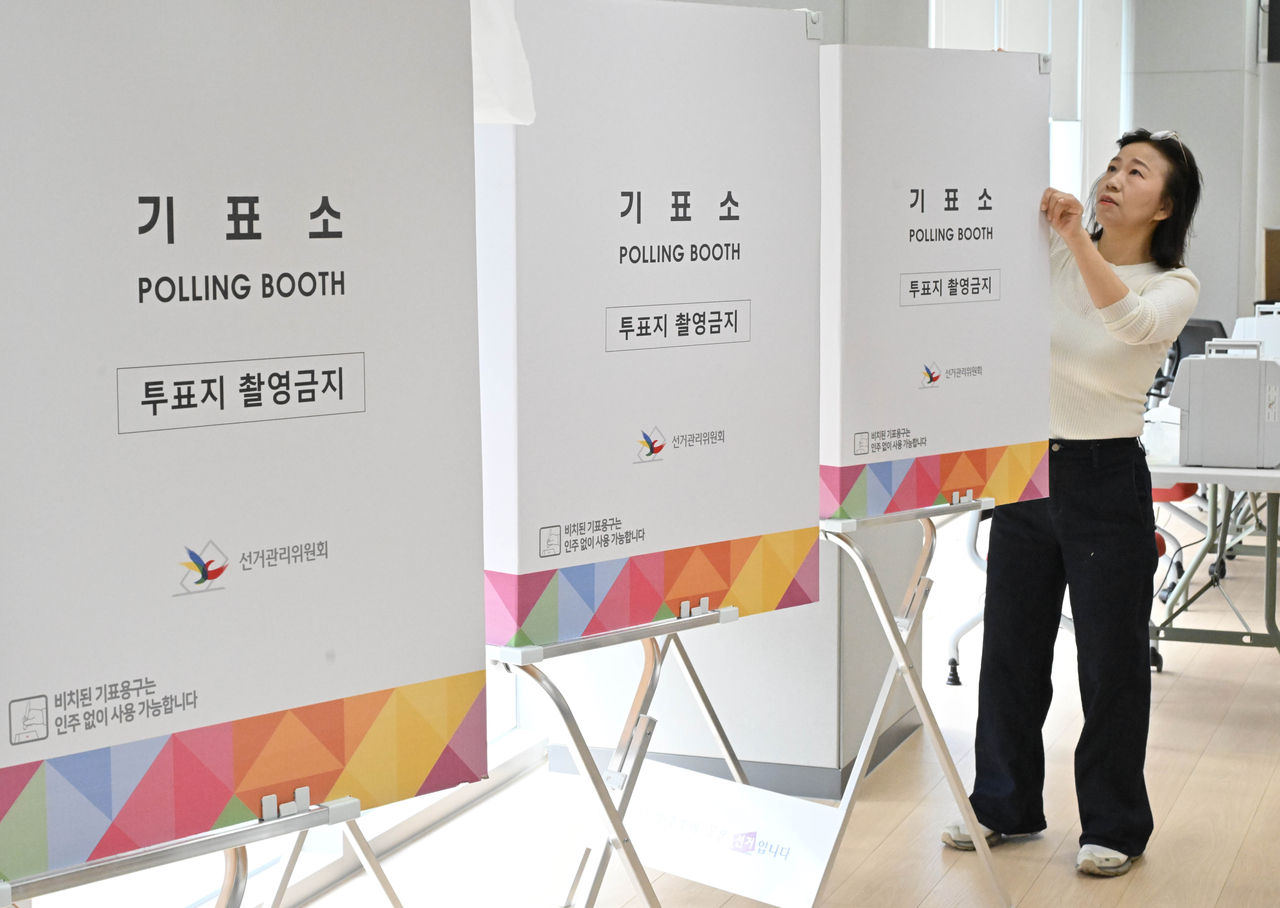
The two-day early voting period for the June 3 presidential election is scheduled to begin Thursday, as authorities revealed measures to strengthen surveillance to prevent voter fraud.
According to the National Election Commission, a total of 3,569 polling stations will be opened across the nation on Thursday and Friday. The stations will be open from 6 a.m. to 6 p.m. on both days.
All South Korean citizens aged 18 or older are eligible to vote. For the upcoming election, citizens born on June 4, 2006, or before can cast their ballots in early voting. There are currently 44.39 million eligible voters, including those based overseas.
Voters must present government-issued identification in the form of a resident registration card, passport or driver’s license. Voters aged 18 or older who are still in high school can present their student ID cards.
While government-issued identification downloaded on the official mobile application is acceptable, screen-captured images are not.
Early voters can cast their ballots at any polling station across the country at their convenience, regardless of their registered home address. On Election Day, however, voters must use only the designated stations near their homes as registered with the government.
To boost transparency and prevent fraud, the NEC has decided to publish hourly updates on the number of voters who cast ballots at each polling station, on its website, starting this election.
As in previous elections, live surveillance footage from ballot storage sites will be publicly available. The footage can be viewed on monitors installed at all National Election Commission offices nationwide.
Police will be deployed to key polling stations to prevent any possible disruptions or fraud.
The election watchdog’s move to tighten its monitoring of polling stations follows former President Yoon Suk Yeol’s claim during his impeachment trial earlier this year that the reason he deployed martial law troops to the NEC offices on Dec. 3 was the suspicion of election fraud. He has raised questions over the NEC’s credibility in handling its systems, pointing to alleged cyberattacks by North Korean hackers.
The NEC has dismissed such allegations as groundless and called the troop deployment unlawful.
Seoul Mayor Oh Se-hoon visited a polling station near City Hall in Jung-gu, central Seoul, on Wednesday to inspect the preparations and encourage the staff. In Seoul alone, 426 polling stations will be opened across the capital during the early voting period. On Election Day, a total of 2,260 polling stations will be operated across Seoul.
A three-way presidential race appeared to be taking shape a day before the start of early voting.
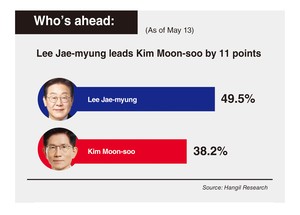
A Realmeter survey released Wednesday showed the Democratic Party of Korea candidate Lee Jae-myung leading the polls with 49.2 percent. People Power Party candidate Kim Moon-soo trailed with 36.8 percent, and the New Reform Party candidate Lee Jun-seok came third with 10.3 percent.
The poll surveyed 1,003 respondents aged 18 or older, and the margin of error was 3.1 percentage points at a 95 percent confidence level.
The three leading presidential candidates plan to cast their ballots during the two days of early voting, according to their respective campaign staffs in recent days.
Lee Jae-myung was considering voting in Sinchon, in Seodaemun-gu, Seoul, a big college town. His rival candidate Kim Moon-soo was planning to vote early in Incheon’s Gyeyang District, which was Lee Jae-myung’s National Assembly constituency and is a liberal stronghold.
Lee Jun-seok was considering casting his vote in Dongtan New Town, part of his constituency in Hwaseong, Gyeonggi Province.
mkjung@heraldcorp.com