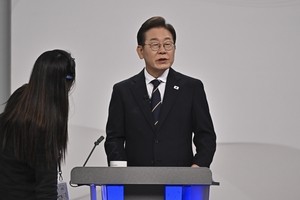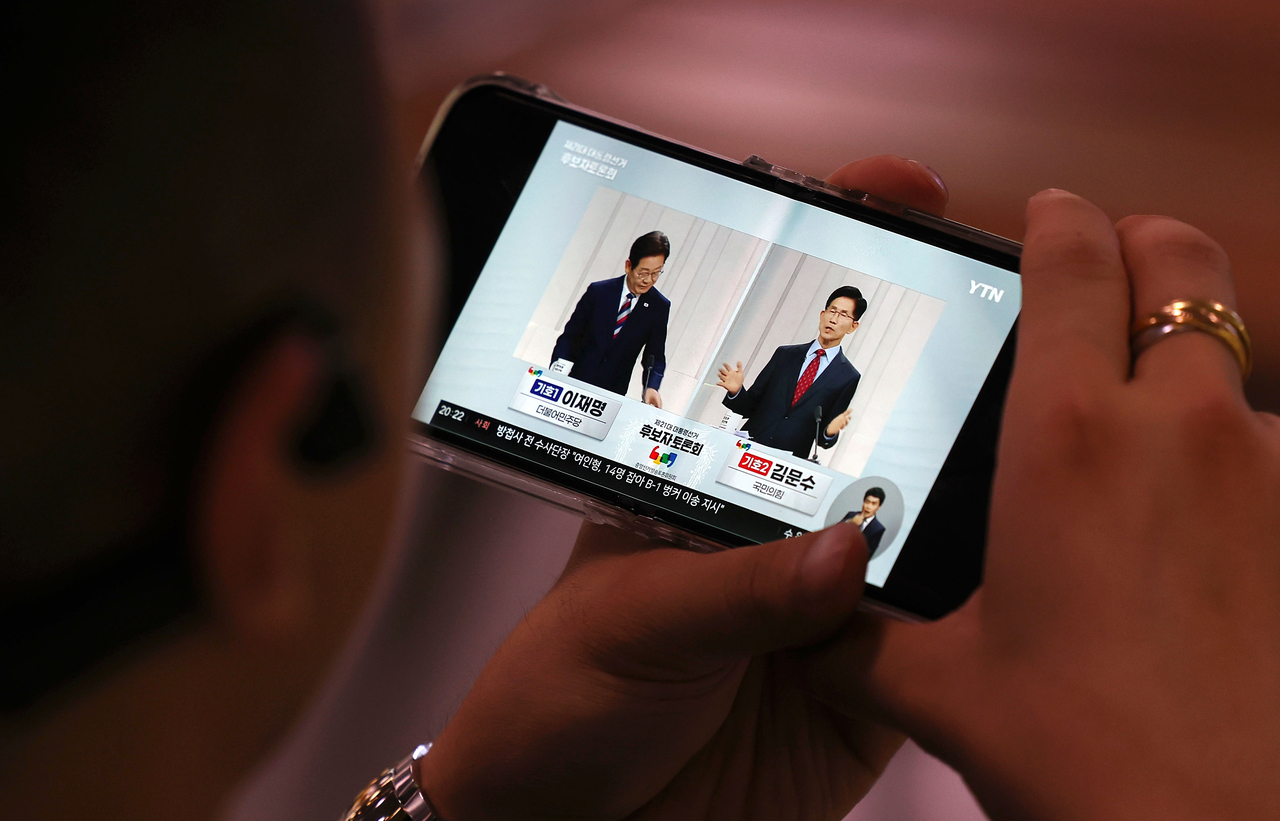
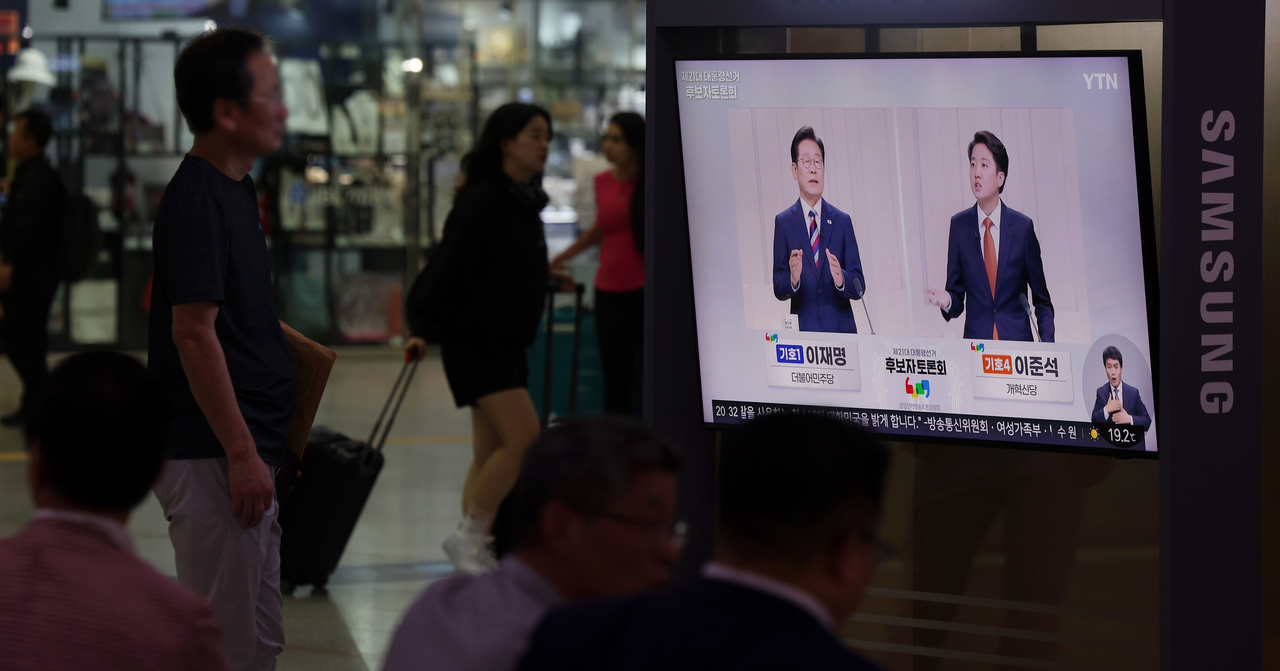
Accusations flew during Tuesday’s televised presidential debate, with the candidates concentrating more on trading barbs than substantive discussions of political and foreign policy issues.
The candidates who participated in the debate — the final one on live television scheduled before the election on June 3 — sought to highlight the weaknesses of their competitors instead of discussing ways to take the country out of its current political malaise.
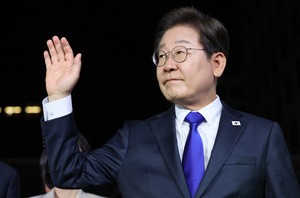
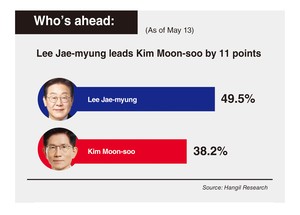
The front-runner in the presidential race, Rep. Lee Jae-myung of the Democratic Party of Korea, came under fire for the criminal allegations against him and explicit remarks he has made in the past.
There were claims that Lee was not qualified to run for president while on trial in multiple criminal cases related to his alleged involvement in a land corruption scandal, unauthorized money transfers to North Korea and embezzlement, among others. Lee Jae-myung was also slammed for his party's exertion of pressure on the Supreme Court, which found him guilty in April of making false statements in violation of election law during his previous run for president in 2022.
His conservative rival Kim Moon-soo lambasted Lee, quoting former Democratic Party chief Lee Nak-yon's accusation that he was plotting a "monstrous, bulletproof dictatorship" with his party, which occupies a majority of seats in the National Assembly.
Kim cited the impeachment spree carried out by Lee's party against dozens of Yoon administration officials, including the president and the two acting presidents who served while he was suspended, and the party's suggestion that Lee's criminal trials should be suspended during his presidency if he is elected.
Kim claimed Lee's criminal court proceedings must continue regardless of whether Lee wins the election. Kim, of the People Power Party, also said Lee should be held responsible for the deaths of several people who had personal connections with Lee and were suspected of involvement in Lee's scandals.
Lee countered that his ongoing trials are proof that a prosecutorial regime — during former prosecutor general Yoon's tenure — abused its power in order to persecute political opponents based on fabricated evidence.
"I was wrongfully indicted without any concrete evidence against me," Lee said.
On the other hand, Lee accused his conservative rival Kim of failing to recognize Yoon's martial law attempt as an insurrection, while claiming that Yoon imposed martial law to stop further revelations of corruption.
In response, Kim said, "Martial law is martial law, and insurrection is insurrection," adding he will withhold judgment until a criminal court finds Yoon guilty of insurrection by instigating the martial law crisis.
Kwon Young-gook, the candidate of the Democratic Labor Party, rejected Kim's assessment, saying that an act that clearly disrupted the constitutional order can be deemed an insurrection.
When asked why Kim on Dec. 11 refused to bow to parliament in apology for Yoon's martial law declaration while the other government ministers did, Kim said he intended to resist "a sort of violence (by the legislature)" against Cabinet ministers.
Rather, Kim accused the Democratic Party-led parliament of holding a "struggle session" to humiliate Cabinet ministers.
Also during the debate, Lee accused Kim of failing to express his willingness to sever ties with Yoon, who left the People Power Party soon after Kim was nominated as the party's presidential candidate. Kim responded, "How can I sever ties with someone I have no relationship with?"
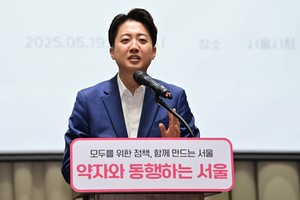
As for New Reform Party candidate Lee Jun-seok's failure to join other lawmakers in voting to lift Yoon's martial law, Lee of the Democratic Party claimed that the minor conservative candidate "went home, took a shower and changed clothes" after learning about Yoon's martial law imposition, and therefore arrived at the National Assembly too late.
Observers said the blame game between the candidates deprived voters of the chance to carefully determine who to vote for based on their policy visions. Tuesday’s debate was designed to revolve around healing the political divide and laying out foreign policy blueprints. Instead, the candidates blamed their rivals for the country's political polarization.
“With just a few days left before the election, (the televised debates) should have been an opportunity to present policy visions and rally support not just from conservatives but also from moderates," Choi Chang-ryeol, professor of political science at Yongin University, told The Korea Herald. "It was a disappointing display of third-rate politics in Korea.”
"If negative campaigning continues to dominate the way it did, the public will only become more disillusioned with politics after watching these debates,” said political commentator Choi Yo-han, calling for a major change in the presidential debate format, through moderator's active intervention, real-time fact-checking by broadcasters or a move away from multi-candidate format.
According to Nielsen Korea, Tuesday's two-hour debate — simulcast on seven broadcasters — saw the viewership rating climb up to 20.5 percent, making it the only debate of the three to exceed the 20 percent mark.
consnow@heraldcorp.com
flylikekite@heraldcorp.com