
Just over quarter of medical students were back in class as of last month, with deadlines to lift boycott approaching

Over 70 percent of medical students across the country may have to repeat an academic year due to absence, as the Ministry of Education's final deadline for universities to confirm their respective repeat status is set for Wednesday.
In a letter to universities Monday, Education Minister Lee Ju-ho, who doubles as acting president, said that the academic decisions regarding the medical students will be processed in accordance with the procedure and cannot be reversed.
"There appears to be misinformation spreading across some medical students. ... (The government) reaffirms that there will be no flexibility regarding the school affairs. If there are vacancies due to (students) not returning to class, the government will allow each university to freely fill the spots via student transfers," Lee said.
He addressed the rumors that universities would not be able to confirm mass repeat of medical students, or such decisions would be reversed.
"For those of you who are mulling whether or not to return to class, I assure you not to bet your futures as doctors based on unconfirmed rumors," he said.
The Yoon Suk Yeol administration and had engaged in a lengthy standoff with doctors and medical students over the government plan to boost enrollment quota by at least 2,000 starting this year. The expansion was halted for later years after the now-former president was impeached for his Dec. 3-4 martial law.
Some 96.9 percent of the medical students across the country — who participated in the nationwide walkout — registered at their schools, but only 25.9 percent were actually participating in classes as of April 16.
Continued boycott?
Most medical schools in South Korea make students repeat a year if they fail to show up for one-quarter of school days without a good reason. This means the medical classes at universities that started their academic year at the beginning of March would have a list of students that were to be held back by April 30.
Some medical schools have stricter regulations of expelling students after a month of unjustified absence, a fate that seemingly awaited 1,916 students at five universities. But the majority of those students have recently voiced their willingness to return.
Medical schools here conventionally conduct their academic courses by the year, meaning a student held back in the first semester cannot return in the second semester and must instead return to class the following year. As such, concerns are rising over possibility of three separate and sizeable cohorts of first-year medical students joining classes simultaneously in 2026 — the freshmen who participated in the 2024 walkout, those held back this year, and those accepted for the 2026 school year.
It is unclear how many students will be held back after the final deadline. Well over 10,000 students would be held back if the class participation rate is as low as the ministry said it was last month.
It is possible that many medical students are backpedaling on their initial decision to boycott classes.
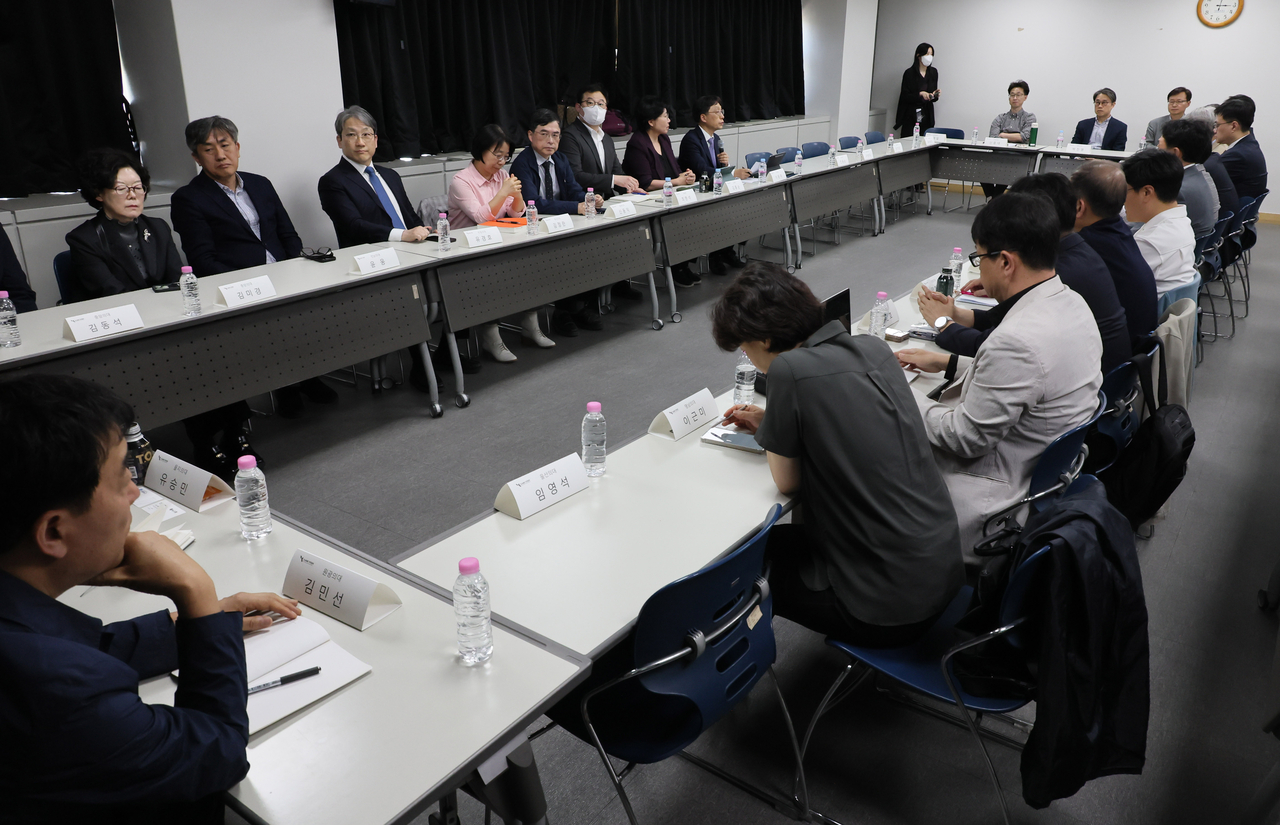
The Education Ministry on April 25-28 conducted an anonymous survey on medical students across the country on whether or not they wish to participate in classes. Of the students 24 universities that submitted the replies to the ministry, 6,742 said they agree on participating.
This accounts for 56.7 percent of all medical students at said universities and 87.9 percent of those who actually participated the survey, possibly indicating that the general consensus is shifting toward ending their boycott.
minsikyoon@heraldcorp.com