
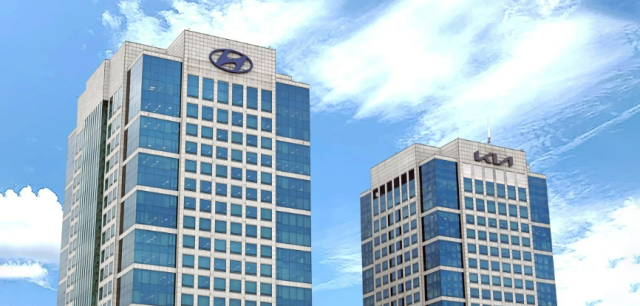
Local industry leaders Hyundai Motor Co. and Kia Corp. are expected to report increased sales but with shrinking operating profits in their first-quarter earnings results scheduled to be announced this week, a market analysis showed Wednesday.
According to the analysis of earnings forecasts from securities firms compiled by Yonhap Infomax over the past three months, Hyundai Motor is estimated to report sales of 43.44 trillion won ($30.4 billion) for the January-March period and an operating profit of 3.54 trillion won in its earnings report set to be released Thursday.
While sales would mark a 6.8 percent increase, operating profit is projected to dip by 0.4 percent.
Its sister Kia is estimated to report 27.81 trillion won in sales and 3.23 trillion won in operating profit, which would mark a 6.1 percent on-year growth and a 5.8 percent decline, respectively, on Friday.
The forecasts come amid growing concerns over the impact of the Donald Trump administration's new 25 percent tariffs imposed on all automobile and auto parts imports since April 3.
While South Korea's two leading automakers are reportedly cushioning the blow with existing vehicle inventories, market watchers warn that profitability will likely come under increasing pressure in the coming months.
KB Securities has warned that the US tariff could eventually cut 3.4 trillion won from Hyundai's annual operating profit and 2.3 trillion won from Kia's.
To mitigate tariff-related risks, Hyundai Motor Group plans to ramp up its US production capacity to 1.2 million units per year by expanding output at its Alabama and Georgia plants, as well as the new Hyundai Motor Group Metaplant America electric vehicle plant also located in Georgia.
It has also decided to freeze the prices of all new vehicles sold in the US through early June, a move aimed at easing consumer concerns over rising costs. (Yonhap)