

Power, water outages ongoing; survivors report post-traumatic stress disorder
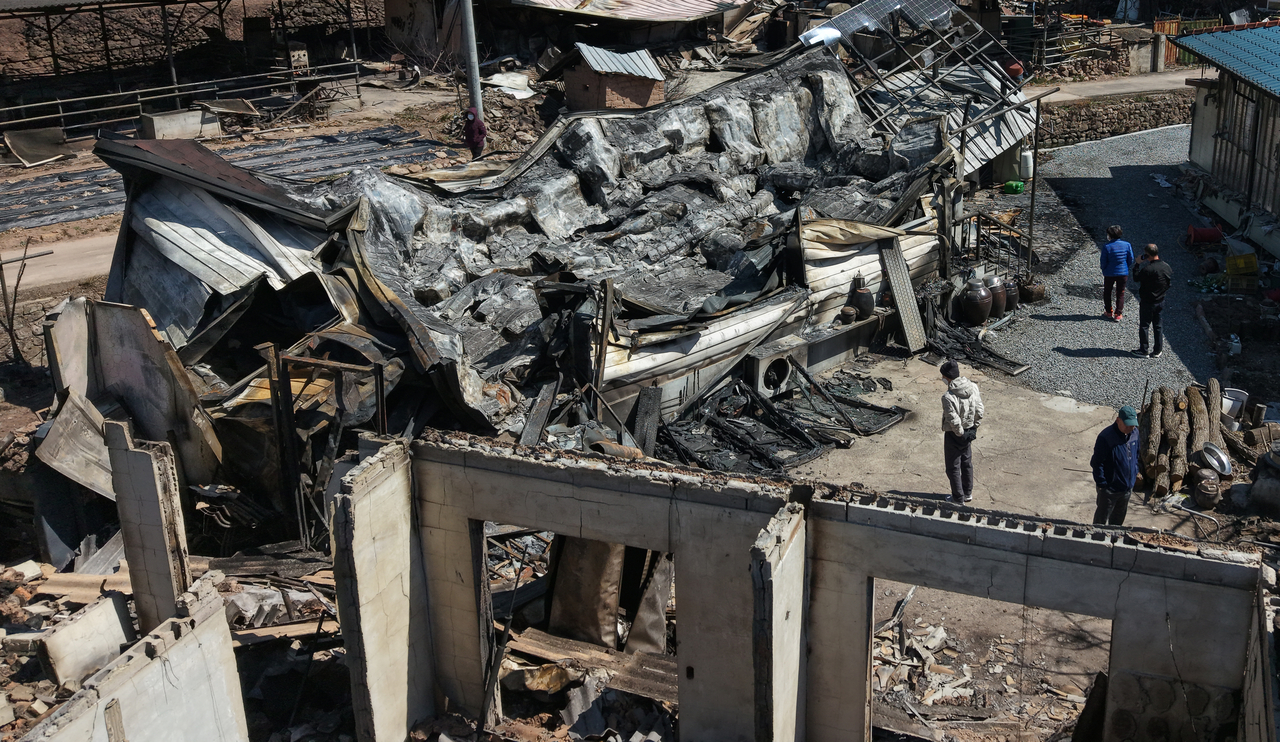
The wildfires have been put out, but the process of recovery has only just begun. In communities left in ruins across southeastern South Korea, survivors are not only confronting the loss of their homes but also the prospect of rebuilding from the ground up.
With so many communities burned to the ground, recovery is likely to be an arduous and prolonged process.
Acting Interior Minister Ko Ki-dong declared the damage caused by the recent wildfires the "greatest" in Korea’s history, “both in terms of human casualties and property loss" during the Central Disaster and Safety Countermeasures Headquarters meeting held Sunday afternoon.
Korea battled one of the worst strings of wildfires in the country’s history from March 21, with 75 casualties including 30 deaths and authorities estimating that up to 48,239 hectares were burned as of Sunday morning.
The number of homes destroyed in the fires totalled 3,285, with some 4,700 displaced people still living in shelters as of the previous day, according to the Central Disaster and Safety Countermeasures Headquarters on Sunday. A total of 34,746 people evacuated due to the wildfires and 29,969 have since returned to their homes, according to authorities.
Massive fires in Sancheong-gun, South Gyeongsang Province, were among the last to be declared extinguished by the Korea Forest Service as of Sunday at 1 p.m.
The government is now sparing no efforts in aiding recovery from the destruction and psychological scars left by the wildfires.
"The most urgent task right now is to help displaced residents regain stability and return to their daily lives as quickly as possible," Ko said. “(The government) will provide practical and stable housing by utilizing public institution training centers as private lodging facilities and by setting up temporary modular homes near areas where people can continue with their lives.”
The government pledged continuous support to wildfire victims still living in 106 temporary shelters — mostly public gyms, senior centers and community halls — with 101 of them in North Gyeongsang Province alone. The government is also coordinating with university hospitals to deploy medical staff to shelters, prioritizing care for older people.
The government had provided 4,462 instances of mental health support to survivors as of Sunday, including 674 cases of psychological first aid and 3,778 of psychological counseling, according to the Central Disaster and Safety Countermeasures Headquarters.
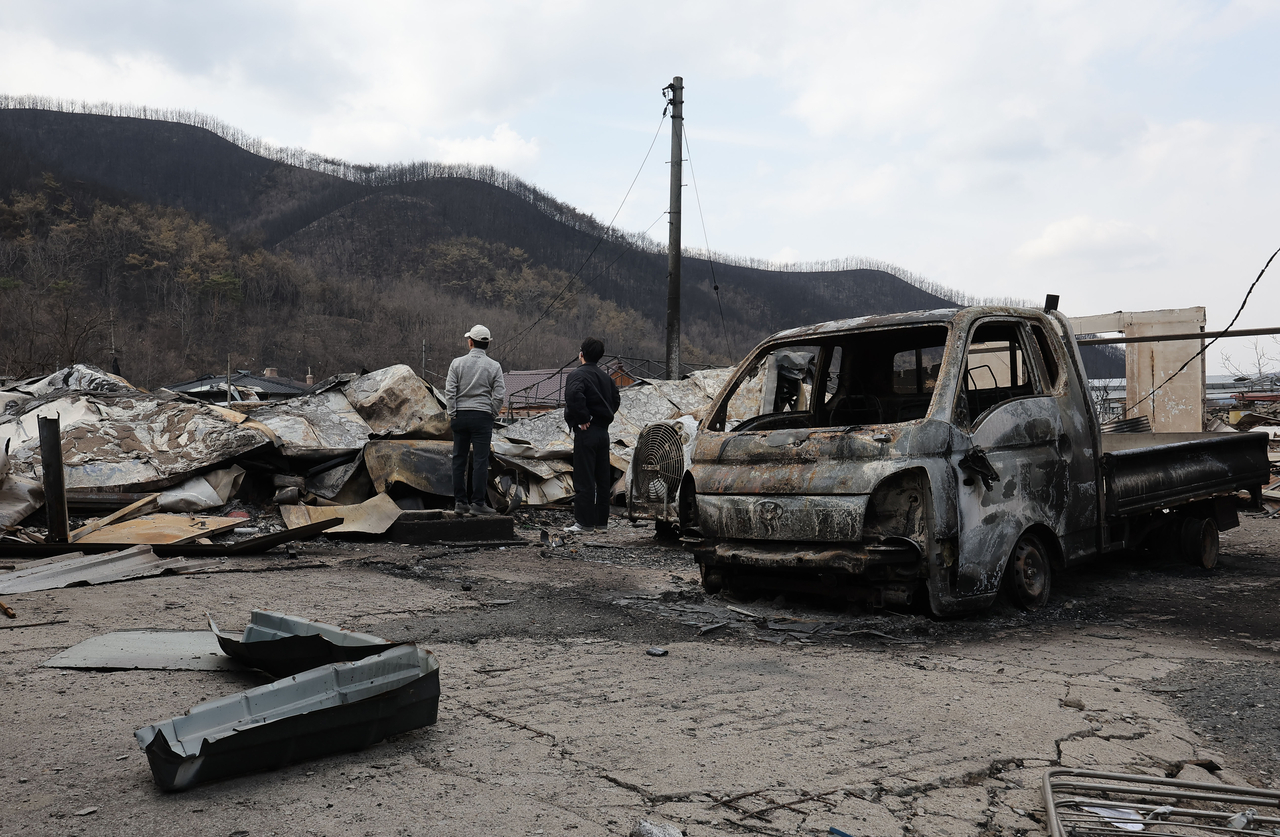
In local media reports, survivors of the wildfires were quoted saying that it was “difficult” to immediately begin recovery efforts as they weren’t sure where to begin.
“If my house had just been flooded, I could have at least tried to bail out the water. But instead, it’s completely collapsed and there’s nothing I can do,” said Ma Bu-jin, a 70-something resident of Uiseong-gun, North Gyeongsang Province, as quoted by Yonhap News Agency. Uiseong-gun was one of the worst-hit regions, with authorities estimating that the wildfires burned up to 12,821 hectares.
“I don’t even want to go near my home, because now it's just a pile of ashes,” Ma continued. “I can’t help but feel resentful about this whole situation.”
According to an Uiseong-gun official, as quoted by local media reports, the county officially began assessing the damage on Sunday. Specific recovery plans, including the scope, timeline and method of necessary repairs, are yet to be determined.
In Yeongdeok-gun, North Gyeongsang Province, recovery efforts are nowhere close to beginning, as the wildfire-struck regions have been experiencing power, water and communication outages since March 25.
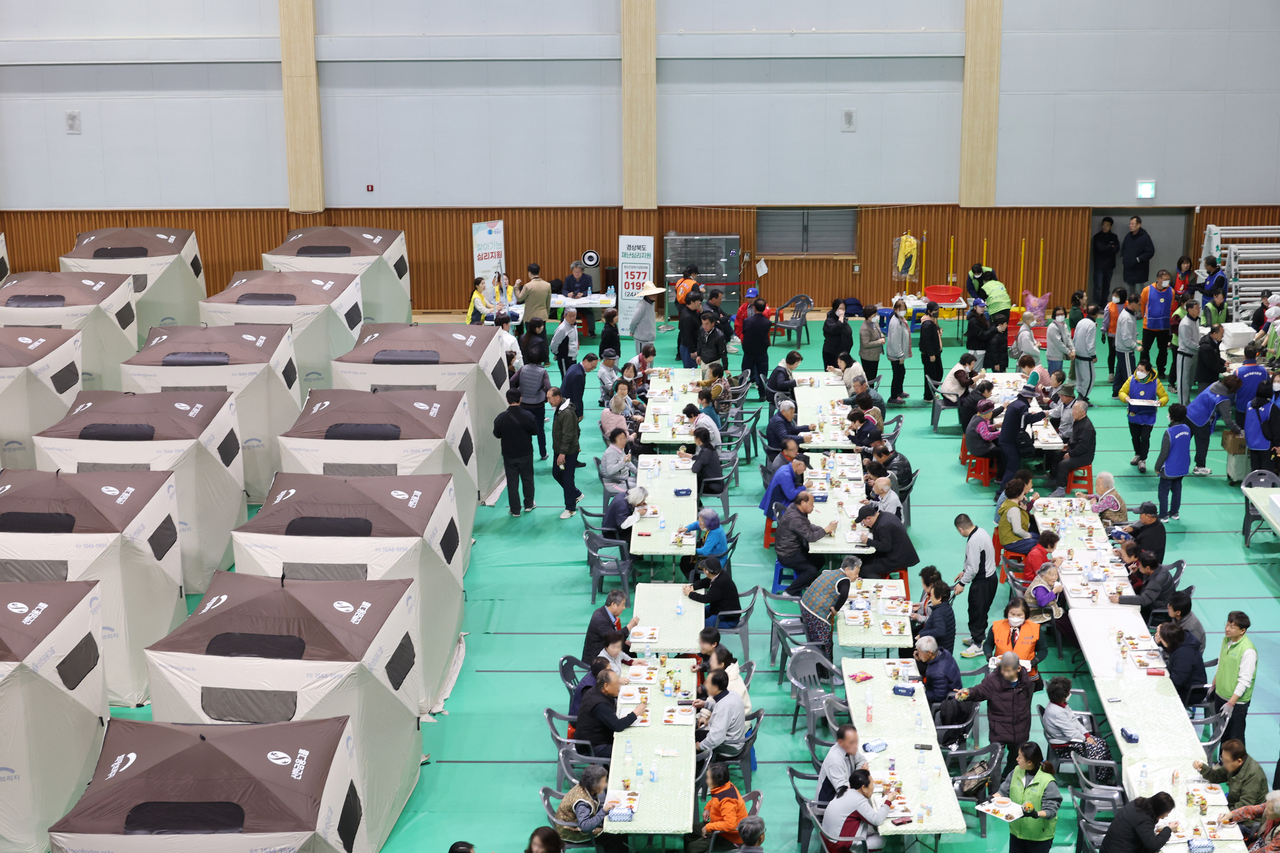
Though over a week has passed since the fires began, many survivors in evacuation shelters continue to live in fear, with several seeking mental health support for post-traumatic stress disorder.
“I keep thinking of the big fires that swallowed everything around me. No one could imagine the kind of things I keep thinking of in my head,” said survivor Lee Bok-soon, as quoted by TV Chosun. “I received a lot of shock (from the wildfires).”
Recovery efforts will begin once damage inspections are complete, followed by equipment and debris removal plans.
Finance Minister Choi Sang-mok also said Sunday the government will request a 10 trillion won ($ 6.8 billion) supplementary budget to offset the economic fallout from the wildfires as well as political and external instabilities.
“Given the urgency of efforts to handle wildfire damage, respond to external challenges and stabilize the lives of the people, it is very important (for both parties) to pass the supplementary budget within April,” urged Choi.
lee.jungjoo@heraldcorp.com