

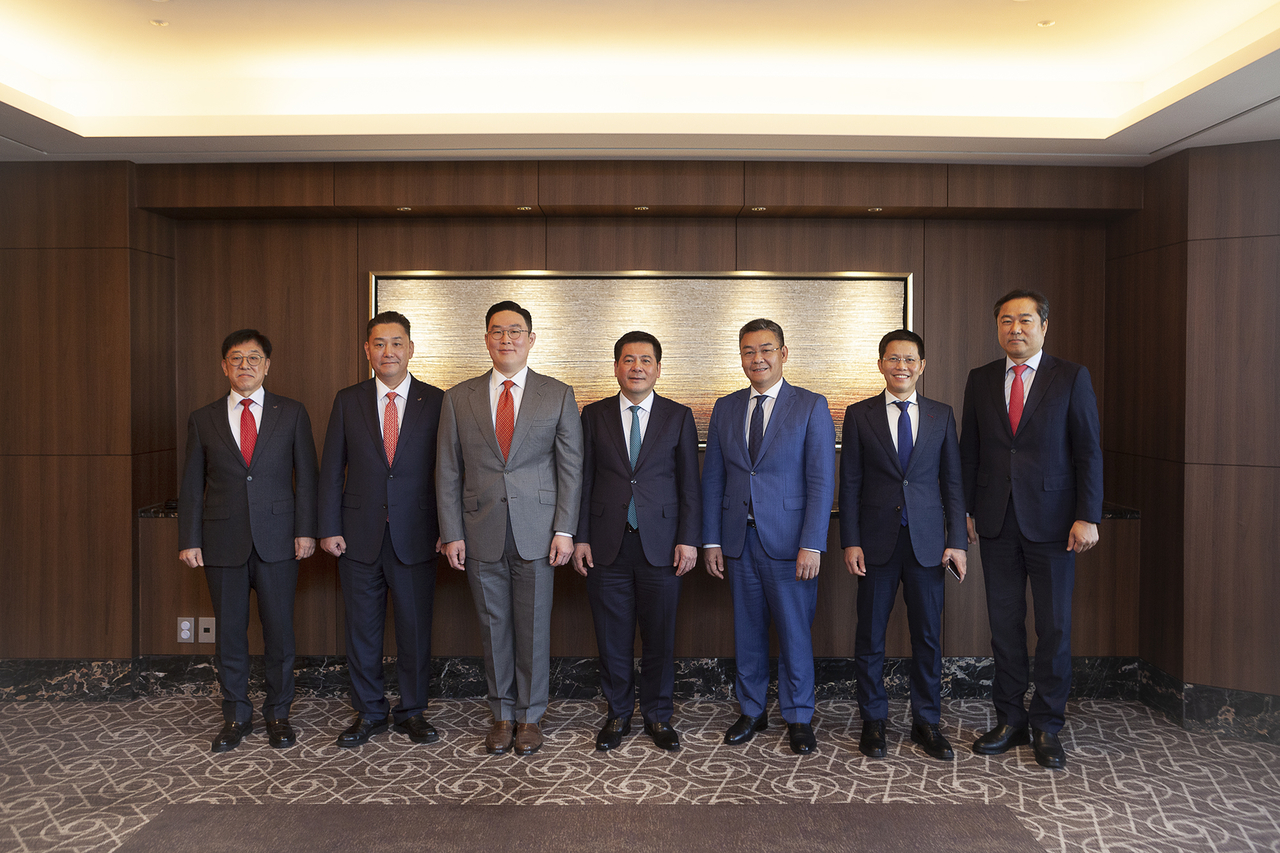
LS Eco Energy, a Vietnam-based cable manufacturer under Korea’s LS Cable & System, announced Tuesday that its top executives met with a Vietnamese delegation led by Minister of Industry and Trade Nguyen Hong Dien to discuss extensive partnerships on rare-earth elements and power utility infrastructure.
The meeting, held at a Seoul hotel, was attended by LS Group's top executives, including LS Cable & System CEO Koo Bon-kyu, LS Eco Energy CEO Lee Sang-ho, and LS Marine Solutions CEO Kim Byeong-ok, alongside officials from Vietnam's state-run energy companies.
Discussions focused on rare-earth elements, which are essential for producing permanent magnets used in electric vehicles, robots and semiconductors. LS Cable & System has been actively working to secure a stable supply of these critical materials, as the company aims to develop a new growth business centered on permanent magnets.
Vietnam holds approximately 18 percent of the world’s rare-earth reserves, making it the second-largest supplier after China. However, only a handful of companies are permitted to produce these materials under the Vietnamese government’s strict regulatory control.
"Recent restrictions on rare-earth element exports from China, combined with the United States' policy to exclude China from industrial value chains, have intensified global competition for securing these critical materials," said LS Eco Energy CEO Lee Sang-ho.
"By ensuring a stable supply, we can accelerate the development of our new business related to permanent magnets."
Formerly known as LS Cable & System Asia, LS Eco Energy has emerged as a leading Korean company in Vietnam’s rare-earth element development sector.
Under an agreement with Hung Thinh Mineral, a local mineral refiner, LS Eco Energy will secure up to 5 million tons of rare-earth materials annually starting this year. According to the company, this supply is sufficient to produce permanent magnets for 400,000 electric vehicles.
During the meeting, LS Eco Energy also expressed interest in participating in Vietnam’s power grid expansion initiative. Under this plan, the Vietnamese government aims to increase its power generation capacity to 150 gigawatts by 2030, primarily by expanding wind and nuclear power plants.
forestjs@heraldcorp.com


![[World Class] HUFS bets on Songdo, AI to redefine what a global university can do](https://wimg.heraldcorp.com/news/cms/2026/10/18/news-p.v1.20260930.7e4dbeacfc1d4d16848c0e2a441c04e6_R.jpg?type=h&h=120)
