The South Korean central bank said Friday that volatility has grown in the US stock market led by IT shares, calling for close monitoring of its potential impact on the local market.
Bank of Korea Deputy Gov. Ryoo Sang-dai made the comment during a meeting meant to check the market situation after the Federal Reserve decided to hold the benchmark interest rate steady on Wednesday following three consecutive rate cuts.
"The Fed's decision did not have a major impact on the market as it had been largely anticipated, but volatility has grown in the US stock market centering on tech shares. We need to closely monitor its possible repercussion on the domestic market," Ryoo said.
Earlier this week, US shares sank markedly after a Chinese artificial intelligence startup, DeepSeek, presented an advanced and more affordable AI model, stoking fears of it challenging the dominance of US tech giants.
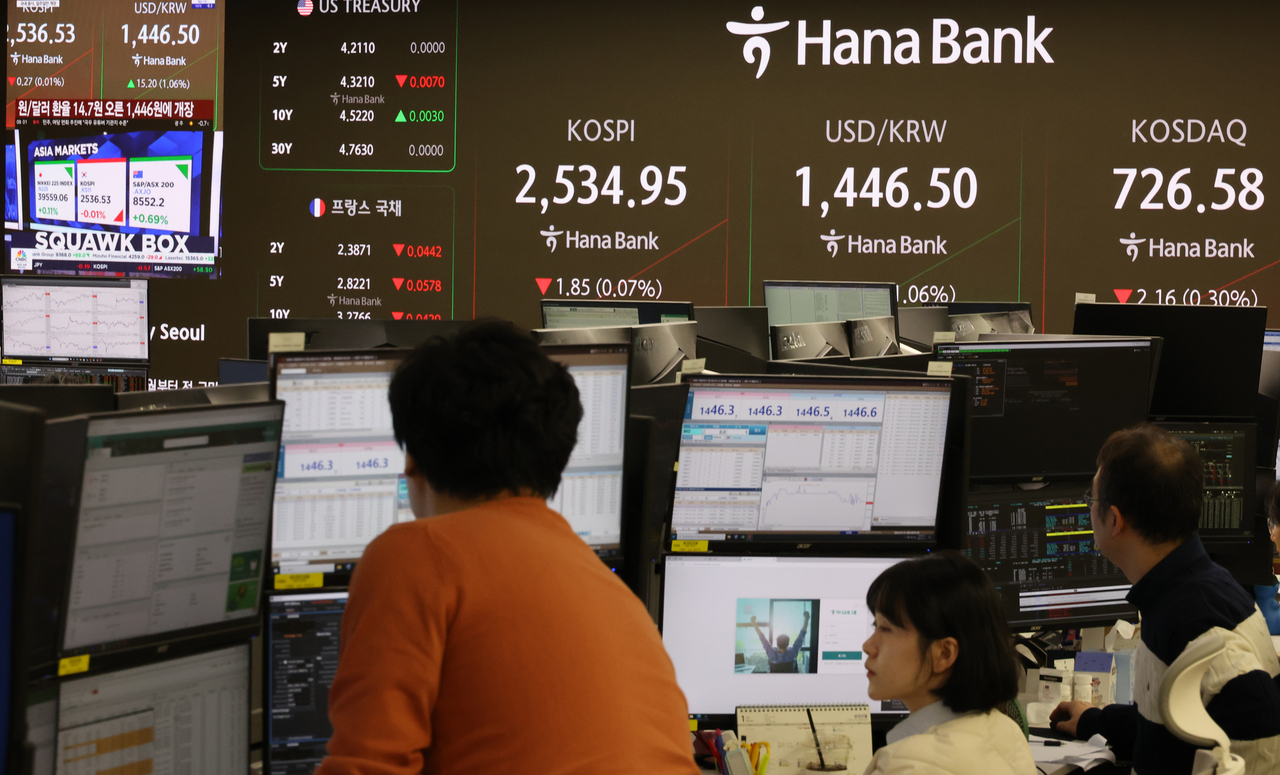
The benchmark Korea Composite Stock Price Index had fallen 1.06 percent to 2,510.03 as of 11:00 a.m.
The KOSPI was closed from Monday through Thursday due to the extended Lunar New Year holiday.
"Uncertainties remain high regarding the timing and the pace of the Fed's rate reduction, the US government's economic policies and domestic politics. We will stay vigilant and check developments and impacts of such risk factors," Ryoo added.
Fed Chair Jerome Powell told reporters after the latest decision that the Fed does not need to be in a hurry to adjust its policy stance, which runs counter to US President Donald Trump's call for lower policy rates.
The Fed's latest rate decision kept the gap between the key rates of South Korea and the United States steady at maximum 1.5 percentage points, with South Korea' rate lower than that of the US.
Earlier this month, the BOK kept its benchmark interest rate frozen at 3 percent, following two back-to-back rate cuts, in the wake of the weak local currency amid political chaos and uncertainties stemming from the new Trump administration.
All of its six board members voiced a need to keep open the possibility of further rate reductions in the next three months to prop up the economy.
Trump has pledged to impose high tariffs on imported goods and to implement a series of protectionist measures. (Yonhap)