Bolstered by hybrid variant of flagship SUV, Hyundai eyes 58,000 unit sales at home this year
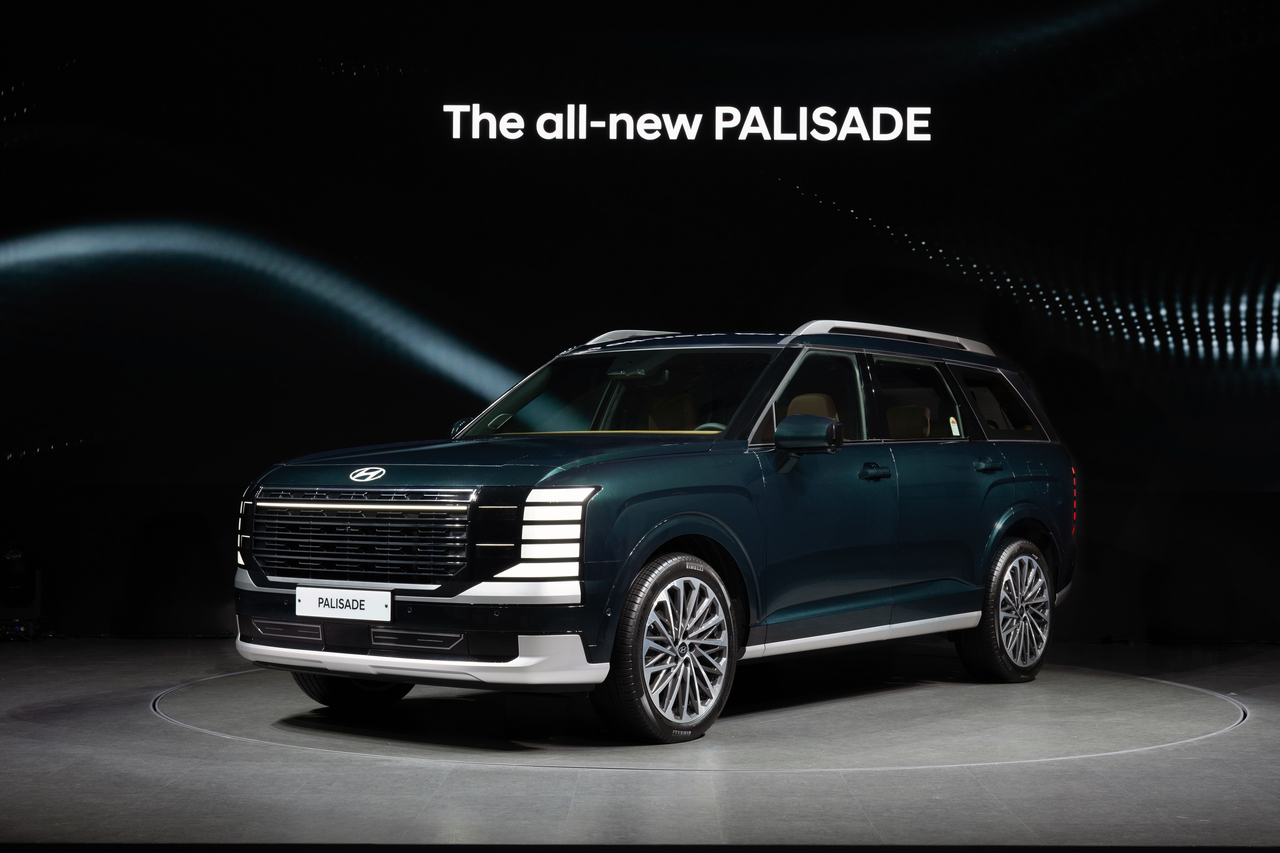
Hyundai Motor Company has unveiled the All New Palisade, the first revamped version of its flagship large-sized SUV in six years, featuring premium upgrades to its driving performance and convenience features.
“The (All New Palisade’s) domestic sales target for this year is 58,000 units,” said Lee Cheol-min, head of the domestic marketing division at Hyundai Motor Company. “Given the preorder volume (of more than 33,000 units), we are confident in achieving this goal. While the first-generation Palisade, launched in 2018, was primarily marketed to families with young children, the new model is expected to appeal to a broader customer base, including middle-aged individuals with active lifestyles.”
Recognizing the strong demand for SUVs in the North American market, including the existing Palisade, Lee added that the fully redesigned version would also be well-received there.
The revamped Palisade boasts a bold exterior design, with its length and height extended by 65 millimeters and 15 mm, respectively, compared to the previous model, according to Jeon Eun-Seok, head of the midsize large vehicle project team 2 at Hyundai Motor Company. The car’s robust image is accentuated by a shorter front overhang, a longer rear overhang and 21-inch wheels.
The interior design focuses on “family” and “luxury,” with the seats, armrests and other components using soft and comfortable materials inspired by high-end furniture, said Song Hyun, head of the interior design group at Hyundai. The island-type console provides a much roomier front interior space compared to other cars. Promising the best living space in its segment for every passenger, the third row features heated and reclining seats like the first and second rows.
The Palisade SUV offers two powertrain options -- a gasoline engine and a hybrid -- both featuring 2.5 liter turbo engines. The hybrid variant, the first to be equipped with Hyundai Motor’s next-generation hybrid system, offers electric vehicle-like features, including “vehicle-to-load” for charging external electronic devices and a “stay mode” that enables air conditioning and infotainment functions when the engine is off. This advanced system uses two motors, unlike the previous single-motor setup. These motors drive and start the vehicle, supporting each other under various driving conditions to maximize fuel efficiency and enhance power performance.
The prices of the gasoline and hybrid models start at 43.8 million won ($30,000) and 49.8 million won, respectively. In particular, the nine-seater option -- the first from Hyundai in 23 years -- offers a tax credit if registered as a corporate vehicle and can use bus-only lanes on highways when carrying five or more passengers.
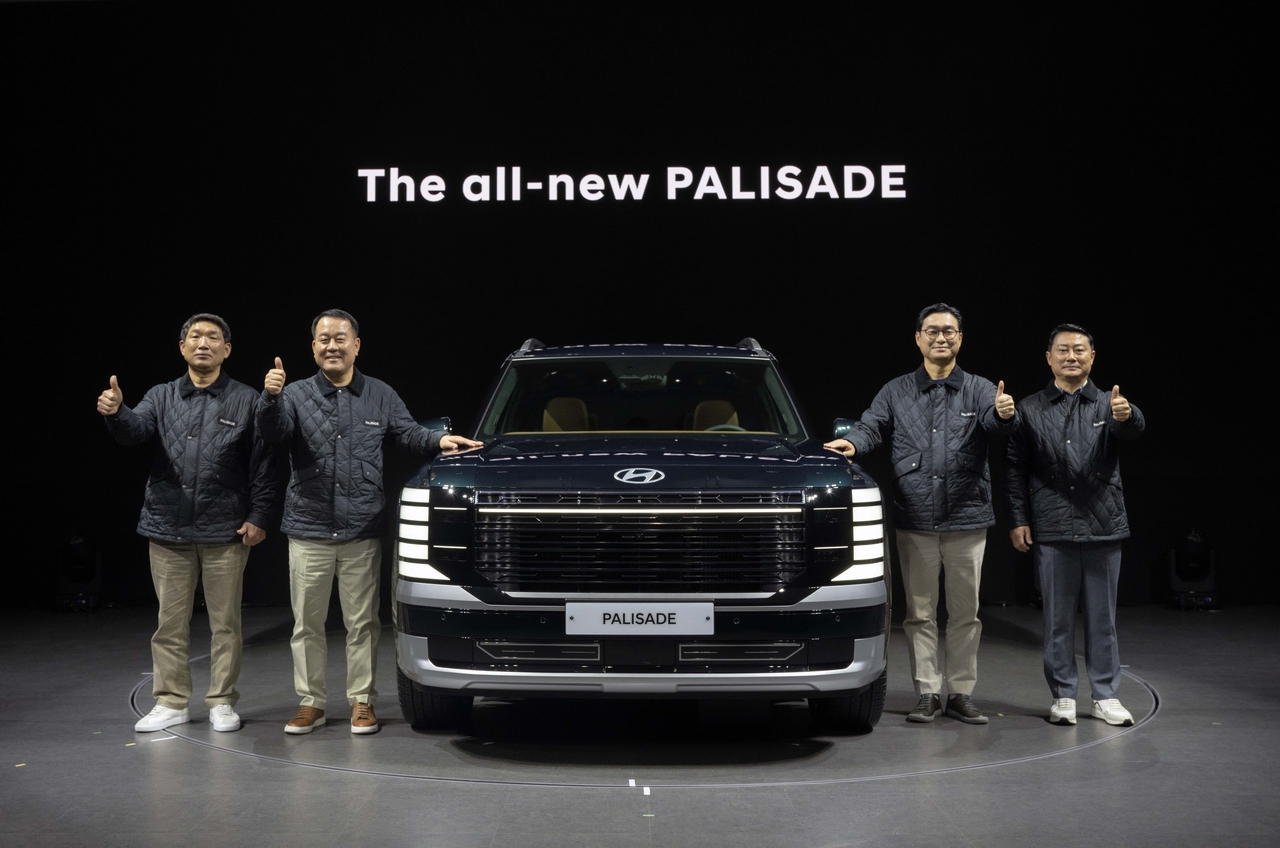
Meanwhile, Lee Dong-seock, president of domestic production at Hyundai Motor Company, and Moon Yong-moon, head of the Hyundai Motor branch of the Korean Metal Workers’ Union, attended Tuesday's event, marking the first time representatives of both management and labor have joined a new car unveiling. They pledged to ensure timely production and top quality, following a two-day partial strike by the Hyundai Motor labor union in December last year, which demanded the resignation of President Yoon Suk Yeol amid the martial law crisis. The strike led to a production shortfall of 4,000 to 5,000 units.
hyejin2@heraldcorp.com