
Growth outlook lowered to 1.8% amid political upheaval, trade volatility
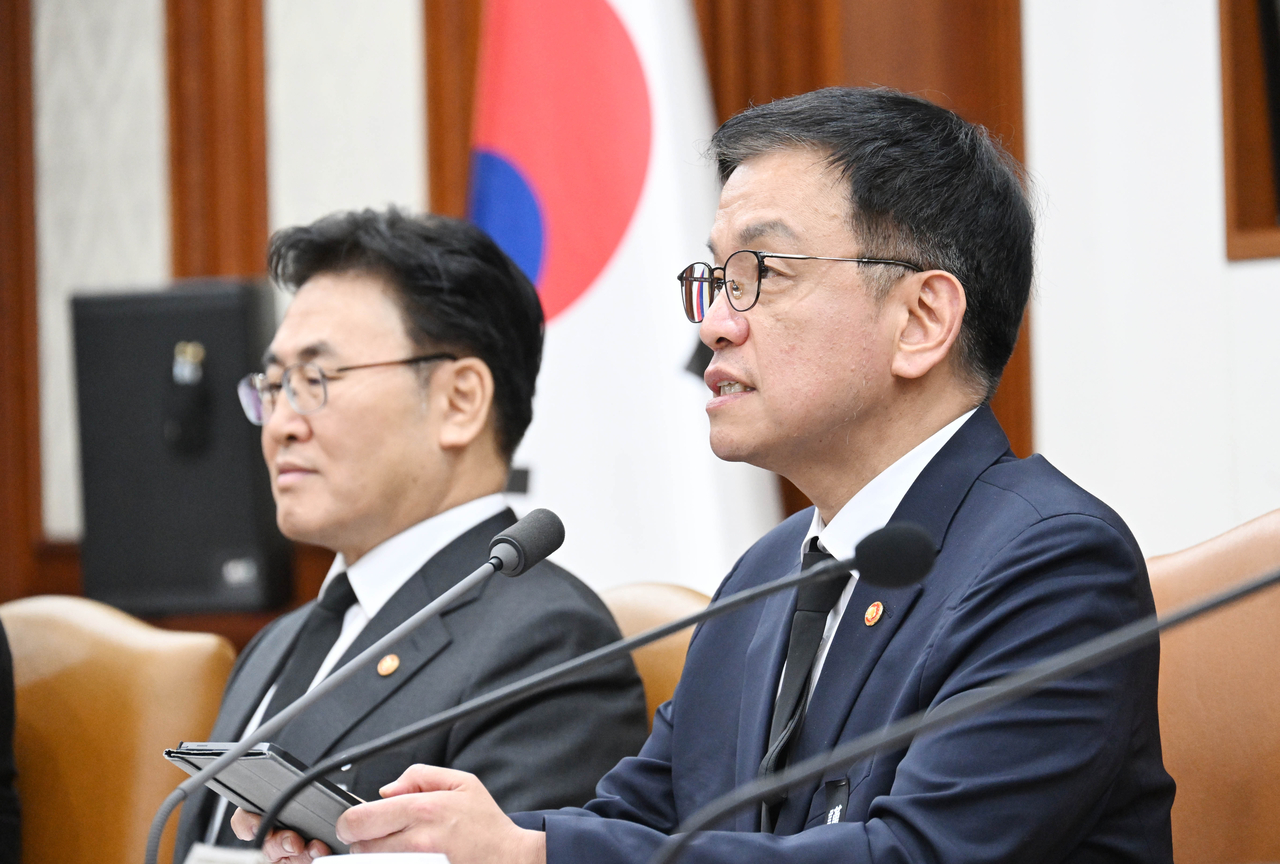
South Korea has set its economic priorities on stabilizing the financial landscape and supporting industries and investment, with growth projected at 1.8 percent amid ongoing political unrest and global trade volatility.
Acting President and Finance Minister Choi Sang-mok on Thursday announced the outlook, marking a slowdown from the 2.1 percent growth forecast for 2024.
“This year, the Korean economy is expected to face greater uncertainties than ever, driven by the new US administration and domestic political turmoil," Choi said during an economic ministerial meeting Thursday. "With growth projected to slow to 1.8 percent, economic hardships are likely to intensify, along with concerns about external credibility."
The government's projection was revised down from its previous forecast of 2.2 percent and is also below the Bank of Korea's November outlook of 1.9 percent.
Weaker exports remain the primary drag on growth. "Export growth is expected to decelerate largely due to the semiconductor cycle adjustment, heightened competition and growing trade uncertainties," a finance ministry statement said, adding that memory chip sales — Korea’s largest export item — are projected to grow 13.4 percent in 2025, a sharp drop from the 81 percent surge in 2024.
Domestically, inflation is expected to ease to 1.8 percent, with a modest recovery in demand tempered by sluggish construction investment.
Choi emphasized "stable management" as the government’s priority, focusing on restoring the people's livelihoods and maintaining national creditworthiness.
To counter economic headwinds, the government plans to deploy 18 trillion won ($12.3 billion) in public sector resources and allocate 11.6 trillion won to ease the financial burdens of low-income households.
Safeguarding international credibility, strained by recent political turmoil and rising financial volatility, is another critical focus.
"The government will advance efforts for (Korea's) inclusion in the World Government Bond Index and for the 'value-up' initiative, while offering substantial cash subsidies and tax incentives for foreign investment," Choi said, pledging decisive action to stabilize the market in the event of increased volatility.
The policy directions also emphasized support for local companies to sustain their export momentum, including a 360 trillion won trade fund, and strengthening global competitiveness in key sectors.
"We will develop strategic approaches in response to trade uncertainties, including the new US administration, and seek measures to enhance industrial competitiveness," Choi said, adding that the government will reassess economic conditions in the first quarter and consider additional measures to boost the economy if necessary.
Typically announced at the end of the previous year, the policy directions were postponed this year following the tragic plane crash at Muan International Airport on Sunday.
Below are key takeaways from the policy plans for foreign investors, residents and travelers.
Promoting FDI
The government plans a comprehensive foreign investment package, including a 200 billion won cash subsidy carried out in the first half.
This will raise subsidy limits by 5 to 20 percentage points across sectors, with an additional 10 to 25 percentage point increase this year. Subsidy rates for national strategic industry R&D centers and for regional headquarters of global companies will rise to 75 percent. The government will also increase its contribution ratio for foreign investment in non-capital areas and "opportunity development zones" by 10 percentage points.
The tax exemption for imported capital goods will be extended to seven years. Also, additional foreign investments in regions outside the capital area will receive benefits, including tax incentives, through the allocation of a separate quota within "opportunity development zones."
A preferential interest rate program by the Export-Import Bank of Korea is being planned, while policy finance institutions are considering a fund to promote foreign investment.
Capital markets enhancement
Major capital market reforms are also underway, including a set of measures aimed at streamlining foreign investment in Korean government bonds ahead of South Korea's WGBI inclusion in November.
Key measures include transitioning to a unified system for foreign investors, enabling global custodians and asset managers to handle transactions on behalf of foreign investors.
A "global sales model" will be introduced, allowing foreign financial institutions to facilitate transactions with foreign investors through local institutions. The tax-exemption application process will be simplified, while the nighttime government bond futures market will open by June.
Enhancements to foreign exchange market infrastructure will include expanding the operational scope of registered financial institutions to cover all transactions, extending settlement deadlines and a six-month extension of the grace period for reporting violations.
Boosting inbound tourism
Tourism initiatives to attract foreign visitors include extending the temporary exemption from electronic travel authorization for citizens from 68 countries until December 2025.
Visa fee waivers for group tourists from China, Vietnam, the Philippines, Indonesia, Cambodia and India will also continue through the year, while a trial visa-free period for Chinese group tourists is under review.
Major events to drive inbound tourism will continue throughout the year, including the "Korea Grand Sale" from Jan. 15–Feb. 28 and the largest-ever "Korea Sale Festa" in November.
jwc@heraldcorp.com